How do you know that your PC is VR ready?

With Facebook launching its own Meta version for Virtual Reality, it has created a huge buzz around the Virtual reality domain. So, a lot of people and companies are planning or will be delving into this domain in the coming days so if you too are a tech enthusiast, then you should try to implement something in Virtual Reality or Mixed Reality. For that to happen you must know a few PC specifications and compatibilities to work on your laptops.

Let us delve a bit deep into them. The first and foremost thing is the display, naturally without a doubt since that is the main attention seeker. So that brings us to the display and other hardware specifications that your Personal Computer will need for you to enjoy the rendering process.

    1. Your PC should have a GPU that runs on no less than 90+ FPS rate.
    2. Since these days, there a lot of VR headsets available in the market, one should be very sure of which hardware will suit the PC and not have unnecessary complications happening while working.

There are a few standard recommendations for each of the headsets, that now will be looking into at a bit more depth.

Oculus Rift S

Oculus Rift S Recommended VR Specifications:
  • Video Card: NVIDIA GTX 1060 / AMD Radeon RX 480 or greater
  • CPU: Intel i5-4590 / AMD Ryzen 5 1500X or greater
  • Memory: 8GB RAM or greater
  • Video Output: DisplayPort
  • USB Ports: 1x USB 3.0 port
  • OS: Windows 10
Oculus Rift CV1 Recommended VR Specifications:
  • Video Card: NVIDIA GTX 1060 / AMD Radeon RX 480 or greater
  • CPU: Intel i5-4590 / AMD Ryzen 5 1500X or greater
  • Memory: 8GB RAM or greater
  • Video Output: Compatible HDMI 1.3 video output
  • USB Ports: 3x USB 3.0 ports plus 1x USB 2.0 port
  • OS: Windows 10 (Windows 7/8.1 no longer recommended)


Valve Index Recommended VR Specifications:
  • Video Card: NVIDIA GTX 1070 / AMD equivalent or greater
  • CPU: Quad Core+
  • Memory: 8GB RAM
  • Video Output: DisplayPort 1.2
  • USB Ports: 1x USB 2.0 port (USB 3.0 required for camera passthrough), 1x DisplayPort v1.2
  • OS: Windows 10, SteamOS, Linux

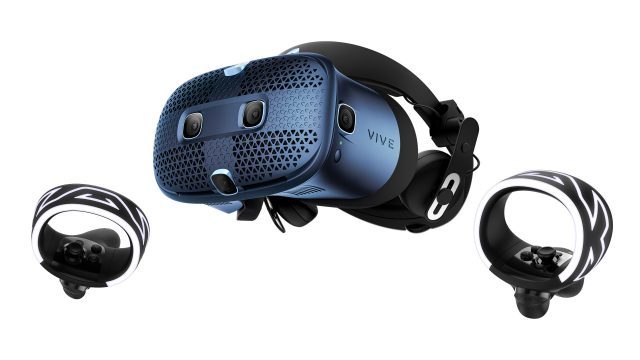
Vive Cosmos Recommended VR Specifications
  • Video Card: NVIDIA GTX 1070 / AMD Radeon Vega 56 or greater
  • CPU: Intel Core i5-4590/AMD FX 8350 equivalent or greater
  • Memory: 8GB RAM
  • Video Output: DisplayPort 1.2
  • USB Ports: 1x USB 3.0 port
  • OS: Windows 10
Vive Cosmos Elite Recommended VR Specifications
  • Video Card: NVIDIA GTX 1070 / AMD Radeon Vega 56 or greater
  • CPU: Intel Core i5-4590/AMD FX 8350 equivalent or greater
  • Memory: 8GB RAM
  • Video Output: DisplayPort 1.2
  • USB Ports: 1x USB 3.0 port
  • OS: Windows 10
Vive Pro 2 Recommended VR Specifications
  • Video Card: NVIDIA GTX 1060 / Quadro P5000 / AMD Radeon Vega 56 or greater
  • CPU: Intel Core i5-4590 / AMD FX 8350 equivalent or greater
  • Memory: 8GB RAM
  • Video Output: DisplayPort 1.2 or newer
  • USB Ports: 1x USB 3.0 port or newer
  • OS: Windows 10
Vive Focus 3 Minimum VR Specifications
  • Video Card: NVIDIA GTX 1060 / AMD Radeon RX 480 or greater
  • CPU: Intel Core i5-4590 / AMD FX 8350 or greater
  • Memory: 8GB RAM or more
  • Video Output: HDMI 1.4 / DisplayPort 1.2
  • USB Ports: 1x USB 2.0 port
  • Wired Streaming: 1x USB Type-C 3.0 cable (5 Gbps)
  • Wireless Streaming (routers): Wi-Fi 802.11ac or Wi-Fi 802.11ax (5GHz)
  • OS: Windows 10

WMR & HP

General Windows Mixed Reality Recommended VR Specifications
  • Video Card: NVIDIA GTX 1060 / AMD RX 470/570 or greater
  • CPU: Intel Core i5-4590 / AMD Ryzen 5 1400 or greater
  • Memory: 8GB
  • Video Output: HDMI 2.0 or DisplayPort 1.2 (may vary based on specific headset)
  • USB Port: 1x USB 3.0
  • OS: Windows 10 (Note: Not supported on N versions or Windows 10 Pro in S Mode)
  • Bluetooth Some headsets require Bluetooth 4.0 for controller connectivity
HP Reverb G1 and G2 Windows Mixed Reality Recommended VR Specifications
  • Video Card: NVIDIA GTX 1080 / AMD RX 5700 or greater
  • CPU: Intel Core i5, i7 / AMD Ryzen 5 or greater
  • Memory: 8GB
  • Video Output: DisplayPort 1.3
  • USB Port: 1x USB 3.0
  • OS: Windows 10 (may require latest updates)
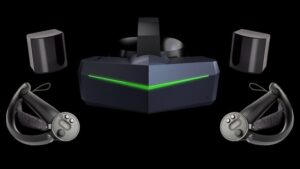
Pimax VR headset

Pimax 8K X Recommended VR Specifications
  • Video Card
    • Upscale Mode: NVIDIA RTX 2060
    • Native Mode: NVIDIA RTX 2080
  • CPU: Intel Core i5-9400 equivalent or greater
  • Memory: 8GB
  • Video Output: DisplayPort 1.2
  • USB Port: USB 2.0 or greater
  • OS: Windows 10
Pimax 8K Plus Recommended VR Specifications
  • Video Card: NVIDIA RTX 2060
  • CPU: Intel Core i5-9400 equivalent or greater
  • Memory: 8GB
  • Video Output: DisplayPort 1.2
  • USB Port: USB 2.0 or greater
  • OS: Windows 10
Pimax 5K Super Recommended VR Specifications
  • Video Card: NVIDIA GTX 1080 Ti
  • CPU: Intel Core i5-9400 equivalent or greater
  • Memory: 8GB
  • Video Output: DisplayPort 1.2
  • USB Port: USB 2.0 or greater
  • OS: Windows 10
Pimax 5K Plus Recommended VR Specifications
  • Video Card: NVIDIA GTX 1070
  • CPU: Intel Core i5-9400 equivalent or greater
  • Memory: 8GB
  • Video Output: DisplayPort 1.4
  • USB Port: USB 2.0 or greater
  • OS: Windows 10, Windows 8.1
Pimax Artisan Recommended VR Specifications
  • Video Card: NVIDIA GTX 1050 Ti
  • CPU: Intel Core i5-9400 equivalent or greater
  • Memory: 8GB
  • Video Output: DisplayPort 1.4
  • USB Port: USB 2.0 or greater
  • OS: Windows 10, Windows 8.1

All of these are the standard recommendations that are expected to be in place before you start working with Virtual and Augmented Reality projects. Since these are one of the hot trending technologies, whatever your interest is, we recommend to at least have a couple of projects under your belt to be able to have a complete and competent skillset.

If you have come to our space for the first, then we recommend you to check out our blogs section. We are Twin reality, a VR/AR web and app development startup based out of Gujrat in India. Though we are young, our young team has had a fair and vast experience of creating VR models across a wide range of industries from education to retail to manufacturing industries.

Virtual Exhibition with Virtual Reality

Welcome to our new Business Case Studies series. In here, we blog about some of the business challenges faced by our clients and how we helped them cross those hurdles with the help of Virtual reality and Augmented Reality.

Before we proceed further, a little about us. We are Twin Reality Technologies, a startup providing virtual reality app and web development services and based out of Ahmedabad in Gujrat, India. This case study is about a challenging problem our talented engineers have worked upon.

CHALLENGE:

The past year for us as been revelation. We have worked with a number of clients across industrial domains on a variety of issues and this one too is a bit unique. We were approached by a client who wanted a virtual ecosystem where people could freely meet and greet with others albeit in a virtual avatar. You could, from this, definitely make out that this too was one of the many outcomes of the covid-necessary measures in recent times.

Although we have had a fair experience in developing virtual meeting environments in the past, this project was demanding in itself. We had to cover quite a distance in revisiting old concepts and implementing newer features in them. Another challenge was to create a single environment where multiple people can interact amongst themselves and with a same object.

PROCEDURE:

We learnt the ropes of building a system where multiple people can deal with the same object at the same time and presented it to the client.

The tools we used were Unity Blender and other such Virtual Reality development engines.

RESULTS:

The client was very much pleased with the outcome of the project. With this project the client could have multiple B2B come together and brainstorm on great ideas.

Another interactive feature that we added was to create a small playground where multiple players can play with one ball.

With this, we were offered another project, as an extension of the same project but with additional features. This story is for another time in future.


If you are someone who is really into Virtual reality and Augmented Reality, we recommend you to get connected with us and follow our blog where we regularly document about various trending technologies, projects and features in the Virtual and Augmented Reality sector. Stay tuned and connected. Until the next post, we sign off!

Forklift stimulation training.

Welcome to our Business case studies series, a new initiative by Twin reality Technologies. We are a start-up providing web and app development services for Virtual and Augmented Reality. In this case studies series, we will explore the scenarios and problems where VR/AR simulation played a pivotal role in solving problems. A majority of them are the problems our engineers have worked on.

CHALLENGE: FORKLIFT SIMULATION

Going forward, we recently faced a challenge. We got contacted by a client, who has his own business of selling training materials for forklift operations and as course material, he wished to include Virtual Reality simulation for the same. This simulation had to be in forklifting shopfloors or factories where operators work on them. It was something beyond our everyday work since even we had to learn about what forklifts are, and what they do.

The parts they wanted us to cover was:

    1. Driving mechanism in the forklift
    2. Training simulations of lifting boxes, objects and crates.

PROCEDURE: The LEARNINGS, UN-LEARNINGS AND RE-LEARNINGS

Like we stated earlier, we had to build our knowledge base about forklifts and their industry from absolute scratch. To those who may not know much about them, forklifts are sort of mini trucks that are used to lift heavy objects, parcels and materials over short distances. Mainly in huge warehouses and factories.

They have a lot of complex gear systems and strings. A huge set of small mechanical components, that together lift tons of weight. This system contains levers for managing the speed of the machine, lifting bars, supporting bars, lights and engine.


So, you see, understanding the forklift was quite a challenge for us to go forward and create a simulation. Once we were fairly competent, we started creating simulations for the training course. We created a simulation of the driving systems in VR. Those also had the absolute force, speed, pressure and torque to lift light or a heavy crate accordingly.


We used Oculus SDK and software’s like Unity SDK to solve issues related to physics and driving the machine. All of this was solved by searching about forklift functioning on the Internet.

RESULTS:

As a result of this, our client could get his business running smoothly and sell simulations to different training institutes that train workers and students in operating forklifts. He also could grab hold of a couple of his clients who take this service and thus, could create a business opportunity, that most people could not dream and execute off.

This VR headset is designed for use in bed

The Virtual Reality and Augmented Reality market has risen very fast and exponentially, especially in the months of COVID-19. Who would have thought that exhibitions, galleries, portfolios, and other outdoor activities, will become a matter of pure on-screen interaction and user-immersive experience?

There are various other companies that have brought the latest and most updated headsets and web and mobile applications over the past year and a half.

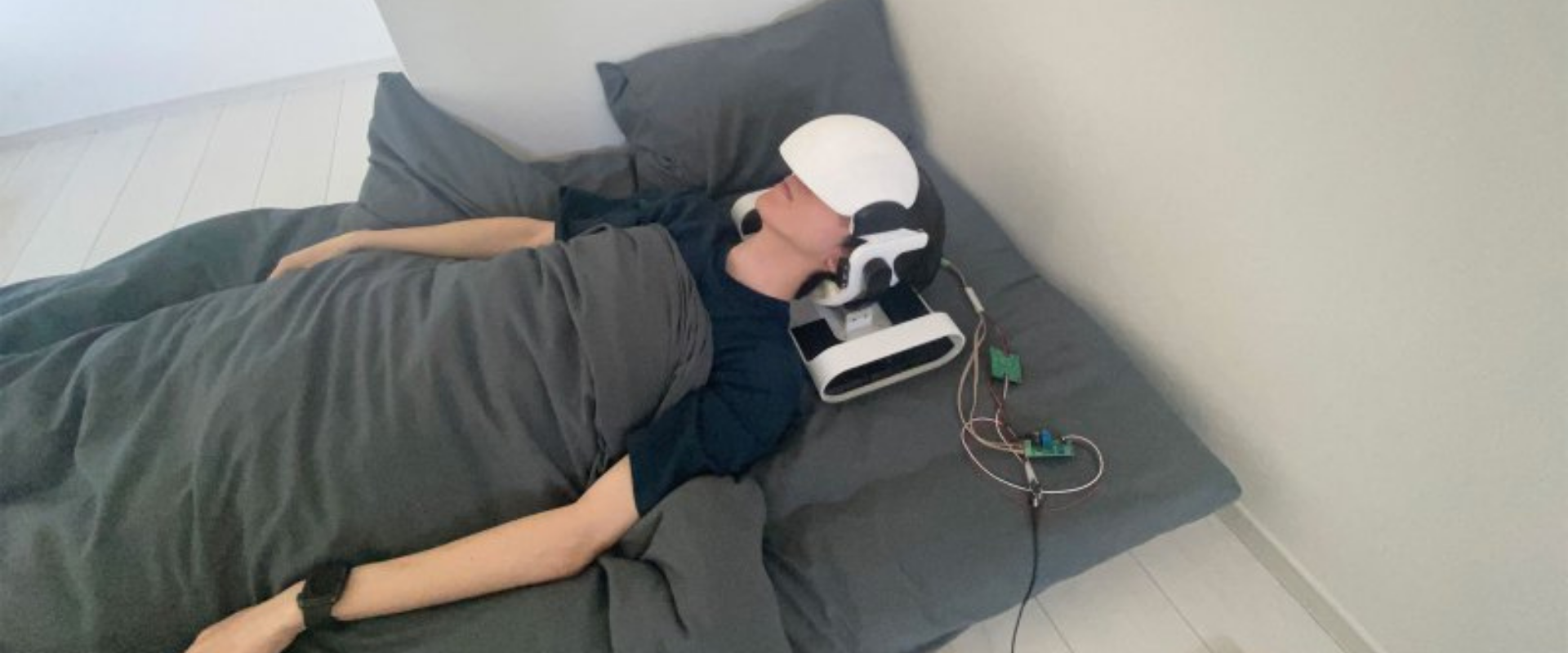
Today, we will be speaking of one such Virtual Reality and Augmented Reality headset, that is specifically designed for use while you lay in bed. There have been very few headsets that one can use while comfortable laying in bed and using. The one which we read in-depth today will work for the same reason.

HalfDive_1

There is a Japanese firm, which is called as Diver-X. this company is making a headset that is named as HalfDive BMD, or in a more expanded way, HalfDive Bed-Mounted Display. This campaign for marketing is all slated to start this November, that is in a few months. This headset is a bit larger than your regular ones. However, it is completely stable and stationary, which will allow you to rest your head smoothly over a couch or a bed. Now, for those who are a bit lazy or nosy, would love the fact that they no longer have to stand and run around while playing a game.

Given below, is a rough sketch of how that headset will look like, when one wears it:

Well, there is another crux to this matter. If you know that there is a sudden rise in Virtual Reality and Augmented Reality based sex games, you should be knowing why! There is also another chance of people who fall asleep as soon as they hit the bed.

The headset might turn attention for its weird features, but it is equally powerful. Among the other features it has, are a pair of coolers, or fans on the sides of the virtual reality headset. If people think that the noise of these fans is disturbing to them, they might as well shut them off from the settings panel.


leg sensors

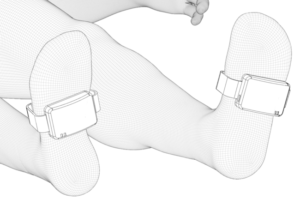
Another pair of cool sensors that these are equipped with are the force feedback sensors, placed at the bottom of the feet, with which the headset is connected to. Say for instance, if you are playing the game of Car or an F1 Racing game, you will actually feel pressing of the brake or the gas pedal against your feet. Similarly, if you are playing a game that involves fighting, or physical activity, you might feel those as well on your feet. Now, isn’t this some next-level user immersive experience?

Now, software developers are in for a huge surprise. What if we say, that this headset has an open-source software? Interesting right? Which means it is highly customizable according to the needs and necessities of the user.

The headset is compatible with all types of Steam VR content due to the unique driver and emulation systems of the device. Getting into the hardware at a little more depth, the headset has a couple of 1600 x 1440 resolutions. That too at a fantastic frequency rate of 90Hz, and a 134-degree field view, which is amazing and cool to imagine.

The device also has variable (or adjustable) focus lenses, with aspherical lenses. Now coming to the price of the device. On an average, for a headset which is not fully loaded with features, it should cost you somewhere around USD 800. The highest piece is placed at USD 4000. The average price is around USD 1200, which is slightly on the higher side, for mixed reality devices.

Are you someone who enjoys reading and keeping a tab on the trending technologies of Mixed, Augmented and Virtual Reality? Then, you have come to the right place. We, Twin reality Technologies, are a startup based in Ahmedabad. Our engineers provide a host of services in the domain of Virtual Reality Web and App development.

Even though, we are young, we have had a huge and diversified client base and experience. We would be glad to serve you, and you can get connected with us over our social media handles. Until the next blog post, have a nice day!

Xiaomi has unveiled their new smart glasses.

Xiaomi smart glasses

The market and the competition for smart glasses for Augmented and Virtual reality is getting heated up. In a matter of months, we have Apple, Facebook, Ray-Ban, and other traditional giants of the software eye a place with their products. But now, we have a smartphone manufacturing giant, step up into this domain. Xiaomi is a relatively new player in the domain, but that should not be taken as a disadvantage or inexperience. It has put in a lot efforts and time to lunch its very own version of Smart Glasses!

Xiaomi is still in the planning stages of the product and hasn’t had any plans of launch in the near future as of now. The company has released a sort of a trailer, where a few components of the smart glasses can be observed. The glasses have a 5MP camera, speaker, and a micro-LED display. The display is used as a notification feature. An important point to note is that even though MicroLED technology is a bit expensive for Virtual Reality in commercial use, still the company is keen on using them. All highlights, information, incoming calls and caller’s information, maps, photo, text and video translations are available on the device, as and when you choose. To summarise, these glasses have a simple structure to deal with and a longer life-span. They also have a Wi-Fi and Bluetooth connection modules.

Now, delving a bit more into the hardware. The processors: Xiaomi uses an ARM based quad-core processor. It is compatible with Google’s Android. The chips in these glasses are roughly the size of medium-ranged rice grain. The size of the pixels is roughly 4 micrometres. The major click here is that, while Xiaomi’s competitors have full solid colour displays, this company only focuses on showing thing on a green colour monochrome display. The glasses will have an LED light at either of its sides, and when the glasses are in function, the lights would blink, giving people around the user, an indication.

This product, if and when launched, would be one of the lightest smart glasses in its category. It weights only about 50 grams. The weight of probably say two pencil cells, we normally use in television remotes. The glasses won’t be acting as an extended screen or a secondary viewing device for the work being done on the mobile phone. The glasses will be powered by Xiaomi’s own voice assistant, named as XiaoAI voice assistant. This voice assistant will convert text to speech and vice-versa. The smart glasses will have a touchpad too.

Are you someone who is intrigued by the technological advances in Augmented Reality and Virtual reality? Then you should definitely consider following our blog where we regularly write about all the happenings in this domain. In case we have met for the first time, we are Twin Reality technologies. A start-up that focuses on building web and app development software for AR, VR, mixed reality applications. You could have a look at our portfolio and consider getting connected with us over our social media handles.