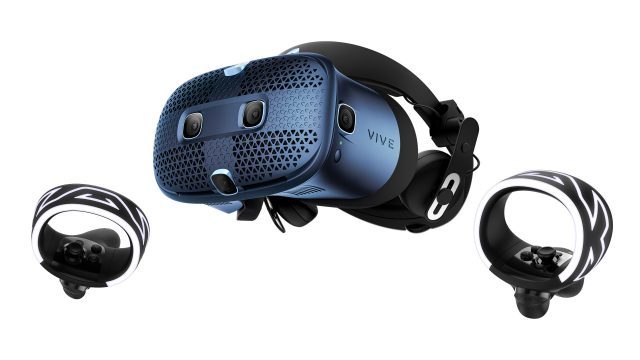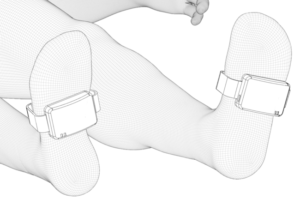
Xiaomi has unveiled their new smart glasses.

Xiaomi smart glasses

The market and the competition for smart glasses for Augmented and Virtual reality is getting heated up. In a matter of months, we have Apple, Facebook, Ray-Ban, and other traditional giants of the software eye a place with their products. But now, we have a smartphone manufacturing giant, step up into this domain. Xiaomi is a relatively new player in the domain, but that should not be taken as a disadvantage or inexperience. It has put in a lot efforts and time to lunch its very own version of Smart Glasses!

Xiaomi is still in the planning stages of the product and hasn’t had any plans of launch in the near future as of now. The company has released a sort of a trailer, where a few components of the smart glasses can be observed. The glasses have a 5MP camera, speaker, and a micro-LED display. The display is used as a notification feature. An important point to note is that even though MicroLED technology is a bit expensive for Virtual Reality in commercial use, still the company is keen on using them. All highlights, information, incoming calls and caller’s information, maps, photo, text and video translations are available on the device, as and when you choose. To summarise, these glasses have a simple structure to deal with and a longer life-span. They also have a Wi-Fi and Bluetooth connection modules.

Now, delving a bit more into the hardware. The processors: Xiaomi uses an ARM based quad-core processor. It is compatible with Google’s Android. The chips in these glasses are roughly the size of medium-ranged rice grain. The size of the pixels is roughly 4 micrometres. The major click here is that, while Xiaomi’s competitors have full solid colour displays, this company only focuses on showing thing on a green colour monochrome display. The glasses will have an LED light at either of its sides, and when the glasses are in function, the lights would blink, giving people around the user, an indication.

This product, if and when launched, would be one of the lightest smart glasses in its category. It weights only about 50 grams. The weight of probably say two pencil cells, we normally use in television remotes. The glasses won’t be acting as an extended screen or a secondary viewing device for the work being done on the mobile phone. The glasses will be powered by Xiaomi’s own voice assistant, named as XiaoAI voice assistant. This voice assistant will convert text to speech and vice-versa. The smart glasses will have a touchpad too.

Are you someone who is intrigued by the technological advances in Augmented Reality and Virtual reality? Then you should definitely consider following our blog where we regularly write about all the happenings in this domain. In case we have met for the first time, we are Twin Reality technologies. A start-up that focuses on building web and app development software for AR, VR, mixed reality applications. You could have a look at our portfolio and consider getting connected with us over our social media handles.

Oculus Space Sense feature! Now you could avoid collisions when immersed in virtual Reality.

Oculus Space Sense feature

Oculus has been the go-to brand hardware for virtual reality headsets. It has been a market leader for quite a while and with every update it releases, it only cements its legacy and reputation further.


Often people might have seen or experienced, that while wearing your AR/VR headsets, people bump into each other, thus not having an amazing virtual playing or work experience. So, to solve this problem, Oculus Quest has come up with an amazing update. Let us talk about it in a more detailed fashion.

Space Sense feature update is a part of the bigger set of a software update that Oculus Quest 2 has been working on, more commonly referred to as the v33 update. Here, it enables you to see the figures of people who are in your range, while working with the headsets. Once, you figure them out, you could pause your task, and have your area cleared and then again resume with your task. Sounds interesting right? Yes, it is. A win-win situation in places where the movement of people is more or important.

This feature of Oculus Quest 2 is available for a distance of 9 feet. However, like all things, there is a small disadvantage with this too. That is, whenever, a person comes from behind, your Oculus headset won’t be able to detect the movement and alert you. Since this is outside the sensors field of view. Even though the update does not fully control the problem of people or pets or objects entering your range of work or play, yet it still solves a lot of issues for people having objects in the vicinity or pets.

This is an optional feature. In case, you aren’t comfortable or can do without the update, you could turn this feature off from the settings panel anytime. There is a bit of time before Space Sense is launched. A similar feature was added to the Guardian of Oculus, two years back in 2019. In that, one could figure out static objects like furniture. However, it could not detect moving objects like people and animals.

Like, we said before, even if the headset does not solve the problem of head-on collisions in virtual reality space, still, it is a logical step for the safety of users. Looking at this update of Oculus, many other headsets manufacturers may also include features like these in their next update iteration.


If you loved reading this article, consider following our blog, where we regularly write about the trending technologies in the domain of mixed reality. We, Twin Reality Technologies, are a startup based out of Ahmedabad, India. With a young team of talented engineers, who work on virtual reality app development. We have a vast experience in working in various domains, from real estate to education to exhibitions. We would be glad to get connected over our website and other social media hands!

A sneak peek into how Facebook’s Aria glasses work, and present a wonderful opportunity into AR!

Facebook’s Aria glasses

Facebook, is no longer the same company that only runs its social media presence. Facebook has come far from that mould and it is now rapidly experimenting with different cutting-edge technologies and investing thousands and millions of dollars into research and development into novel technologies for people around the world.

Today’s article is one such piece into the company’s technology, a technology that is no longer connected with social media. It is a revolutionary technology that brings people together and let them experience certain situations in a virtual environment. It is about VR/AR.

The company has recently been a lot in news about its products in the Virtual Reality domain. Initially, it developed the headsets of Oculus and its related web software. Now it is for the VR/AR glasses developed by the company. The project is called Aria and is being projected as a research idea on the types of sensors and their study to use them in smart AR/VR glasses.

Let us have a short tour of the project layout, components and the technology that is used. We won’t delve into many details, but for those who are interested, a detailed user manual is available on this link.

The hardware of the project, which makes it the backbone of the project is called the Gemini Engineering Valuation Test. These are a set of few hardware glasses and other hardware equipment that is being built for testing and prototyping, before mass production. Another point that has to be clarified is that this project is not full-fledged software development, but more of hardware research and study. Hence it is mostly concentrated on collecting and analysing data, and not displaying it like on Oculus Headsets.

These glasses are just similar to the reading glasses that most people wear while reading or working to avoid eye strain. Thus, people with defective eyesight cannot wear it. The glasses have four cameras on them in different places and angles to capture videos and photos. The glasses are being developed by a leading eyewear manufacturer Ray Ban. They are powered by Qualcomm chips, have LED’s which change colour according to the mode they are operating in. They also have a separate power button and a USB-powered charging cable and port.

Since these glasses can be categorised into the smart category, and store data, they need a platform where the analysis, displaying and other interactive activities happen. It is for the same reason that an app called Ariane is being developed.

Ariane app is a one-stop app for all the interactive and immersive experiences of the glasses. All features like getting connected by Wi-Fi, battery levels, sensory data, notifications and other stuff will be processed. The app is still in the beta stage. Although a lot of reviews that have surfaced online say that the app has incredibly simple UI.

So, in a nutshell, this project looks more like hardware and data collecting experiment rather than an AR/VR project.

For more such articles about the trending technologies in the domain of Virtual and Augmented Reality, make sure to follow us on our website Twin Reality. We also specialise in creating virtual reality web and app development for our clients. We have a huge client base with amazing projects, showcased in our portfolio. We would be glad to get connected with you!

Tik Tok and its foray into the Virtual reality realm

Tik tok creating AR studio

All of us have known Tik Tok for its short and crisp video sharing and making platform. The business idea made it a household name and raked in millions for the company and its popularity.

However, since Virtual Reality and Augmented Reality is fast replacing all other forms of entertainment, especially in the audiovisual and gaming segment, it seems Tik Tok has felt the need to upgrade itself in the market. As a result, they have been researching very hard and now they have come up with a VR app of their own.

Coming to the technicalities, what does it do? It is a creative toolset that is named Tik Tok Effect House. Currently under the beta testing stage. Since it is open to constructive criticism in this phase, the company has asked developers who may be interested in contributing to sign up today and start testing and debugging on the software. All they have to do is to fill out a simple information form and they are good to go.

With this new set of features, the company aims to make the platform user immersive and interactive for its users. They can choose from a variety of visual effects for their Tik Tok videos, and interact with the physical environment around them.

The feature is available for both the Windows and MAC platforms. There have been multiple reports and documentation on how the VR of Tik Tok is using the LiDAR camera of the iPhone, for a confetti feature. Once you focus the person or object on the camera, the confetti will automatically blow up. However, this according to the company is just the start and they plan to work on more innovative and interactive features.

The entry of Tik Tok into this field is an alternative to the existing competition created by Facebook and Snapchat. Both the companies have a cumulative of at least USD 5 million in market revenue. Snapchat has 3 million in revenues while Facebook has operations in 190 countries with a 600,000-user base.

The project is in the early stages and its beta version is available in select countries like the US. Yet once launched it has an amazing way to create on the spot interactive videos instead of relying on a third-party app to be downloaded and again create a video.

For a more in-depth view and insights, make sure to follow us, Twin Reality, on our blog posts regularly. We are a company is based out of Ahmedabad in India and work on the most advanced creation of virtual reality web and app software development. We would be glad if we could connect over the website and make sure to have a look at our portfolio, with some big players in the market as our clients.

Revolutionizing North Korean education system with Visual Reality and Augmented Reality

VR in north Korea

North Korea is a seemingly interesting yet controversial place to be in. For the better part of the last decade, it has been coming in print media and digital media for not so right reasons, as a deprived country, where the availability of high-speed internet and free information is seen as a luxury for any civilian.

Students use VR glasses during a class at a teachers’ training college during a government organised visit for foreign reporters ahead of the 70th anniversary of North Korea’s foundation, in Pyongyang, September 7, 2018. REUTERS/Danish Siddiqui/2018-09-07 14:23:03/


But you are in for a shock when I say that in this country where freedom of speech and the internet is severely scrutinized, the education system is quite fantastically promoting the use of Virtual reality and Augmented Reality to make education for kids in schools quite fun and interactive. Looks interesting, right!

Now that we have told you this, let us also tell you how the country promotes such futuristic technologies when most of the advanced countries around the world are still following the textbook-notebook combinations.

A school in North Korea’s capital Pyongyang has recently come into the spotlight for the novel methods they are implementing. A report documented in a Japanese newspaper says that the teachers there are combining traditional blackboard-based education curriculum with hidden animations, illustrations of concepts and topics, 3-Dimensional pictures and having all of those projected onto the classroom walls.

The Augmented Reality makes use of all these projections and turns them into real life-like looking creatures. Say, for instance, if kids are studying wild animals, then they can see how a tiger or a lion looks from all directions. More than that, how fast it runs, how loudly it roars and other interesting things which will make the teaching and learning process such fun.

There are several AR/VR headsets available in the schools using which immersive experiences are given to the kids. While exact details haven’t emerged, it is said that lots of animated series, drawings and pictures are pre-recorded into the Virtual reality headsets.

All of these efforts and farsightedness of the leaders came in very handy when the world got engulfed in the COVID pandemic. Since March 2020, the North Korean classrooms have been consistently using video conferencing, Virtual Reality Web and App software for complex concepts, and Augmented Reality to make learning more immersive, interactive and enjoyable.

The technology is strictly monitored by the school authorities and teachers so that no misuse of this unique technology is done by the students.

This has heralded Industrial Revolution 4.0. A revolution that is not limited to industries and offices alone, but is as deeply embedded into something like our kid’s education and shopping experiences. For a country like North Korea, it is a much-needed welcome step taken. After this, we can only see other advanced nations implementing these policies and giving a lot of importance to Virtual Reality app development.


If you are someone, who is looking to build an immersive and more interactive experience for your client, then you might have just landed in the right place. Our teams at Twin Reality make some of the most cutting-edge web and mobile application development in Virtual and Augmented Reality.

For more insights into this trending technology, make sure to check out our blog regularly, where we document a lot of this technology in the form of Technical Blogs.