
XR News Round Up [17 Oct 2022]: Meta Quest Pro Launched

We are already into 3rd week of October with the expectation that there would be interesting events to mention in our summary post. And we were not disappointed. In between all this interesting events we are also developing some great VR projects for clients.

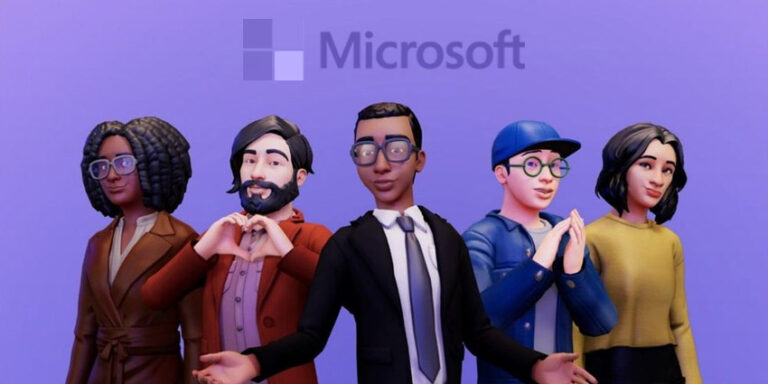
So, let’s get straight to it while Meta and Microsoft Form Major Quest Pro Collaboration has been the big news of the week, 

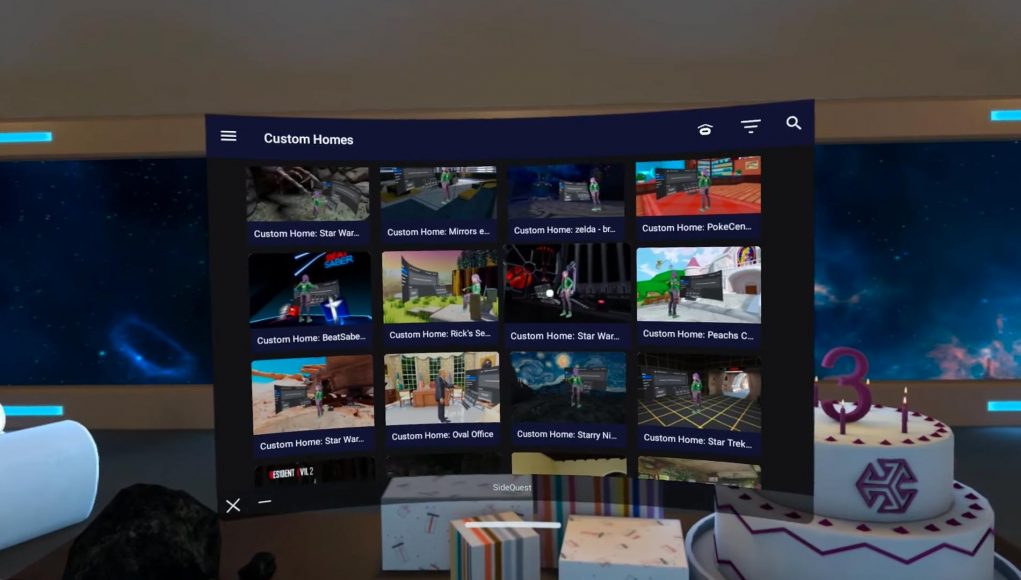
Second, among us which became popular during Lockdown they have just announced that they are going to bring their game onto VR headsets and guess what Horizon Home finally added YouTube to their VR environment while moving onto gaming, 

Xbox revealed that Cloud Gaming Is Coming to Quest 2 VR Headsets so now users can access latest games on their headsets, and as is a tradition of this blog, 

we are going to write today for you a super article where you can find inside ALL By reading this post, you may be certain that you did not miss any of the announcements made there.

I genuinely hope this is beneficial to all of you.

This month’s important news and events in the realm of augmented and virtual reality technology are as follows:

1. Meta Quest Pro Specifications, Price, and Release Date

Meta quest Pro

Here’s all you need to know about Meta’s latest VR headset, the Quest Pro:

1. The Specifications

The Quest Pro is a “high-end” gadget that supports both VR and mixed reality. The headgear is powered by the all-new Qualcomm Snapdragon XR2+ architecture, which provides 50% more computing power than the Meta Quest 2 while also improving heat dissipation. Each headgear has 12GB of RAM and 256GB of storage space.

Meta selected pancake optics over the Quest 2’s Fresnel lenses, allowing them to lower the optical module by 40% while delivering 37% more pixels per inch and 10% more pixels per degree than the Quest 2. The gadget has a horizontal field of vision of 106 degrees and a vertical field of view of 96 degrees, as well as a maximum refresh rate of 90Hz.

Two LCD panels with quantum dot technology provide sharp, vivid images that are enhanced by the company’s local dimming technology, which regulates 500 LED blocks to provide 75% greater contrast. As a result, the images are crisp and clear. The Quest Pro has 360-degree spatial audio, a built-in mic, and twin left/right 3.5mm headphone connectors for audio. A full charge provides around two hours of usage, depending on the material.

2. The Design

Unlike the Quest 2, the Quest Pro is more of a design and collaboration tool than a gaming device. The headgear is intended to boost your productivity through the use of virtual material while keeping you grounded in reality. As a result, the gadget has a one-of-a-kind open peripheral design that enables you to engage with virtual material while keeping aware of your actual surroundings. However, you may employ partial light filters to immerse yourself in some activities; however, more on that later.

As previously stated, Meta was able to shrink the optical module by 40% by using pancake optics. The Quest Pro has a curved-cell battery at the back, which results in improved weight distribution. A crank wheel on the rear of the headset allows you to quickly change the tension of the device, which is a significant improvement over the cloth straps on the Quest 2.

A continuous lens spacing adjustment mechanism lets you to change the gap between the lenses to your ideal inter-pupillary distance (IPD) of 55mm to 75mm, which is a broader range than the Quest 2. The auto-adjustment software, which alerts you if you’re wearing the gadget improperly, is pretty cool. The Quest Pro weighs around 1.59 pounds, which is significantly heavier than the Quest 2.

3. The Perplexing Reality

The Quest Pro, in addition to VR, can give 3D mixed reality experiences owing to full-color stereoscopic Passthrough technology. High-resolution outward-facing cameras triangulate your location and scan your surroundings in real time, letting you to “see” the actual world in breath taking detail. The Quest Pro’s cameras have four times the pixels of the Quest 2, and the difference is evident. The images are so good that you can read text while wearing the headset.

Developers may create compelling mixed reality experiences that integrate virtual information with the real world using the company’s Presence Platform. This may be anything from a virtual office with many displays to a next-generation art studio where you can hang virtual artwork throughout your physical room.

Scene understanding and Shared Spatial Anchors enable people to collaborate in a shared location at the same time. You may even place virtual things in real-world locations and return to them later.

4. The Controller

A new set of self-tracking controllers is included with the Quest Pro. Unlike the Quest 2 Touch controllers, which rely on the headset’s sensors to work, each Touch Pro controller has three built-in sensors that detect their locations in 3D space.

In addition, the Touch Pro controllers include a redesigned ergonomic design and enhanced haptics powered by the TruTouch Haptics engine. A rechargeable battery system eliminates the need for throwaway batteries. Each headset includes a charging station and a 45W USB-C power converter, but more on that later.

As if that wasn’t awesome enough, the Touch Pro controllers are sold separately and work with the Meta Quest 2. Even if you don’t plan on purchasing the Quest Pro, you can still use the additional controllers to augment your current setup. The Touch Pro controllers will be available for $299 later this year.

5. Eye and Face Tracking

The Quest Pro, as previously mentioned, has eye tracking and Natural Facial Expressions, allowing the firm to do some really creative things with avatars. The headset records the movement of your pupils as well as any small facial emotions after calibrating your face in the settings to give more genuine interactions.

This technology may also be utilised for menu navigation and system optimization using a method known as foveated rendering. In a recent demo, I tried out a novel programme that let me control the face of a bizarre alien avatar. Despite the fact that it was a simple tech demo, I was completely enthralled by the experience. Both eye and facial tracking will be disabled by default; you must enable them explicitly in your settings. Images of your eyes and face, according to Meta, are erased after processing and are never shared with the firm or any outside groups.

6. The Apps and Games

The Quest Pro supports both virtual reality and mixed reality material, so there’s something for everyone. I was able to experience a limited selection of new and old games made even better by the Quest Pro’s mixed reality features during a hands-on session with the headset. Tribe XR, a VR DJ software available now on Quest and PC VR headsets, was one of my favourites. During my brief demonstration, I digitally connected with a professional instructor who led me through the intricacies of beatmatching. Wooorld, a GeoGuessr-style game that allowed me to tour renowned cities throughout the world in mixed reality, was another game I loved.

Then there was Painting VR, a virtual reality art tool that let me make my own virtual art and hang it about my real-world area. And, because to the previously stated Spatial Anchors, my work stayed permanently placed in my physical area even after I closed the app, allowing other visitors to add to the virtual gallery throughout the day. We’ll discuss about content in greater detail later. The Quest Pro, according to Meta, is compatible with all Quest 2 games and apps. Link and Air Link can also be used to view PC VR content.

7. The Accessories

The Quest Pro will come with a slew of cool extras right out of the gate. Each headset has a number of handy add-ons meant to improve your experience. Partially opaque light blockers, a specialised charging station, and a 5W USB-C power converter are included. A new pen device that can be affixed to the bottom of the Touch Pro controller for more realistic sketching and writing in VR is now available. This is especially beneficial while working in Meta’s own VR coworking platform, Horizon Workrooms.

In addition to the accessories included with the Quest Pro, the business will sell a number of premium accessories for a fee.

2.Among Us Will Be Available on VR Headsets Next Month

Meta Connect 2022 was jam-packed with intriguing news. Among Us VR, a VR adaption of the popular multiplayer deduction game from Robot Teddy, Schell Games, and Innersloth, now has an official release date.

Some lucky people were able to join up for early gameplay with their beta back in August, leaving us slowpokes out in the cold. Now we can all play when the game is released next month for $9.99 on Steam, Meta Quest, and Rift. To add to the excitement, you can now pre-order the game on the As a pre-order bonus, purchase a Mini Crewmate hat from the Meta Quest shop.

“We can’t wait to hear how family and friends band together and betray each other as they perform duties onboard the Skeld II,” stated Victoria Tran, Community Director for Innersloth, in an official news release. “The VR version of Among Us stays faithful to the essence of the original game while also introducing new ways for players to experience the turmoil and pleasure of accusing your friends of murder!”

Among Us VR will have the following features when it launches:

In-game chat: Use in-game voice chat (with proximity chat) or rapid text chat to communicate. Minigames: Play classic favourites as well as new-for-VR titles.
Customization: Choose the colour and cap of the Crewmate.
Options for comfort and safety: Adjust the parameters for the best possible experience.

VR on several platforms: Play with Crewmates on many VR platforms at launch, including Meta Quest, Rift, and Steam.

Choose between single-handed and two-handed movement.

Among Us: Localization English, French, Italian, German, Spanish (LATAM), Chinese (traditional and simplified), Japanese, and Korean are among the eight languages supported by VR.

Achievements: Completing unique tasks will get you exceptional accomplishments.

“We’ve worked on a variety of projects, but collaborating with Innersloth and Robot Teddy to bring Among Us on VR platforms was really rewarding,” said Schell Games CEO Jesse Schell. “Together, we built something that will please the current Among Us community, attract new fans who will experience Among Us in a headset for the first time, or convince fans of the original game to explore VR for the first time.” “Let the emergency meetings begin!”

Ranjani Natarajan, Robot Teddy’s Director, was ecstatic about bringing this beloved title to VR. Among Us was a game that brought together communities and total strangers at a collectively uncommon and painful moment, and Among Us VR allows players to embody that same intensity and vitality. “Who doesn’t want to spend the holidays in virtual reality roleplaying humour, intrigue, and some deliciouss backstabbing?”

3.Meta and Microsoft Form Major Quest Pro Collaboration

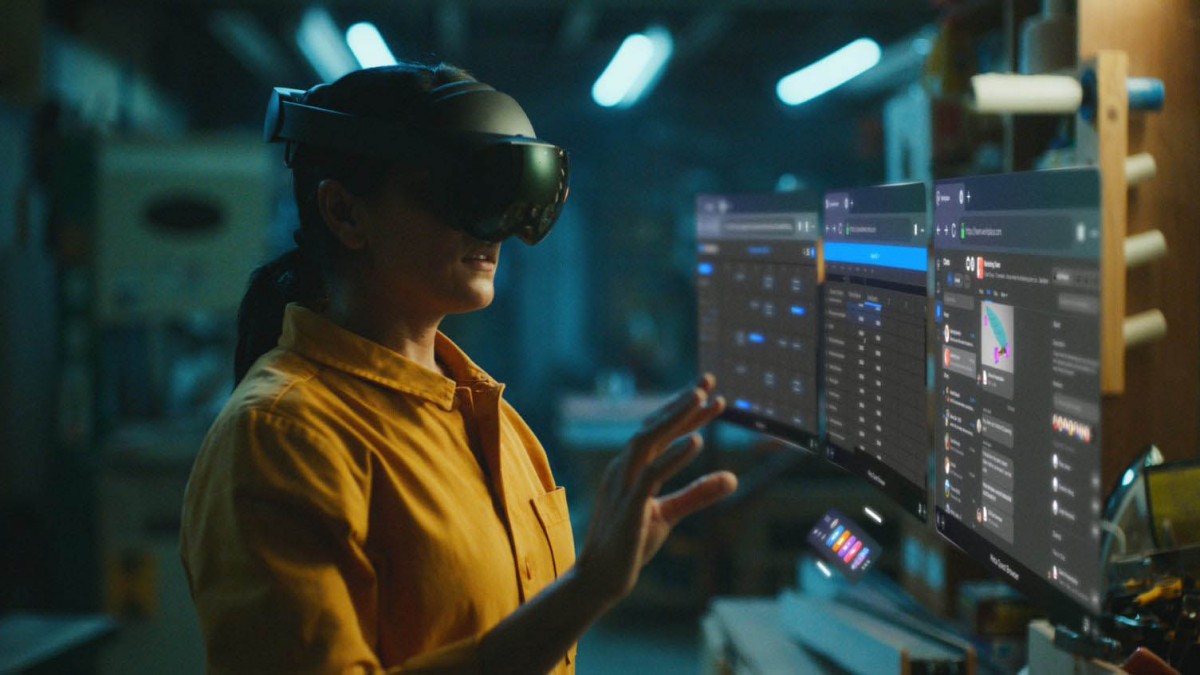
Meta Platforms has announced a strategic relationship with Microsoft Teams to incorporate Microsoft Teams on the company’s newest gadget, the Meta Quest Pro, during the Meta Connect 2022 event on Tuesday.

At the enormous event, Mark Zuckerberg, CEO and Founder of Meta Platforms, and Satya Nadella, CEO of Microsoft, revealed the strategic agreement that corporate customers of the new headgear will be able to access Microsoft Teams in mixed reality (MR).

In his address, Nadella stated,

“We’re taking steps to guarantee that our software can benefit people on all of their preferred devices.” That is why I am so excited about what we are introducing today, and how we are combining the strength of several of our most popular productivity tools for the VR devices you are releasing.”

Teams, one of the market’s most prevalent tools for work productivity to date, provided a platform for chatting, collaborating, and doing business with others, according to Nadella, who added that Microsoft had launched the “once in a lifetime” change by opening it in a fresh, immersive format for the Quest Pro.

Microsoft 365 Comes to VR

Nadella went on to say that Microsoft will boost productivity in VR by introducing Office 365 to Meta Quest headsets, allowing users to access all of their most often used programmes including Word, Excel, Powerpoint, Outlook, and many more.

The inclusion would also let users to move settings, files, and other functionality to their headsets via full Office 365 streaming over the immersive gear.

Microsoft-Meta Gaming Store?

Nadella made the final announcement, explaining how the Meta Quest Store will also use Microsoft’s XCloud gaming technology. Following its historic $68.7 billion USD acquisition of Activision Blizzard earlier this year, Microsoft’s current gaming shop just saw a huge shift in accessible titles.

page5image11101952

“You’ll be able to play 2D games with your XBOX controller projected on a large screen on the Quest,” he said. We’re still in the early stages, but we’re thrilled about what’s to come. Who knows, maybe the next time we chat we’ll be playing VR Flight Simulator.”

Industry Reactions to the Meta-Microsoft Partnership

Bola Rotibi, CCS’s Chief of Enterprise Research, termed Meta’s relationship with Microsoft “hugely significant.” The agreement, according to CCS, will serve as a “catalyst for many firms to dip a toe in the water on how [VR/AR] technology might be employed in everyday business.”

“These developments underscore Zuckerberg’s commitment to make the metaverse a respectable realm for the enterprise,” she continued. Given that most people associate virtual reality with gaming and consumer applications, it’s an important next step.” The Meta Quest Pro’s full-color MR was a “big leap forward,” with the potential to boost inclusivity for the user experience and open doors to “a wide range of new [AR] use cases and applications.”

She went on to say that using user-facing sensors to make avatars more lifelike was also a “important step.” A realistic nonverbal communication system, such as blinking and brow movement, would also “provide a more engaging experience.”

In conclusion, she stated that the Quest device platform and integration approach was “geared at attracting additional application developers.”

She praised the decision as “wise” for creating opportunities for a “broader variety of use cases” to push VR adoption. Cost-effective, flexible pricing schemes, as well as “the intuitiveness of its use and security,” will be “critical” to Quest devices’ long-term success. such enhancements were noted as issues in the CCS Insight Senior Leaders IT Investment report, which outlined “barriers to deploying XR solutions and systems inside the workplace,” according to her.

Many prominent members of the Menlo Park-based firm’s team attended the Meta Connect 2022, including Zuckerberg, Microsoft Project Manager Josh Sachs, John Carmack, Meta’s Consulting CTO for Reality Labs, and many more, to outline the Metaverse’s vision and announce new products.
4.Horizon Home will (finally) have YouTube. Making it More Convenient to Watch with Friends

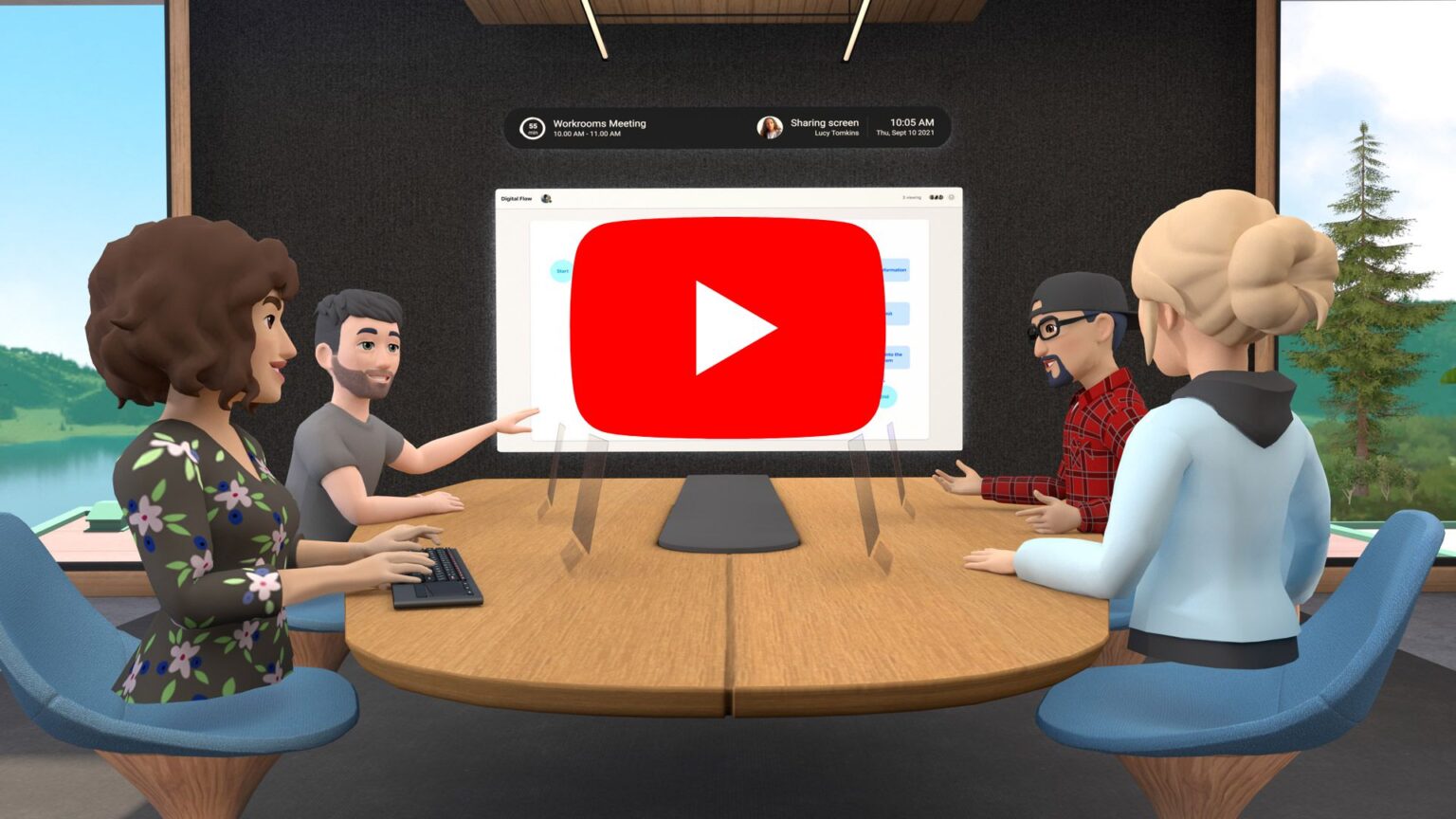
Quest users will soon be able to watch YouTube material inside Horizon Home, the first-party social VR environment that is finally making it easier to hang out in VR with pals, according to Meta. Meta is moving slowly… excruciatingly slowly… developing up the main social capabilities of its Quest series of headsets, which debuted in 2019.

Horizon Home only recently began enabling users to invite their friends inside the home zone. While you may view films together there, what you’ll find is a difficult-to-navigate scattering of flat and VR- specific content hosted by Meta And, while there is some good content to be found there, there’s no doubting that YouTube is the main destination for independent online video content… especially anything that’s short and approachable enough to share with friends while sitting on the sofa.

It’s already theoretically viable to watch YouTube in VR with pals in a variety of ways. However, they all need users to download a new app and, in many cases, create new avatars or utilise another friends list or method of joining… Not the easy, smooth experience one would expect.

But, finally… Meta claims it will deliver the massive wealth of YouTube material directly inside Horizon Home. That means that all you have to do to watch with your friends is send them an invite and then press the play button. It’s already theoretically viable to watch YouTube in VR with pals in a variety of ways. However, they all need users to download a new app and, in many cases, create new avatars or utilise another friends list or method of joining… Not the easy, smooth experience one would expect.

But, finally… Meta claims it will deliver the massive wealth of YouTube material directly inside Horizon Home. That means that all you have to do to watch with your friends is send them an invite and then press the play button. It’s unclear when the YouTube VR functionality will be available in Horizon Home on Quest, but if we’re lucky, we could see it before the end of the year.

5.Xbox Cloud Gaming Is Coming To Quest 2 VR Headsets

In the future, your VR headset will be able to access a large archive of console games.

There was no shortage of important announcements at Meta Connect 2022. We not only got our first official glimpse at the much-anticipated Meta Quest Pro, but we also heard about many new titles coming to Quest 2 and Quest Pro VR headsets, including Marvel’s Iron Man VR and I Expect You To Die: Home Sweet Home.

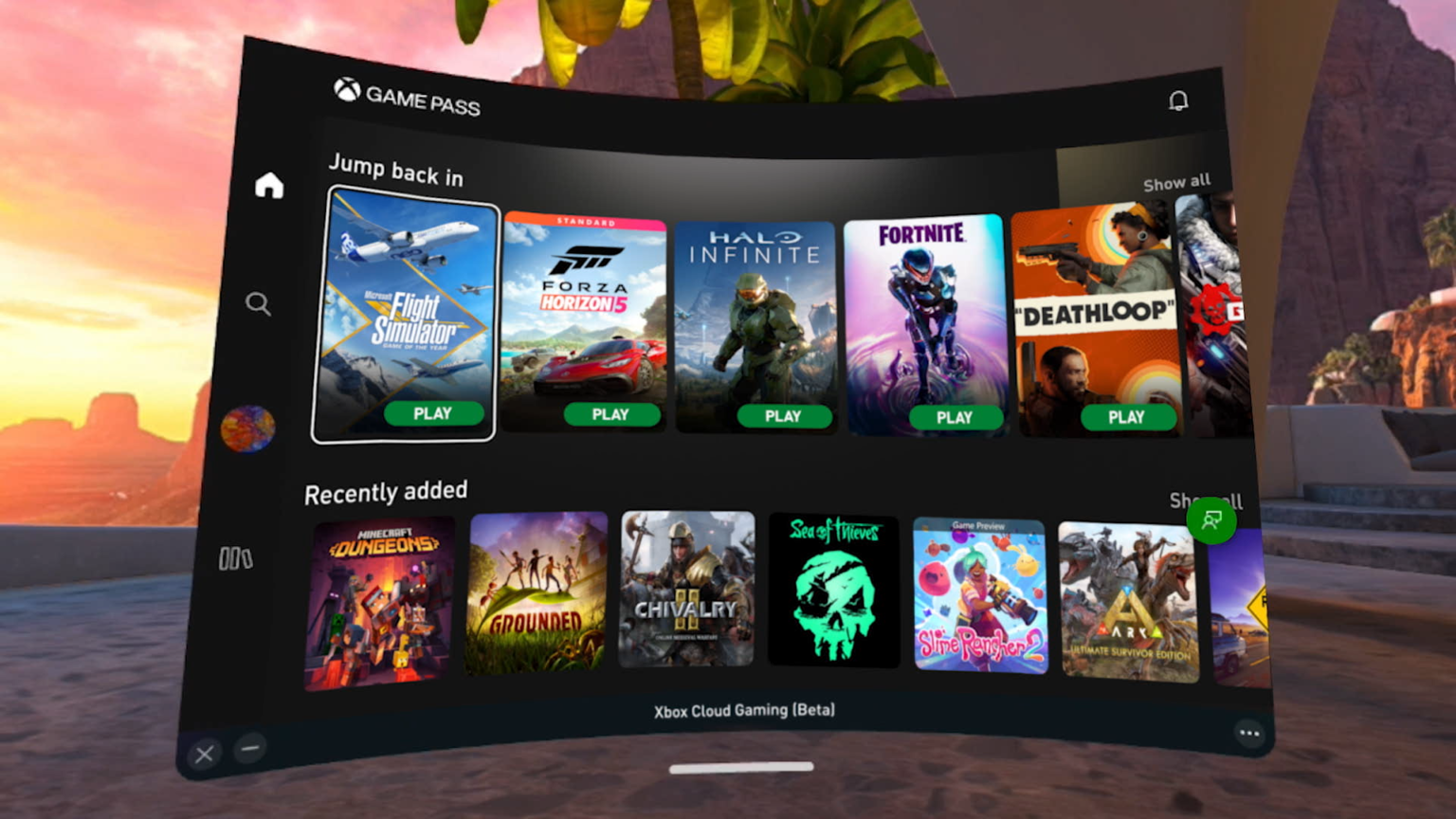
The unveiling of Xbox Cloud Gaming (Beta) for the Meta Quest platform was equally thrilling. You’ll be able to connect an Xbox controller to your Quest headset in the future and play cloud-compatible titles from the Xbox Game Pass Ultimate catalogue in VR on a huge screen. Microsoft CEO Satya Nadella made the announcement at Connect.

In an official statement, the firm stated, “We’re teaming with Microsoft to offer Xbox Cloud Gaming (Beta) to the Meta Quest Store in the future.” “We are not announcing a release date for Xbox Cloud Gaming on the Quest Store, but we will provide additional information as soon as feasible.”

There is no news on when this functionality will be released. Having said that, I’m looking forward to the day. The ability to effortlessly access cloud-compatible Xbox Titles Pass games with only a Quest headset, Xbox controller, and a stable internet connection may make the Quest an even more appealing option for those selecting which system to spend their money on.

XR News Round Up[10.10.2022] HTC Teases New VR Headset, Leaked Meta Pro Headset in action

Meta quest leaked footage

We started October with the expectation that there would be interesting events to mention in our summary post. And we were not disappointed. So begin, what can we expect from the next Meta Connect?

Second, big developments happened at one of the world’s leading AR/VR companies, HTC, where they teased their next VR headset ahead of Meta Connect. 

While some of these changes will annoy some of the company’s customers, others are expected to improve how users engage with AR/VR apps and games. 

The application of augmented and virtual reality technology is increasing in a variety of fields. Moving on to gaming, Quest Pro Leak Shows Meta’s Next-gen Headset in Action, which has been significantly upgraded.

The following are this month’s major news and events in the field of augmented and virtual reality technologies:

Topics Covered in this RoundUp:

HTC new VR headset teaser

1.HTC Teases Next VR Headset Ahead of Meta Connect, Claiming It Will Be Small

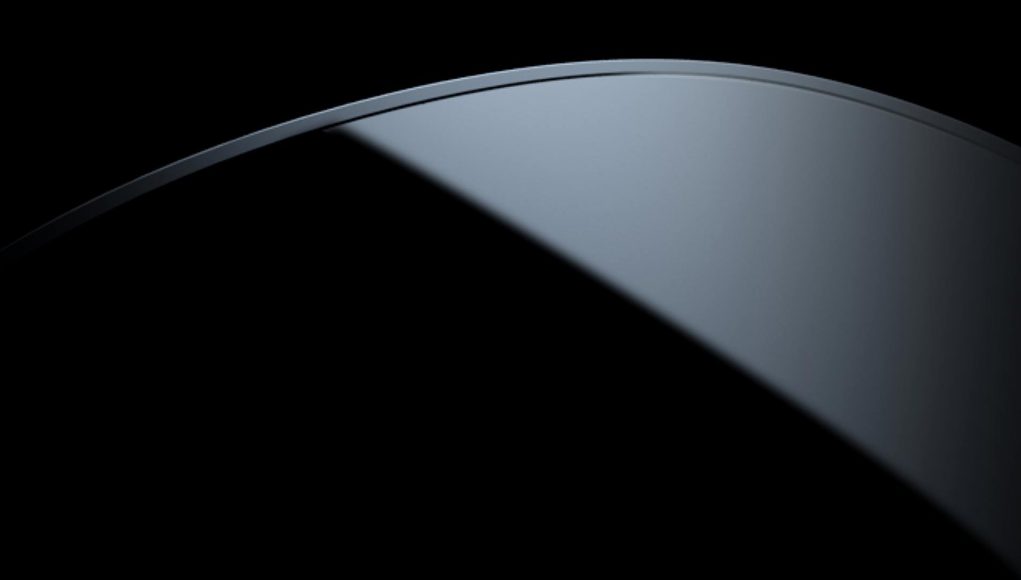
HTC today announced the company’s future VR headset, which the Vive developer claims would be “something large… we mean little.” For the time being, all we have is a tweet that displays a portion of the headgear in question with the caption “Go tiny or go home.” There is no name, no price, and no release date. Bupkis.

Is it a representation of a pancake lens, which several VR headset manufacturers, including Meta and Lenovo, are now utilising in favour of classic Fresnel lenses to reduce overall bulk? HTC’s Vive Flow casual VR content device already makes use of one.

Is it an external view of a face plate, maybe to resemble a pair of sunglasses like… well… Vive Flow? At this point, your guess is as good as ours. Turning up the contrast on the image shows one thing for certain: a witty message complimenting us on our inability to decipher more important information. And, although we’re still expecting for anything from HTC that would provide Meta true consumer competition, the focus on the headset’s size as the key selling feature might indicate to the arrival of another casual VR watching device like Flow.

In any event, the business claims to have learnt from prior missteps and is “putting those learnings into this headset.” It’s also rather good timing, given Meta’s yearly Connect developer conference is just a few days away, and this year will almost certainly witness the launch of the heavily-leaked Quest Pro (formerly Project Cambria).

Vive Flow was widely panned for failing to provide a more practical experience than first- generation mobile VR devices like Gear VR, Oculus Go, or Google Daydream. It also requires an external power source to operate, which is preferable to having a front-heavy headset but is still a worry for some owners. Perhaps the Taiwanese maker is aiming for a true standalone format this time?

HTC has been known to conduct repeated headset reveals in the past, so we’ll be keeping an eye on the firm’s Twitter account in the meanwhile to see what the business has in store.

Will HTC include any further features?

The emphasis on the headset’s size as a significant selling point may lead to the release of another casual VR viewing device, such as Flow. Despite the fact that we are still waiting for HTC to release something that provides genuine consumer competition to Meta.

In any case, the company claims to have “integrated those learnings into this headset” after “learning from those missteps in the past.” It’s also a good time because of Meta’s annual Connect developer conference, which will most likely see the formal introduction of the widely rumoured Quest Pro this year (formerly Project Cambria).

Meta quest leaked footage

2.Alleged Quest Pro Leak Shows Meta’s Next-gen Headset in Action

Immersed, a firm renowned for its work-focused productivity software for VR, may have gotten ahead of Meta’s planned Project Cambria mixed reality headgear (aka ‘Quest Pro’).

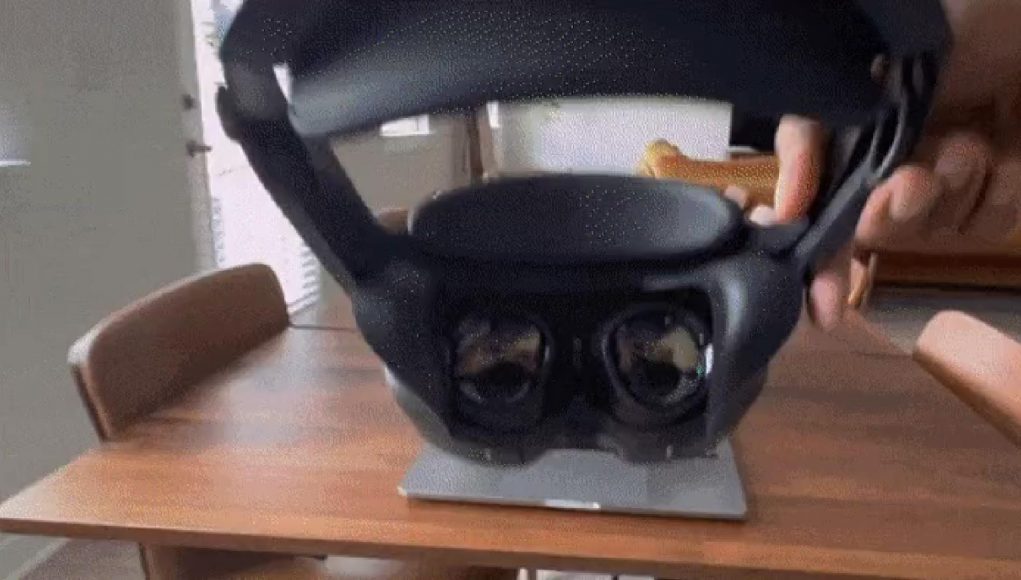
The video, which was discovered in a business website, purports to show the Immersed software in action on the unannounced Quest Pro, utilising its hand tracking and mixed reality features. Although Meta has not publicly acknowledged the Quest Pro naming scheme, an alleged unauthorised unboxing of the headset last month revealed the alleged unit’s exterior in full replete with Quest Pro branding—basically unveiling it well ahead of Meta’s upcoming Connect developer conference on October 11th.

If there was any doubt, here are still shots from the video (left) and the illegal Quest Pro unpacking (right). The only noticeable variation between the two is the addition of a light- blocking facial interface in Immersed’s shot, which may be included in the box or as an optional extra for enhanced immersion.

We’ll undoubtedly hear more than however it seems quite probable that we’ll not only see a lot of the next-gen standalone at Connect, but also an opportunity to pay for the obviously costly headset, which is supposed to be priced “substantially” higher than $800. In late August, Meta CEO Mark Zuckerberg revealed on the Joe Rogan Experience podcast that the company’s “next product [is] coming out in October,” which might imply that an official pre- order announcement will follow.

And it doesn’t stop there. While readers should take this with a grain of salt, a cheaper Meta Quest 3 is expected to follow Quest Pro at some point next year, featuring the latter’s full- colour AR passthrough and depth sensor but lacking Quest Pro’s face and eye-tracking functionality.

3.Google Ventures invests $12 million in SideQuest to build the XR Ecosystem's main content hub.

SideQuest, the sideloading programme and unofficial app store for Meta’s Quest and Quest 2, announced a $12 million Series A investment sponsored this time by Google Ventures (GV) SideQuest, founded in 2019 by Orla and Shane Harris of Belfast, has effectively become the de facto unauthorised app store, as well as the major sideloading platform for Quest and Quest 2.

SideQuest has generally avoided Meta’s attention by not directly competing with Meta by charging for material that is already accessible on the official Meta Store or its early access content outlet App Lab; it mostly serves as a centre for listing everything and anything. M.G. Siegler of Google GV will join the company’s board, as first reported by Tech Crunch. Siegler has sponsored a number of early-stage firms as a GV general partner, including Anchor (bought by Spotify), CTRL-Labs (acquired by Meta), Matter, Slack, Stripe, the Skimm, and Universe.

Shane Harris, co-founder of SideQuest, tells Tech Crunch that the initiative has provided “a significant lot of value to their headset,” but that there are no intentions to monetise on the Quest platform in order to avoid competing with them. Still, the corporation does not want to take a back seat as the ecosystem matures. SideQuest hopes to become “a primary hub and software layer for the larger XR ecosystem,” according to Siegler in a GV blog post.

“SideQuest’s ultimate aim stretches far beyond these early days,” Siegler writes, “but is based on development on top of Open XR, an open, royalty-free API standard that provides engines with native access to a range of devices in the mixed reality area.” “And the business has collaborated with companies like Meta on initiatives like App Lab for Oculus Quest headsets.”

SideQuest tells Tech Crunch that they’re exploring for methods to monetize that don’t immediately impact Meta’s bottom line, such as providing more developer tools and even establishing a publishing fund to financially support popular projects, thereby turning SideQuest into a VR game publisher. SideQuest has previously received money from venture capital firms and individuals including Oculus VR co-founder Palmer Luckey, Boost VC, and Connect Ventures.

SideQuest plans to double or triple its staff with the $12 million investment, bringing additional three to six employees to the project. According to Crunchbase records, Google’s investment is the highest single investment in the firm, increasing SideQuest’s total outside investment to $15.6 million.

Meta Connect 2022 is only a few days away, and anticipation is high. This year’s event, according to Meta, will concentrate on the company’s XR aspirations and how inclusion through user experiences and avatars will play a significant part in the future. Meta Connect 2022 will have three major speakers for the Developer State of the Union, 30 various developer workshops, and an unscripted chat with John Carmack about the future of technology, in addition to a keynote delivered by Meta CEO Mark Zuckerberg.

Melinda Davenport, Director of Internal Communications for Meta, and well-known Instagrammer Karen X Cheng, who has been recognised Inc 30 and Adweek’s Creative 100 for her work in AI and AR, will host the annual event this year.

To assist you in planning the perfect event, Meta has compiled a list of some of the must- see sessions that will be presented at Connect 2022.

1. Developer State of the Union

Anand Dass, Chris Pruett, and Yardley Pohl will discuss the most recent innovations in Meta’s VR ecosystem, as well as how they might assist you in building and managing your business. They’ll also go through the many tools and applications Reality Labs has to offer to assist you incorporate those ideas into your workflow with the least amount of interruption.

2. Carmack Unscripted

Whatever you decide. This is not to be missed. John Carmack, CTO of Reality Labs Consulting, will take the stage for an unedited, unscripted chat about technology. Carmack joined Oculus in 2013 and collaborated with Palmer Luckey on the development and deployment of the first Oculus Rift.

In 2019, he resigned as CTO, stating, “I’m going to focus on artificial general intelligence” (AGI). I believe it is doable, really beneficial, and that I have a good opportunity of making a difference there. So, according to Pascal’s Mugging reasoning, I should be working on it. For the time being, I’m going to approach it in “Victorian Gentleman Scientist” fashion, conducting my research from home and enlisting my son’s help.”

3. Building Bridges to the Metaverse Alex Hopmann, a software engineer at Meta Software, and Andy Shenton, the head of studio at Unit 2 Games, will discuss how you can develop appealing and meaningful links between the user-generated content production platforms Horizon Worlds and Crayta in this lecture

4. Designing VR for Women Ellen Utrecht, creator of Mike Teevee, Richard Duck, Meta Content Launch Manager, and Ting Wang, head of shared production at Resolution Games, will examine which features and systems best engage and keep female-identifying consumers across a number of genres. They’ll also be speaking with the creators of Angry Birds VR: Isle of Pig, The Last Clock winder, and The Shores of Loci.

5. Growing Communities in VR with Integrity and Trust

John Connell, Modulate’s head of business development, will be joined in this session by Web Purify Founder Joshua Buxbaum, Meta Games Producer Mari Kyle, and Hive Sales and Business Development Director Simon Lebsekal to discuss how VR creators can establish and manage vibrant online communities.

6. Inclusive Design and Building for Diverse Audiences Attendees will leave with a better grasp of how to create inclusive apps and how to leverage user feedback to enhance their games. Mari Kyle, a Meta Games producer, will discuss the numerous aspects that go into making a game more accessible to varied audiences. Tom Ivey, Resident Evil 4’s Executive Producer, will also join the discussion to discuss the different mechanics and features aimed to make the game more accessible.

7. The Creator Journey—Bridging to the Metaverse Chris Barbour, Meta Director of AR Partnerships, will present participants to several skills they may learn to build their business while continuing to develop their technical expertise. In addition, Metaverse Artist Denis Rossiev, Dude Studios Tech Artist and Founder Eugene Soh, VMLY&R Spatial Designer, Speaker, and AR Consultant Luke Hurd, and Seeds Creative Director Mitsuko Ono will be in attendance to contribute to the conversation.

Note By Twin Reality:

As we are seeing many different VR headsets coming into the market. So because of this, there are lots of Opportunities coming in.

If you are a business and have an idea about your VR app development. We can help you with it.

Avatars with the Ability to “travel between” Two Platforms: Meta’s First Step Toward a True Metaverse

Crayta with Metaverse avatar

Meta says it wants to connect Horizon Worlds and Crayta in “meaningful ways.” This will give the company’s plans for the metaverse the first hint of cross-platform interoperability.

Meta may be very interested in the metaverse, but hasn’t done much to build one yet. Sure, the company has Horizon Worlds, which is a great way for people to work together to make things. However, Horizon Worlds is an island unto itself and doesn’t work with anything outside of its own walls, which is something that many people agree is necessary for a proper metaverse. But soon, Meta says, it will take its first step—a small one—toward a metaverse that is all connected.

Next week, at the Meta Connect event, the company plans to talk about how it will connect its Horizon Worlds VR creation platform to Crayta, which Meta bought last year. 

In a session called “Building Bridges to the Metaverse,” the company says, “[User-generated content] creation platforms Crayta and Meta Horizon Worlds will soon be linked in ways that will show the potential of a metaverse of experiences with shared values. Leaders from both teams will talk about this journey and show how it’s possible for two products on different platforms to connect meaningfully and add value without hurting either one. 

We won’t know more about how deep this connection will go until the session itself, but another session shows that one part of it will be sharing avatars between platforms.

The thinking and problem-solving processes that enabled the [user-generated content] game platform Crayta to accept Meta Avatars into its ecosystem are explained in this session. Takeaways from this study include technological problem-solving scenarios that enable a user’s avatar to move between platforms as well as insights into how another platform views avatar appeal.

It’s unclear if this will be a one-way street or a two-way street, where avatars from either platform can travel in both directions (where Meta Avatars can jump into Crayta but not the other way around). Aside from using the same avatar, it’s unclear if other aspects of users’ digital identities, such as usernames, control preferences, and in-game currency, will be transferable between platforms. 

Many people agree that the metaverse should be open and widely interoperable, just like the web. As a result, while it’s encouraging to see Meta take its first steps toward connecting two previously unrelated platforms, this is still just one player joining a closed club with no way for others to join. In that regard, it will still be a while before we witness anything that truly resembles a metaverse.

Twin Reality For Business:

The metaverse is expanding daily. We can assist you in understanding the metaverse if you’re eager to learn more about it.

XR News Round Up[3.10.2022] – Meta Quest 3 Leaked Images

Meta Quest 3

Welcome to another roundup blog of this week , this is a special day for this blog …..But it’s also Monday, so I’m not going to skip posting a fresh fantastic collection of AR/VR news. 

So,I wish you a very happy navarti (the name of today’s festival in India). Are you ready to find out what occurred this week in the world of immersive realities? , I leave you with thegreatest VR/AR news of the week!

Niantic Metaverse
Image Source: VRScout

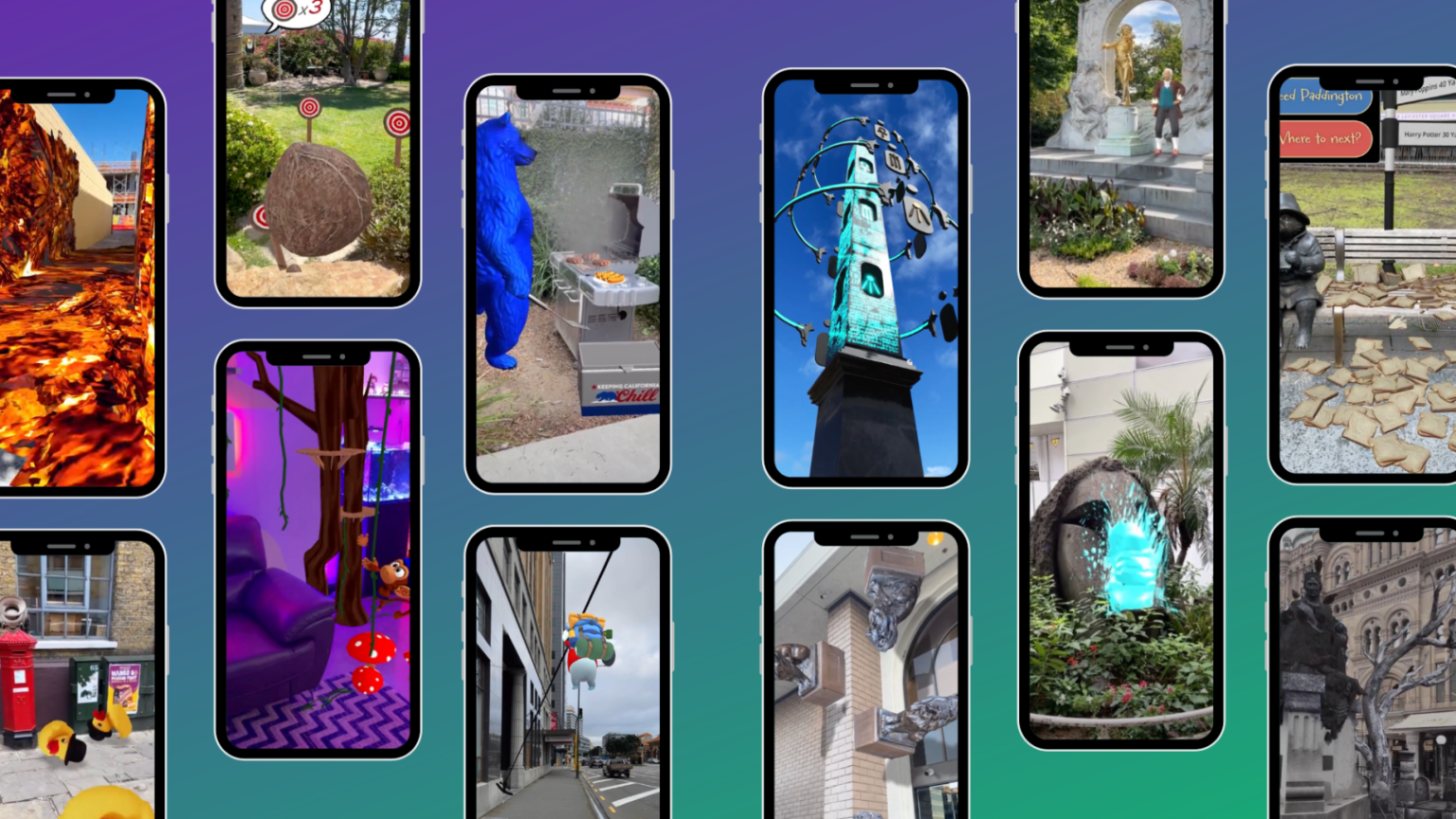
1.Niantic Brings Its Real-World Metaverse To Browsers

With the release of Lightship VPS for Web, Niantic is offering the web an even more powerful platform for augmented reality. This ground-breaking browser-based technology will link the physical and virtual worlds by anchoring Web AR (browser-based augmented reality) information to specific places and allowing virtual items to interact with the physical environment.

Lightship VPS for Web will revolutionise the world around you by offering personalised and engaging augmented reality experiences. These reality-altering applications may turn ordinary places into spectacular virtual experiences. You’ll be able to interact with the world around you in whole new ways after you’ve unlocked the digital counterpart of your surroundings. This may be accomplished by using the traffic provided by the platform’s visual location services.

Niantic CEO John Hanke stated in an official press release, “At Niantic, we believe that the real-world metaverse should engage people exploring and connecting with the world around them.” “Bringing Lightship VPS to the Web is a crucial step forward for AR, allowing developers to realistically fuse digital material to the actual environment with accuracy and permanence,” he says.

Developers that wish to develop augmented reality experiences based on real-world locales must first understand what their consumers are looking at. Creators can now produce immersive experiences that are both personal and permanent with the Lightship VPS by anchoring content to particular spots across the world using the company’s AR map.

Developers will be able to construct and maintain their own location-based web AR experiences using the Lightship Virtual Environments. They may also remotely mimic their experiences by utilising the Geo Browser on the 8th Wall platform.

Before Lightship Virtual Environments was officially released, a number of 8th Wall developers were allowed to beta test the programme by constructing their own location- based web AR experiences. These experiences have been displayed in cities all around the world, including London, Paris, Tokyo, New York, and Sydney.

More about Niantic Metaverse

Image Source: Beta News

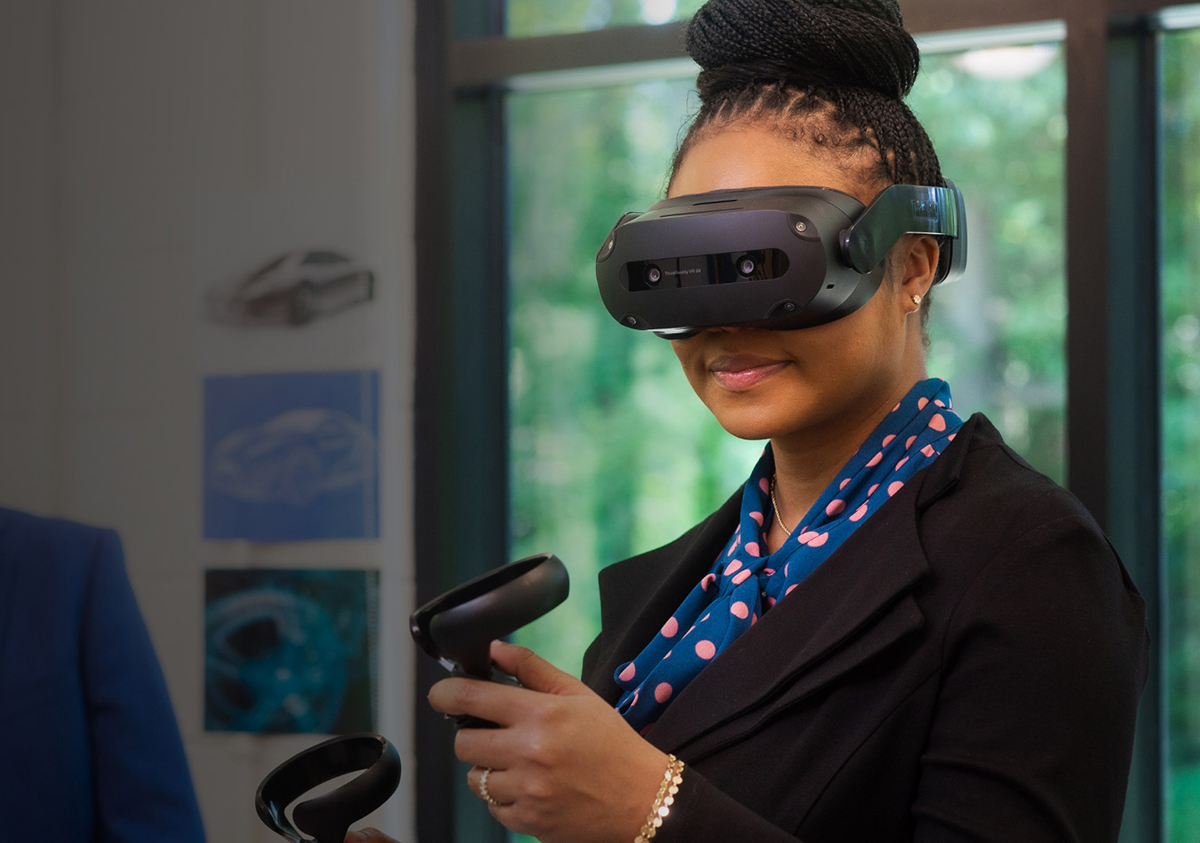
2. Lenovo Unveils Mixed Reality Headset For Businesses

Lenovo, a multinational technology corporation, presented the Think Reality VRX, an all-in- one mixed reality headset geared for enterprises, today. The enterprise-focused device supports cloud-based rendering technologies like as NVIDIA Cloud XR and has high-resolution coloured passthrough.

Research Triangle, North Carolina – September 28, 2022 – Lenovo TM today unveiled a new all-in-one virtual reality (VR) headset designed for the workplace. The Think Reality TM VRX has six degrees of freedom (6DoF) and pancake optics, as well as full colour, high-resolution pass-through capabilities for mixed reality (MR) applications. The Think Reality VRX is also backed by a comprehensive set of end-to-end services to assist organisations achieve faster time-to-solution and higher return on investment.

While the business has not released any precise specifications, we do know that the gadget includes four inbuilt cameras for inside-out tracking as well as a Qualcomm Snapdragon XR CPU. The gadget is capable of providing complete VR experiences as well as projecting virtual material into the real world.

“The Lenovo Think Reality VRX is designed to be a virtual reality solution for all employees.” Because of the realism and immediacy of new digital tools made available through extended reality (XR) devices, workforces are becoming almost time and space unbound,” noted Lenovo in an official press statement.

“From improving employee training efficiency and virtual collaboration to extending 3D design and engineering roles, XR technologies are more vital than ever for organisations, allowing hybrid staff to do more.”

The Lenovo Think Reality VRX will be available to early partners before the end of the year. The gadget will be available for purchase by the general public in certain areas beginning in early 2022, according to the business.

More about lenovo xr headset for business

Meta Quest 3
Image Source: Roadtovr

3. Meta Quest 3 Leak Suggests Cheaper Consumer Device to Soon Follow Quest Pro

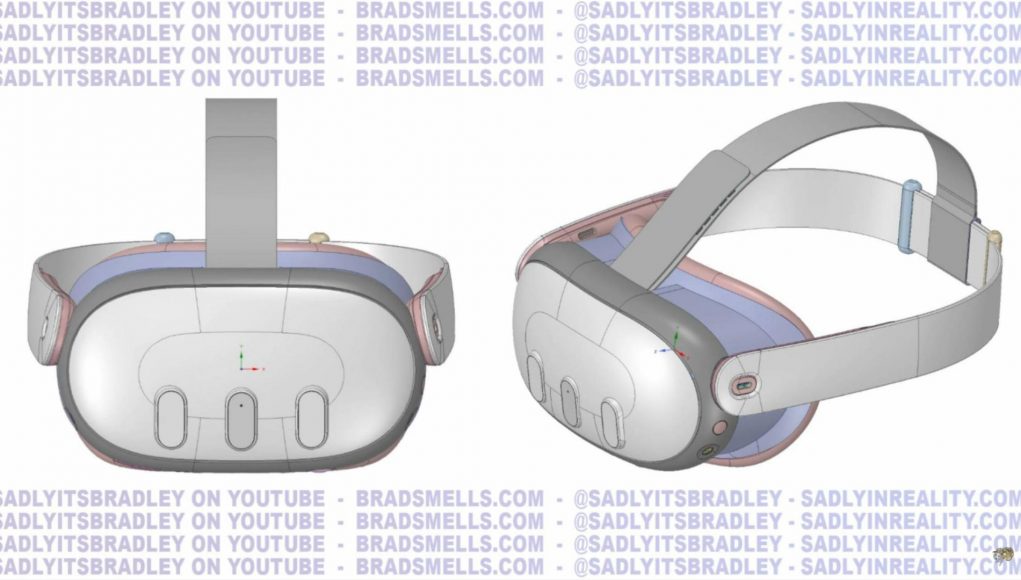
Brad Lynch (aka ‘SadlyItsBradley’) has been a major factor behind many of the previous Quest Pro leaks, and now Lynch has disclosed in a new video what he thinks to be CAD data

page2image29590128 page2image29591168

connected to a ‘lower-end’ consumer headset that follows in the footsteps of Quest 2, purportedly dubbed Quest 3.

Lynch claims that the item in issue is called ‘Stinson,’ and that it will be released in 2023. Furthermore, he claims that the headset will be a step forward from the Quest 2 and the impending Quest Pro, with the latter focusing more on augmented reality duties owing to the inclusion of a colour passthrough camera and depth sensor.

Here’s a quick rundown of Lynch’s main points:

    1. Soft strap like Quest 2 and no back-mounted battery

    2. 2 cameras for 6DOF tracking

    3. 4-camera array: 2 BW + 2 RGB

    4. Depth sensor

    5. 2 LCD displays

    6. mechanical IPD adjustments

    7. Pancake lenses

    8. No eye or face tracking

    9. Single fan design

    10. Qualcomm Snapdragon XR2 (second gen) SoC

    11. Pogo pin connector for dock charging

The headset is expected to be a lower-cost, consumer-oriented gadget that will be released after Quest Pro. Assuming the leak is genuine and represents a near-final product, it actually makes a lot of sense given that Meta may use its $800+ Quest Pro as a sort of high-end developer kit to kick off the development of a new rash of mixed reality games and experiences, with the end goal of capitalising on that new influx of content with a more commercially accessible product.

Image Source: VRScout

4. Official Matsu VR Temple Opens Inside The Metaverse

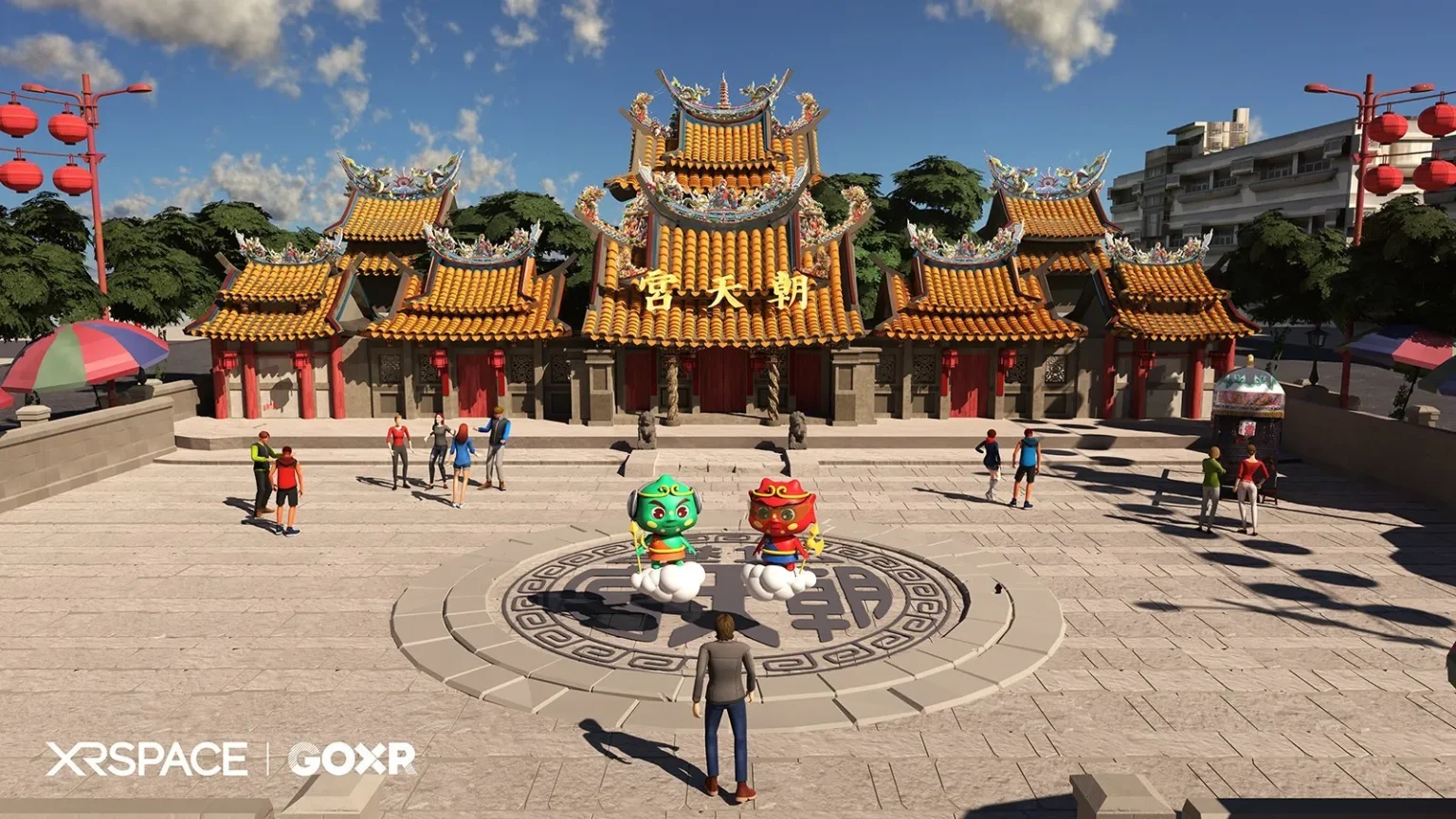
Metaverse company XRSPACE is teaming up with Meta and Taiwan Creative Content Agency (TAICCA) to build a virtual reality recreation of the famous Beigang Chaotian Temple. The Matsu metaverse will allow adherents all across the world to immerse themselves in the thousand-year-old faith in ways never previously possible.

The virtual world will be available on compatible smartphones and tablets, as well as in virtual reality via the Meta Quest 2. After logging in, followers can take part in Matsu traditions like as Fortune-Changing Bells, Fortune Poem Readings, and Moon Block Divination. Guangming Lights is another paid ceremony that involves burning a virtual light within the metaverse with a physical lantern on the grounds of the authentic Beigang temple.

The Beigang Chaotian Temple metaverse will be available on the aforementioned platform on October 4th. In honour of the platform’s grand debut, it will hold a “People’s Matsu Art Contest.” If you ever want assistance, just keep an eye out for your two tour guides: Thousand-Mile-Sight and Wind-Ears

“The metaverse is more than simply an extension of reality; it is a powerful tool for real-time interaction and connectivity.” Meta, TAICCA, and the Beigang Chaotian Temple are all thrilled to be working with XRSPACE. to better understand the Taiwan Cultural Metaverse. We will continue to advance the understanding of how metaverse experiences may support cultural stories and projects, resulting in new opportunities for Taiwan builders and producers on a global scale.”

Mr. Yung-Te Tsai, Chairman of Beigang Chaotian Temple, remarked, “Beigang Chaotian Temple has a long history as arguably the most significant Taiwanese spiritual centre for Matsu in commitment to servicing all Her devotees.” “We are constantly searching for innovative ways to expand Matsu’s international impact and connect with new generations.”

“We are happy to be collaborating with XRSPACE’s GOXR platform to interact with metaverse viewers all across the world.” As a result, we may reproduce Matsu’s rites and services for Her guests, providing new opportunities for everyone to participate in Taiwan’s traditional holidays, and we will continue to collaborate with XRSPACE on a series of cultural events to honour Matsu’s spirit and teachings.”

Read More about Matsu VR temple

Note: 

We love to provide information on different VR topics. If you are a enthusiast and want would like to know how Virtual Reality App Development Works Do visit our home page

XR News Round Up[26.09.2022] – Pico 4 launched and its giving competition to Quest!

Everyone, have a Happy Navaratri! This weekend, people in India are celebrating one of the most prominent festivals, and I am very thrilled for Dandiya, a type of dance performed during Navaratri! I wish you a nice weekend as well. 


Anyway, it’s been a fairly exciting week in the AR/VR sector as Apple’s mixed reality headgear has been the topic of much speculation in recent months and finally Pico 4, a potential rival, is here all set to disrupt and give Meta quest 2 a stiff opposition! We’ve got more stuff coming soon…… and now, let’s start another wonderful week with a roundup of news!

  1. Apple Will Release Several AR/VR Headsets, the First Mixed Reality Headset Could Be Called Apple Reality Pro

Apple’s mixed reality headgear has become the subject of much speculation in recent months. According to a new claim, the Cupertino-based company is developing at least three augmented reality and virtual reality headset devices, not just one.

According to Bloomberg’s Apple reporter Mark Gurman, Apple is working on three AR/VR headsets, with the first one, which has been rumoured, perhaps being dubbed the “Apple Reality Pro.” “headset. According to Bloomberg’s Power On newsletter, at least 3 Apple headsets with the codenames “N301,” “N602,” and “N421″ are actively in development.”

The first of these headsets, the N30, is said to be the “Apple Reality Pro,” Apple’s high-end competitor to Meta’s planned Quest Pro headset. The N602, on the other hand, is rumoured to be the successor of Apple’s original Reality Pro headset and may be less expensive. The N421 will be Apple’s long-rumored augmented reality glasses, although it may not be available for some time, according to the story.

Read More Here 

This Unique AR Fashion Show Features ‘No Clothes’

2. This One-Of-A-Kind AR Fashion Show Features ‘No Clothes’

If you’re a lover of augmented reality (AR) technology, you’ve probably come across the work of Doddz, a prominent AR designer who’s collaborated on a range of fantastic AR experiences with everyone from Disney and Facebook to Doja Cat and Drake.

The multi-talented developer has also collaborated on interactive fashion creations with celebrities such as Shaquille O’Neal and Anthony Joshua. Doddz expanded their fashion goals with a one-of-a-kind runway presentation at London’s Kacheete. The exhibition, which was created in collaboration with Snapchat, acted as a showcase for Doddz’s new AR fashion line, Defy. Rather than wearing actual clothing, attendees used the Snapchat app to project digital apparel over the models in real time.

Immersive technology is primed to be the next big thing in fashion, with the debut of AR headsets just a few years away. Major corporations have already begun to investigate how AR may be used to augment existing apparel or develop totally new combinations.

RTFKT, for example, has lately produced a selection of Nike NFT sweatshirts. Each NFT includes a tangible sweatshirt with a one-of-a-kind QR code that, when scanned, displays a pair of digital wings. Previously, the studio released the RTFKT x Nike Dunks Genesis Crypto Kicks, a pair of real sneakers with NFT equivalents.

Read More Here 

3. For Enterprise, Pico 4 Pro will have eye and face tracking as well as autoIPD.

In addition to the Pico 4 consumer headset, the business has also developed a Pico 4 Pro model geared towards enterprise use-cases. Pico 4 was unveiled this week, pitting it directly against Meta’s Quest 2. However, it looks like the company is prepping for Meta’s upcoming Project Cambria, a high-end enterprise-focused standalone headset (which is rumoured to be called the Quest Pro).

Along with the Pico 4, the business unveiled the Pico 4 Pro. The headgear, which is expected to be released later this year, seems to be roughly the same in terms of technology, but with the addition of three internal cameras for eye and facial tracking. Pico states the Pico 4 Pro will feature automated IPD adjustment with eye-tracking by monitoring the user’s IPD every time the headset is put on and then altering the IPD distance with a motorised drive. While the Pico 4 has a motorised drive, it does not include eye-tracking, hence the IPD value must be adjusted manually.

Aside from eye and facial tracking, the Pico 4 Pro looks to have the same technology as the Pico 4, including a Snapdragon XR2 CPU, 2,160 2,160 (4.7MP) per-eye resolution, and pancake lenses with a reported 105° field-of-view. A complete list of the headset’s specifications can be found here.

Pico 4 Pro, on the other hand, will be significantly different in terms of software. According to the business, the headgear would have an enterprise-focused variation of its operating system and will not require any type of “personal identity” to operate, implying no logins. Pico

has yet to disclose a particular release date or pricing for the Pico 4 Pro, however it has stated that the headset would be available in the US at some point later this year.

Read More Here 

4. Pico 4: Everything you need to know about Byte dance’s Quest 2 competitor

For the past two years, the VR market has been firmly in control. Meta Quest 2 swiftly established a quasi-monopoly by offering beginner-friendly virtual reality at an unbelievable price. The Pico 4 is the first virtual reality headset to threaten this position. It functions independently, provides well-known VR games, and costs less than a Meta Quest 2 despite having somewhat superior technology.

Byte Dance, the parent company of TikTok and a competitor to Meta, purchased Pico in the summer of 2021: The owner of the fastest-growing social network is now competing with Meta in the virtual reality industry by investing in technology and pricing its goods competitively. While Pico previously offered its VR goods primarily to corporations and Chinese customers, the company is now expanding into the Western market as ByteDance. The Pico Neo 3 Link was the first to hit the market.

Pico finally debuted the Pico 4 on September 22nd, after much speculation. This is the first time that Western consumers have the option of choosing between two low-cost standalone headsets: Meta Quest 2 and Pico 4. Although the Pico 4 incorporates certain new VR technology, it is not a direct competitor to Meta’s planned Quest Pro VR headset. The Pico 4 Pro, which will be released later, is more suited for this purpose.

Read More Here

Amaze Vr

5. AmazeVR receives a million-dollar investment following a successful virtual tour.

Following the achievement of a successful movie tour, more investors are seeing possibilities in virtual concerts and AmazeVR. AmazeVR has gained new investors, who have invested an additional $17 million in the firm. Mirae Asset Capital is leading the current Series B fundraising. This, as well as investments from Mirae Asset Venture Investment, CJ Investment, Smile gate Investment, GS Futures, and LG Technology Ventures, were renewed. CJ ENM and Krafton are two new strategic investors.

$17 million for virtual reality concerts

So far, the firm has put its technology through its paces on several tours, including specially designed concert buses and movie theatres. The firm intends to provide its digitally improved live experiences to music listeners at home beginning in the first quarter of 2023. Users will be able to witness the performances in the comfort of their own living rooms via in-home streaming for VR headsets such as the Meta Quest 2.

Megan Thee Stallion, a rap artist, poses in front of a fantastical fire ring. Megan Thee Stallion, a rap artist, is also on the list for the impending in-home streaming. AmazeVR would hope to get additional supporters by December 2022. The start-up received a $15 million investment in January. One explanation for the upbeat attitude might be the summer’s successful “Enter Thee Hottieverse” tour. Megan Thee Stallion’s virtual performance visited AMC cinemas in 15 locations, with 75 percent of seats sold out.

That’s almost 4.3 times the normal movie theatre occupancy rate of 15 to 20%, according to TechCrunch. At the same time, the $20 to $25 ticket price is much higher than the average movie ticket price ($9.17).

AmazeVR intends to provide in-home streaming in 2023.

AmazeVR intends to launch its “Music Metaverse service” in all major VR app stores in the first quarter of 2023. The business isn’t identifying specific platforms yet, but the news release teases them, including Apple’s expected VR headset: “AmazeVR is pioneering VR concert production and online distribution ahead of several big 2023 debuts, including next generation headsets like the Meta Quest Pro (October 2022) and Apple’s own VR gear.” According to CEO Ernest Lee, the fresh cash will assist develop collaborations with artists, agencies, labels, and publishers. AmazeVR also hopes to recruit celebrities to their service.

Read More Here

————–

Hope you guys doing great. We are started this round up blogs so that you will get all the important news at once. Do check out out VR solutions which we have created through the time