20 Companies That Are Using VR For Training

Companies using virtual reality training

Article Updated on June 2025

VR training can provide a number of benefits for companies, including improved learning outcomes, increased efficiency, reduced risk, and cost-effectiveness.

As a result, Virtual Reality company like Twin Reality helping Industrial companies to train their employees and improve their skills and knowledge.

Let’s get ready to know:
Case Studies

Download Our Latest EBook Here

Companies that are using virtual reality for training.

Table of Contents

Most Popular VR Headset Using by Companies for Training

Best VR Headset

Popular Among Industrial Use for VR visualisation

What is VR Training

VR training is basically using virtual reality tech to train people in a super immersive way. Instead of learning by reading manuals or watching videos, you put on a VR headset and actually step into a virtual environment that simulates real-world scenarios. It’s like you’re inside a video game, but instead of playing, you’re learning how to do a job or complete a task.

Here’s what makes VR training stand out:

Cost Savings

Data Driven Insights

Hands-On Learning Without the Risks

Full Immersion

So, in a nutshell, VR training is like stepping into a safe, virtual sandbox where you can practice real-world tasks as many times as you need to. It’s more engaging, more hands-on, and way more effective than traditional methods, all while saving companies time and money.

1. Mondelez International

TwinBIM VR Menu
TwinBIM VR Distance Calculator

Developed by Twin Reality​

we are proud to introduce a cutting-edge Virtual Reality (VR) Building Information Modeling (BIM) Visualization application designed to revolutionize the way companies plans, designs, and manages its facilities. 

This bespoke application leverages the latest in VR technology to provide immersive, real-time 3D visualisation  of building projects and infrastructure, Multiple team collaboration , Distance Calculator and many useful features in terms of Industrial Point of view.

We have provided customize application which meets the unique needs of client, enabling stakeholders to virtually walk through and interact with the 3D models of upcoming new facility.

Key Features of this TwinBIM VR application

      1. Distance Calculator: Measure distances accurately.
      2. Issue Tagging: Assign issues easily.
      3. Portal Navigation: Move through walls effortlessly.
      4. Screenshot Capture: Share area screenshots quickly.
      5. Audio to Text: Speak, convert to text.
      6. Map Navigation: Navigate areas swiftly.

As we continue to refine and expand the capabilities of our VR BIM Visualization application, we remain committed to providing clients with the tools needed to lead in the digital transformation of facility management and construction. Our partnership marks a significant step forward in harnessing the power of VR technology to create tangible value and drive forward-thinking solutions in the industry.”

Achievement

      1. Handling hevay 3D Spatial Model of 3.5GB. 
      2. Live rendering of 25 Million poly counts. 
      3. Collaborative review upto 32 users with 25.17 ms latency. 

2. Rolls Royce

Rolls-Royce began virtual reality training during Covid-19 pandemic with its two-day BR725 familiarization class. Participants joined the class remotely, logging in over the internet while wearing VR glasses and handheld VR controllers.

Students could learn about parts of the engine and components exactly as they relate to each other, either in an as-assembled view or by virtually taking them apart, assembly by assembly, piece by piece.

Rolls Royace began valuable maintenance training, to dramatically increase knowledge proficiency, accelerate skill levels, shorten learning curve, and increase retention rates.

Features of Rolls Royce VR Training

Collaboration Capability
Secure and Supported
Flexibility

3. Toyota

Toyota’s VR Dojo is a fascinating example of how tech is making its way into traditionally hands-on fields like manufacturing. So, here’s the gist of it in more human terms:

Toyota wanted to find a way to train their workers more effectively, especially when it comes to assembly line skills and safety protocols. 

They came up with this virtual reality (VR) training system, which is basically like giving their employees a way to practice on complex machinery or tasks without having to actually stop production or risk getting hurt. 

Imagine being able to screw up as many times as you need in a virtual environment until you get it right, but with no real consequences. That’s pretty much what the VR Dojo does—only, Toyota-style.

What’s cool is that it’s not just a passive learning experience. The system is tracking everything you do, from how long you take to complete a task to whether you’re getting the steps right. It’ll even flag areas where you could improve.

 So, it’s not just training, but it’s also giving you real-time feedback. The idea is that this kind of hands-on virtual practice gets people up to speed faster.

Features of Toyota’s VR Dojo VR Training

Real Time Feedback
Customized Learning Paths
Data-Driven Insights

4. Mars

Mars’ Perfect Store Assessment is basically their game plan for making sure their products are front and center in stores, set up in a way that grabs shoppers’ attention and boosts sales.

It’s not just about putting stuff on shelves—it’s about creating a shopping experience that makes people more likely to pick up Mars products. Here’s the lowdown:

  • Smart Product Placement: Mars knows that where their products sit in a store matters. The Perfect Store strategy is all about getting candy bars, pet food, and other Mars items in prime spots—like right by the checkout or at eye level where people are more likely to grab them.

  • Cool Displays: It’s not just about stacking products; they want to make sure the displays look good, too. Eye-catching setups that are easy to browse through. Think of those end-of-aisle displays that pull you in—Mars is all about making their products pop like that.

  • Shopper Behavior Data: Mars has data nerds digging into what people do when they’re shopping—like what aisles they walk down, what catches their eye, and what makes them toss something into their cart. They use all that info to set up the store in a way that makes people more likely to buy.

  • Keeping Stores in Check: After everything is set up, Mars doesn’t just walk away. They’ve got a system to check that stores are sticking to the Perfect Store plan. If things are off—maybe products aren’t where they’re supposed to be—they can fix it before it starts affecting sales.

  • Boosting Sales & Happy Shoppers: The whole point of this is pretty simple: sell more stuff and make sure shoppers are happy while they’re at it. The easier it is to find and grab Mars products, the more likely customers are to walk out with them.

  • Custom for Every Store: Mars gets that not all stores are the same. What works in a big supermarket might not fly in a small, local shop. So, the Perfect Store Assessment is flexible, making sure each store’s layout and customer base get the right setup.

  • Teaming Up with Retailers: This isn’t Mars going it alone—they work closely with the stores to figure out what’s going to work best. It’s all about teamwork to make sure the displays and product placements work for both Mars and the retailers.

Features of Mars’ Perfect Store Assessment

Strategic Product Placements
Shopper Behavior Insights
Adaptable for Different Stores

4. Siemens

Siemens, the renowned Automation Company has entered the new dimension of learning with their VR solution to provide factory training and enhance the engineering expertise of their sales force. With this groundbreaking VR technology, the company is benefitting from greater speed, effectiveness, safety, reach, and availability of 24/7 training.

  • 𝐂𝐮𝐬𝐭𝐨𝐦𝐢𝐳𝐞𝐝 𝐓𝐫𝐚𝐢𝐧𝐢𝐧𝐠 𝐒𝐨𝐥𝐮𝐭𝐢𝐨𝐧𝐬: Siemens used their digital twin data to create advanced 3D training with VR support, tailored to their products and facilities.
  • 𝐄𝐟𝐟𝐞𝐜𝐭𝐢𝐯𝐞 𝐓𝐫𝐚𝐢𝐧𝐢𝐧𝐠: Training programs are customized with increasing difficulty,
    cutting training time by up to 50% and reducing errors by up to 40%.
  •  𝐂𝐨𝐬𝐭 𝐒𝐚𝐯𝐢𝐧𝐠𝐬 𝐰𝐢𝐭𝐡 𝐕𝐢𝐫𝐭𝐮𝐚𝐥 𝐓𝐫𝐚𝐢𝐧𝐢𝐧𝐠: Siemens has been able to reduce training costs by eliminating the need for expensive physical prototypes, hardware, and tools.
  • 𝐄𝐟𝐟𝐢𝐜𝐢𝐞𝐧𝐭 𝐕𝐢𝐫𝐭𝐮𝐚𝐥 𝐓𝐫𝐚𝐢𝐧𝐢𝐧𝐠: With verifiable and flexible training methods, workers achieve the same level of knowledge faster, even at locations distributed around the world.

5. Walmart:

Walmart has used VR to train its employees in customer service, management, and other skills. The company’s VR training program allows employees to practice interacting with customers, handling difficult situations, and operating equipment in a safe and controlled environment.

One example of Walmart’s VR training program is the “Walmart Academy,” which is a comprehensive training program that teaches employees about customer service, product knowledge, and other skills. 

The program includes VR simulations that allow employees to practice interacting with customers, handling difficult situations, and operating equipment.

According to Walmart, the VR training program has been successful in improving employee performance and customer satisfaction, and the company plans to continue expanding its use of VR training in the future.

Overall, Walmart’s VR training program is an example of how companies can use VR technology to improve the efficiency and effectiveness of their training programs and help employees develop new skills and knowledge.


6. Lowes:

Lowes, a home improvement retailer, has used VR to train its employees in customer service, sales, and product knowledge. The VR training program allows employees to practice interacting with customers and providing product recommendations in a safe and controlled environment.

One example of Lowes’ VR training program is the “Lowes Virtual Reality Training Center,” which is a state-of-the-art training facility that utilizes VR technology to teach employees how to provide excellent customer service and recommend products to customers.

The VR training program includes simulations of various customer interactions, allowing employees to practice interacting with customers and providing product recommendations in a realistic, simulated environment.

Case Studies

Download Our Latest EBook Here

7. Johnson & Johnson:

Johnson & Johnson has used VR to train its surgeons in complex procedures, allowing them to practice surgeries and procedures in a simulated environment before performing them on real patients. 

The VR training program has helped the company improve the skills and knowledge of its surgeons, leading to better patient outcomes.

8. United Rentals:

United Rentals vr

United Rentals, a provider of construction and industrial equipment, has implemented VR training to teach employees how to operate and maintain its equipment.

The VR training program allows employees to practice using the equipment in a simulated environment, reducing the risk of accidents and injuries.

One example of United Rentals’ VR training program is the “Virtual Reality Training Center,” which is a state-of-the-art training facility that utilizes VR technology to teach employees how to operate and maintain various types of equipment. 

The VR training program includes simulations of various equipment, including forklifts, scissor lifts, and boom lifts, allowing employees to practice using the equipment in a realistic, simulated environment.

According to United Rentals, the VR training program has been successful in improving employee performance and reducing the risk of accidents and injuries, and the company plans to continue expanding its use of VR training in the future.

9. The Home Depot:
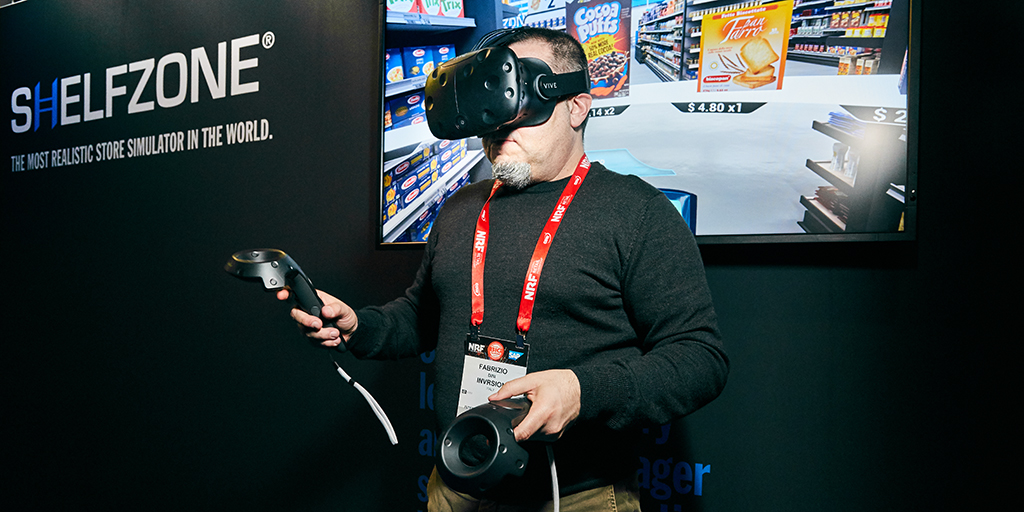
The Home Depot vr

The Home Depot has implemented VR training to teach its employees how to operate and maintain equipment, including forklifts and other heavy machinery. 

The VR training program allows employees to practice using the equipment in a simulated environment, reducing the risk of accidents and injuries.

One example of The Home Depot’s VR training program is the “The Home Depot Virtual Reality Training Center,” which is a state-of-the-art training facility that utilizes VR technology to teach employees how to operate and maintain various types of equipment. 

The VR training program includes simulations of various equipment, such as forklifts, scissor lifts, and boom lifts, allowing employees to practice using the equipment in a realistic, simulated environment.

10. UPS: Transforming Driver Safety Training with VR

To improve driver hazard awareness, safety protocols, and delivery accuracy by immersing trainees in lifelike virtual driving and logistics scenarios—without the cost and risk of real-world training from day one.

What the VR Training Covers

    1. Pre-Trip Vehicle Inspection
      Trainees check mirrors, tires, brake lights, and under-the-hood components in a virtual delivery truck before beginning their route.

    2. Hazard Recognition in Urban Environments
      Learners experience 360° simulations of busy city streets and must spot pedestrians, cyclists, road signs, and unpredictable vehicles.

    3. Parking and Package Handling

      • Learn how to safely park on narrow streets or loading docks.

      • Practice proper lifting and delivery procedures in different environmental conditions (rain, night, snow).

    4. Driver Distraction and Judgment Drills
      Real-time branching choices test how they respond to distractions, time pressure, and split-second decisions.

11. Delta Air Lines:
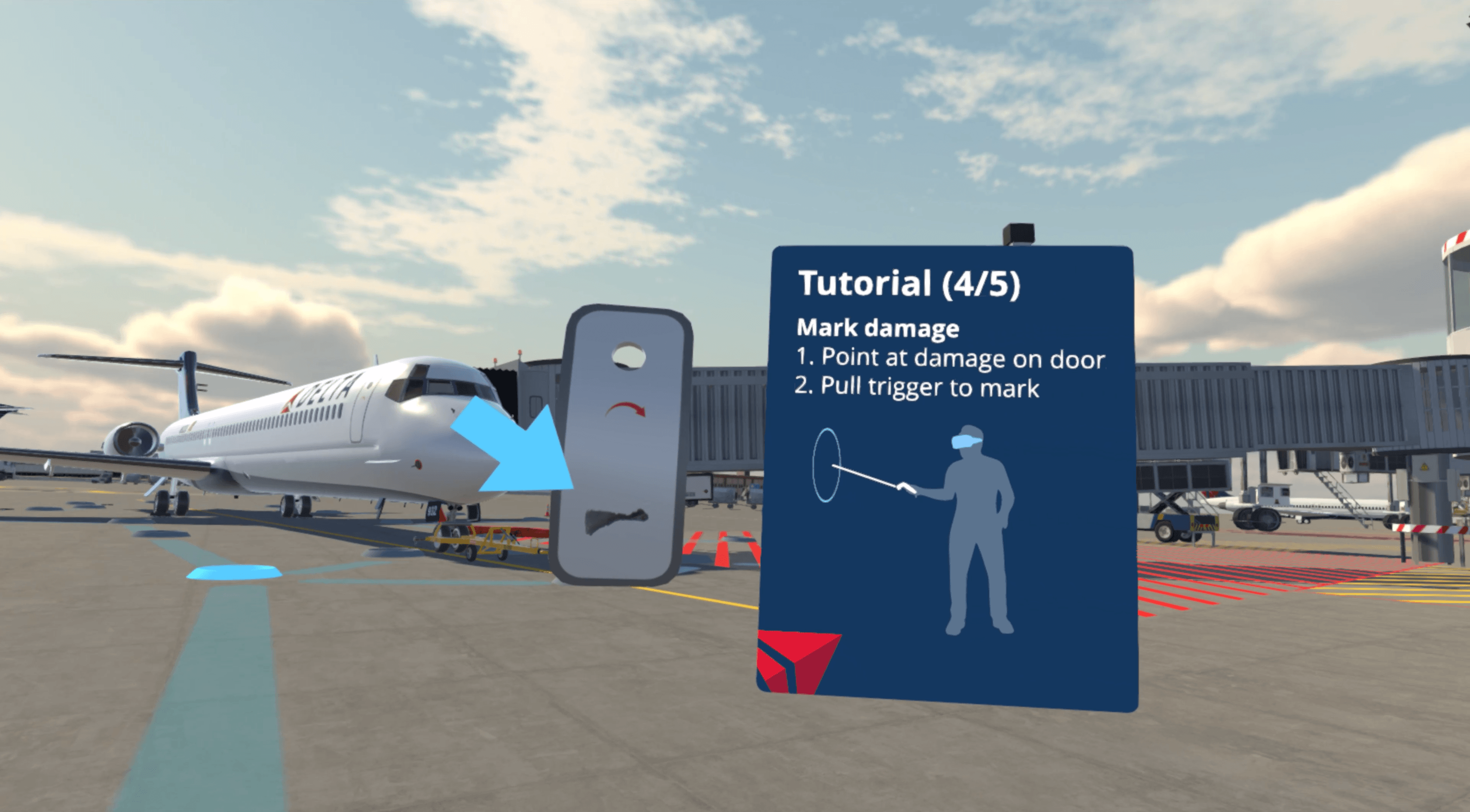
Delta Air Lines has implemented VR training for its flight attendants, allowing them to practice emergency response procedures and customer service skills in a simulated environment. 

The VR training program has helped the airline improve the efficiency and effectiveness of its training programs.

One example of Delta Air Lines’ VR training program is the “Delta Virtual Reality Training Center,” which is a state-of-the-art training facility that utilizes VR technology to teach flight attendants how to respond to emergencies and provide excellent customer service. 

The VR training program includes simulations of various emergency scenarios, such as medical emergencies, fires, and evacuations, allowing flight attendants to practice these procedures in a realistic, simulated environment.

12. Alcoa:
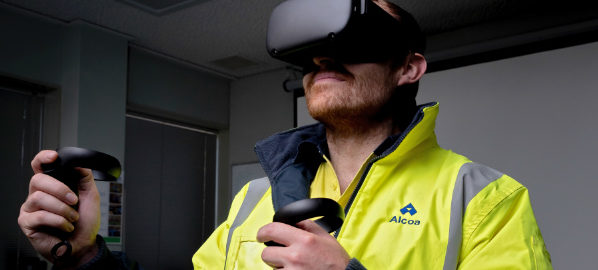
Alcoa, a global aluminum company, has used VR to train its employees in safety procedures and equipment operation. The VR training program allows employees to practice these skills in a simulated environment, reducing the risk of accidents and injuries.

One example of Alcoa’s VR training program is the “Alcoa Virtual Reality Training Center,” which is a state-of-the-art training facility that utilizes VR technology to teach employees how to operate and maintain complex machinery and equipment.

 The VR training program includes simulations of various equipment, such as furnaces, rolling mills, and casting machines, allowing employees to practice using the equipment in a realistic, simulated environment.

13. Walgreens:
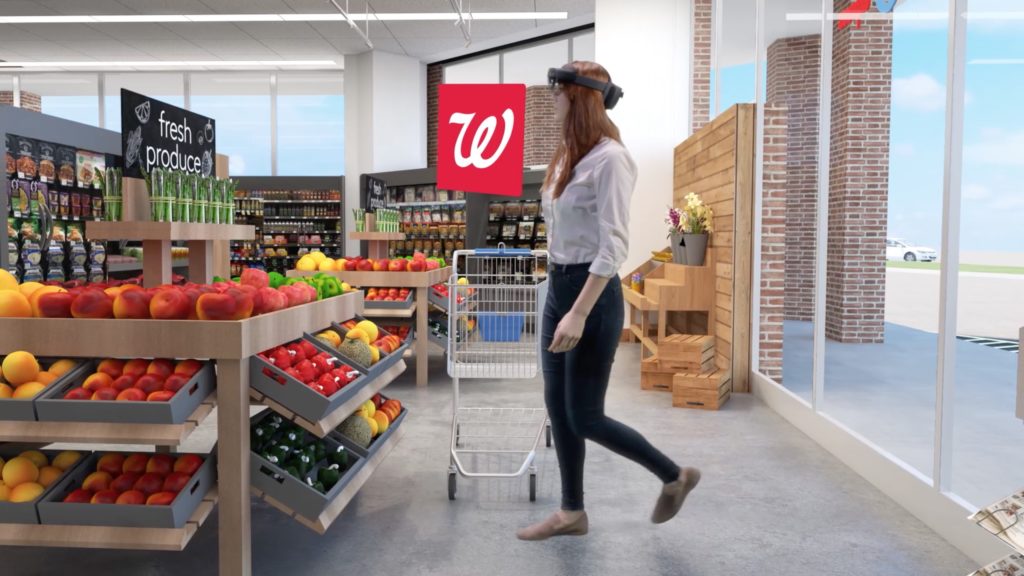
Walgreens VR

Walgreens, a pharmacy and healthcare company, has used VR to train its employees in customer service and other skills. 

The VR training program allows employees to practice interacting with customers and handling difficult situations in a safe and controlled environment.

14. Mercury Engineering

Mercury Engineering is a leading European company specializing in construction solutions and engineering services for various industries.

The services they provide includes: Construction Solutions, Engineering Solutions

Company has recently developed – Work At Height VR Safety Training

Work At Height VR Safety Training is pivotal as it provides an immersive and interactive experience, enhancing learning and retention of safety protocols. 

This training allows workers to practice in a risk-free, realistic environment, enabling them to understand the dangers and consequences of height-related mishaps without real-world risks. 

It builds confidence in following safety procedures and using equipment, ensuring better preparedness for real-world scenarios. 

Furthermore, it offers a cost-efficient and accessible way to train a large workforce consistently and provides immediate assessment and feedback, allowing prompt identification of areas for improvement.

In essence, it’s a revolutionary method to bolster workplace safety by thoroughly preparing employees for the challenges of working at elevated heights.


15. Volvo Group

Volvo Group is a multinational organization that specializes in transportation, mobility, and construction equipment solutions, serving a diverse range of customers and markets worldwide.

Recently They have developed multiple virtual reality training with oculus headset. 

  1. E-mob Training Application In the training we can see that it’s a multiplayer module where different team members can collaborate. Team can inspect the 3d model the truck on different levels and understand the issues


  2. LNG Training Application – In this training team can learn to change the LNG Tank.

16. Medtronic

This Medical VR Training is developed to understand HysteroLux fluid managment system.

The training shows step by step method to understand the system and to practice it.

The benefit of a VR training app specifically for the HysteroLux system is that it allows healthcare professionals to gain practical knowledge and experience with the system in a controlled and risk-free virtual environment. This is particularly important for the HysteroLux system, as it is used for delicate medical procedures.

The VR training app can help in reducing errors by allowing practitioners to familiarize themselves with the functionalities and operation of the HysteroLux system before they use it in real medical scenarios. 

It enables users to practice and refine their skills, ensuring they are well-acquainted with the system, thus enhancing the overall safety and effectiveness of the medical procedures involving the HysteroLux system.


17. Pfizer – Stroke VR Training

To improve how medical professionals—especially junior doctors and ER teams—identify, assess, and treat stroke patients through real-time decision-making and procedural practice in a virtual hospital environment.

🧪 What the VR Training Covers

1. Simulated ER Environment

Learners interact with a virtual patient showing stroke symptoms in a hospital setting. They walk through:

    • Symptom recognition (e.g., facial droop, arm weakness, speech)
    • Patient triage and handoff procedures
    • Time-sensitive decision-making for thrombolysis or thrombectomy
    • Post-treatment care steps

2. Interactive & Immersive

The simulation mimics high-pressure environments where “time is brain”—the faster a stroke is treated, the better the patient outcome.

3. Voice Commands & Decision Trees
Users respond using natural voice commands, enhancing realism and allowing branching dialogue with virtual nurses and patients.

🧪 What the VR Training Covers

1. Simulated ER Environment

Learners interact with a virtual patient showing stroke symptoms in a hospital setting. They walk through:

    • Symptom recognition (e.g., facial droop, arm weakness, speech)
    • Patient triage and handoff procedures
    • Time-sensitive decision-making for thrombolysis or thrombectomy
    • Post-treatment care steps

2. Interactive & Immersive

The simulation mimics high-pressure environments where “time is brain”—the faster a stroke is treated, the better the patient outcome.

3. Voice Commands & Decision Trees
Users respond using natural voice commands, enhancing realism and allowing branching dialogue with virtual nurses and patients.

18. Coca‑Cola – Sanitization Processes (2024)

To train production line employees on sanitization procedures in Coca‑Cola bottling facilities using immersive VR—ensuring safety, hygiene compliance, and efficiency without disrupting actual factory operations.

🧪 What the VR Training Covers

1.Clean-In-Place (CIP) Protocols
Users step through the sanitization process of machinery and fluid lines without touching real equipment—minimizing risk and downtime.

2. Tank & Equipment Cleaning Sequences
VR modules demonstrate:

      • Proper disassembly of parts
      • Safe handling of chemicals
      • Sequenced washing, rinsing, and drying operations

3. Safety Protocols & PPE Checks
Before starting, trainees must put on gloves, eyewear, and suits in the correct order—a gamified PPE compliance drillensures readiness.

4. Hazard Recognition & Emergency Response
Trainees must identify errors like incorrect valve settings or chemical leaks and respond using in-VR prompts and real-time decision making.

19. Hilton: Elevating Hospitality Training Through VR

To enhance the way Hilton team members—especially frontline staff—are trained in customer service, empathy, and property operations using immersive virtual reality. The goal: deliver consistent 5-star service across properties worldwide while improving employee confidence and emotional intelligence.

🧪 What the VR Training Covers

1. Guest Interaction Scenarios
Employees interact with virtual guests to learn:

    • Greeting and welcoming techniques
    • Conflict resolution (e.g., delayed check-ins, wrong room types)
    • Upselling and concierge services
    • Handling complaints with empathy

2. Housekeeping & Property Tours
Trainees walk through virtual rooms to:

    • Identify cleanliness issues
    • Spot inconsistencies in room setup
    • Learn SOPs for room turnover

3. Team Collaboration Modules
In multi-role simulations, team members work together virtually—front desk, housekeeping, security—to understand each other’s challenges and roles.

4. Cultural Sensitivity & Empathy Drills
Trainees experience customer interactions from both the staff and guest’s point of view, boosting emotional intelligence and cross-cultural communication.

20. NHS – Racism & Discrimination Awareness

To help healthcare workers better understand racism and unconscious bias by experiencing discriminatory situations from the first-person perspective—a method proven to foster empathy and change behavior.

The NHS (National Health Service, UK) piloted VR training as part of a wider Equality, Diversity & Inclusion (EDI)effort to address complaints and raise awareness of systemic inequalities across the health service.

🧪 What the VR Training Covers

1. Experiencing Racism Firsthand

    • Trainees step into the role of a healthcare worker from an ethnic minority background.
    • Scenarios include being talked over, unfairly questioned, or left out of decision-making.

2. Role Reversal

    • Staff also experience scenes from the perspective of colleagues unintentionally contributing to a hostile environment, helping them recognize microaggressions and unintended bias.

3. Interactive Decision-Making

    • Users choose how to respond to discrimination, see the effects of passive vs active intervention, and receive AI-driven feedback.

4. Debrief & Discussion

    • Each session ends with guided reflection and group discussion, led by trained facilitators using insights from the VR scenario.

Frequently Asked Questions

VR training enables companies to bridge skills gaps and instill transferable, enterprise skills within their employees

Yes, leading companies are using VR specifically for soft skills training. Managers can even review practice conversations conducted in VR and work with employees to refine their skills

Industries like healthcare, automotive, logistics, and safety have shown notable examples of virtual reality training applications

Companies like VirtualSpeech offer specific solutions aimed at using VR for corporate training, emphasizing both hard and soft skills

The year 2023 has seen significant advancements in the ways companies leverage VR for training, ranging from customer experience training to upskilling business practices

Virtual reality training offers an interactive way to learn, practice, and hone skills in a controlled, simulated setting, ensuring a safer and more effective learning experience

Retail is one of the sectors that has integrated VR in its training methods, with various use cases and examples showcasing its effectiveness[

The increasing use of VR in training signifies a growing trend in 2023, with companies investing more in these immersive technologies to elevate their training programs

Top 7 VR industrial training applications

Industrial VR application

Hey there! I’m a total tech nerd. Lately, I’ve been super into Virtual Reality Simulations. It’s not just for games, you know. It’s actually helping in real-life stuff like job training.

Factories and other industrial places can be pretty tough. People need good training. But the old ways don’t always work. That’s where VR comes in. It lets people practice the real job, but without the risk.

VR is changing job training big time. It makes you feel like you’re at an oil rig, on a factory line, or even in a surgery room. And you’re just in a training room!

So, what’s next? I’ll talk about how VR is used in real job training. Like training forklift drivers or teaching welders. The aim is to show how VR can make training safer, cheaper, and better. Let’s go check it out!


Table of Contents

Forklift Simulation:​

Training forklift operators is a significant challenge in warehouse settings due to the inherent dangers involved. 

VR-based forklift training programs can simulate the experience of operating a forklift in a busy warehouse environment, with realistic physics, sounds, and scenarios such as stacking pallets, navigating through narrow aisles, and avoiding collisions with people or other equipment. 

This helps to reduce accidents and improve efficiency.

Welding Simulation

Welding is a critical skill in several industries such as manufacturing, construction, and automotive.

However, traditional welding training can be expensive and potentially dangerous. 

VR-based welding simulators allow trainees to practice various welding techniques and scenarios without the risk of physical harm, reducing training costs, and improving safety.

Crane Operations:

Similar to forklifts, cranes can also be difficult and dangerous to operate, particularly in busy construction sites.

VR crane simulators can replicate the entire process of operating a crane, including hoisting, hooking, and unloading items, all while navigating a realistic construction site. 

This can help new operators become more confident and proficient before operating the real equipment.

Eectrical Circuit Troubleshooting

Working with electricity can be dangerous without the proper training.

VR can simulate a wide variety of electrical circuits, faults, and scenarios, providing a safe and interactive platform for electrical engineers and technicians to learn and practice troubleshooting techniques.

Chemical Plant Operations:

VR can simulate the complex processes involved in a chemical plant, including handling hazardous materials, understanding the flow of materials, and learning how to operate and troubleshoot equipment. 

This can significantly reduce the risk and cost associated with traditional hands-on training.

Conclusion

So that’s it! VR isn’t just for playing games anymore. It’s helping people learn their jobs better. Like driving forklifts. Or welding. Even in safety training, VR is making a big difference.

It’s also helping people learn how to work on assembly lines. Or fix and maintain machines. It’s even teaching people how to handle dangerous stuff safely.

In short, VR is changing how we learn our jobs. It’s making training safer and better. And I think that’s pretty amazing. I’m excited to see where it goes next!

Revolutionizing Training in the Manufacturing and Engineering Industry with VR

Industrial Training with VR

In recent years, Virtual Reality industrial trainings has emerged as a transformative technology with the potential to revolutionize various sectors, including the manufacturing and engineering industry. 

Traditional training methods in these industries often involve high costs, safety risks, and limited accessibility. 

However, VR training offers a groundbreaking solution by providing immersive and interactive experiences that enable employees to learn in a virtual environment.

Virtual reality is all about democratizing storytelling. It gives people more control over the experience. Instead of trying to force a story upon you, we try and give you this huge playground through which you will create stories that you will then share through this medium.

Table of Contents

This blog will explore the benefits and applications of VR training in the manufacturing and engineering industry, highlighting its potential to enhance efficiency, safety, and productivity.


Learning in VR

Enhancing Learning through Immersion:

VR training enables trainees to step into a virtual environment that simulates real-life scenarios, providing a high level of immersion. 

This immersive experience allows employees to learn by doing, enhancing their understanding of complex manufacturing processes and engineering concepts. 

For example, trainees can practice assembly line operations, equipment maintenance, or even experience hazardous situations in a safe and controlled virtual environment.

By engaging multiple senses and promoting active participation, VR training boosts knowledge retention and skill development.

VR use for safety training

Improving Safety:

Safety is paramount in the manufacturing and engineering industry. VR training offers a safe environment to learn and practice safety protocols without exposing trainees to real-life hazards. 

By simulating dangerous scenarios, such as handling hazardous materials or operating heavy machinery, VR training ensures that employees are well-prepared to deal with potential risks. 

Furthermore, trainees can learn emergency response procedures and practice them in realistic simulations, empowering them to act swiftly and effectively in critical situations.

Cost and Time Efficiency:

Traditional training methods often involve significant costs related to equipment, materials, and facility setup. 

Additionally, the time required to coordinate training sessions and gather resources can be extensive. 

VR training eliminates many of these expenses by providing a virtual platform that requires minimal physical resources. 

Once the virtual environment is created, it can be replicated for multiple training sessions, reducing costs associated with repetitive training. 

Moreover, VR training enables employees to learn at their own pace, allowing for flexible scheduling and reducing the time required for training.

Accessible and Scalable Training:

One of the challenges in the manufacturing and engineering industry is the accessibility of training programs. 

VR training overcomes geographical limitations by providing remote access to training modules. This means that employees across different locations can receive consistent and standardized training without the need for travel. 

Furthermore, VR training can be easily scaled to accommodate the growing workforce, as virtual simulations can be replicated and shared across various devices, making it accessible to a larger number of trainees simultaneously.

Real-Time Feedback and Performance Assessment:

VR training offers real-time feedback, enabling trainees to learn from their mistakes immediately.

 Virtual environments can track and analyze trainees’ actions, providing comprehensive performance assessments. 

This feedback allows employees to identify areas of improvement and refine their skills. 

Furthermore, VR training can generate performance metrics and progress reports, enabling employers to assess the effectiveness of the training program and identify areas that require additional focus or improvement.

Simulating Complex Scenarios and Specialized Skills:

Manufacturing and engineering industries often involve intricate processes and specialized skills. 

VR training can effectively simulate complex scenarios and provide trainees with hands-on experience in dealing with challenging situations. For instance, VR can be used to simulate intricate assembly processes, fine-tuning welding techniques, or training for operating specialized machinery.

 By practicing in a virtual environment, trainees can refine their skills and gain confidence in handling complex tasks before applying them in the real world.

Collaboration and Remote Training:

In addition to individual training, VR platforms enable collaborative learning experiences. Trainees can participate in virtual group exercises, allowing them to work together and practice teamwork in a simulated environment. 

Moreover, VR training can facilitate remote collaboration, bringing together experts and trainees from different locations in a shared virtual space. 

This capability is particularly valuable in industries where specialists or trainers may not be physically present at every location, ensuring consistent knowledge transfer and fostering a culture of collaboration.

At the moment, VR is really about lessons learned. It's in an exciting (and frightening) experimentation stage, something that might not be perfect during the first go-around but should still be invested in. This is the way we will start breaking new ground and challenging the norms.

Conclusion

Virtual Reality (VR) training has immense potential to revolutionize the manufacturing and engineering industry.

Its immersive nature, cost efficiency, scalability, and ability to simulate complex scenarios make it an ideal tool for training and skill development. By leveraging VR, organizations can enhance learning outcomes, improve safety, and increase productivity. 

As technology continues to advance, we can expect VR training to become an integral part of training programs, providing employees with the skills and knowledge they need to thrive in the manufacturing and engineering sectors.


XR News Round Up[19 Dec 2022]: VR mastermind John Carmack leaves Meta

John Carmack

It’s December, which means Christmas, the holidays, and New Year’s Eve are approaching. Well, we know you’re not getting over that thrilling final like dammit! Anyway, the GOAT debate is done, and Mbappe has won all of our hearts, and you’re probably wondering what we’re supposed to do now that FIFA is over that is why we are here to entertain you with the latest innovative news on AR/VR, so let us close this year with some fantastic news roundups! But, as you wait for the days when you can finally unwind, enjoy this roundup of the week’s most intriguing XR news!

1.The NBA’s Official AR Game Launches January 2023

NBA’s Official AR Game

Niantic’s next augmented reality game will be available free to play on iOS and Android smartphones.

This past June, we learned that the National Basketball Association (NBA) and National Basketball Players Association (NBPA) are partnering with Niantic, the developer behind Pokémon GO and Pikmin Bloom, on NBA All-World, a location-based augmented reality (AR) mobile game that will have you exploring the real world in search of digital collectibles and interactive mini-games.

We learnt this week that the officially licenced game will be available for iOS and Android devices on January 24th, 2023. The news was made alongside a brief video teaser on the game’s official Twitter account.

According to the crew, further behind-the-scenes footage and player lessons will be provided in the following weeks. As you battle head-to-head with NBA luminaries, you’ll need all the aid you can get. As you conquer the virtual court, you’ll get access to officially licenced NBA items that you can use to personalise you’re in-game character. NBA All-World is set to debut on January 24th, 2023. The game will be accessible for free on iOS and Android smartphones.


page1image49435520

2.How Meta is Approaching the Future of work

The parent company of Facebook is shaping the next generation of work

Meta, a leading immersive technology start-up, showed its Meta Quest Pro and Horizon Workroomsapplications last Thursday at its Kings Cross Office in London. The display was designed to demonstrate Meta’s objective of influencing the future of work through immersive mixed reality (MR) solutions.

Steve Hatch, Meta’s VP for Northern Europe, began the seminar by pointing out how drasticallydifferent some regions work now compared to the Covid limitations of the past. Remote and hybrid working has become more popular since the Covid epidemic. Furthermore, the advent of videoconferencing and new immersive collaboration solutions is supporting firms in taking advantage of remote working arrangements.

Hatch stated:

“Not long ago, the concept of flexible work or remote work was viewed as a bonus, a benefit, or perhaps something a bit less desirable at times. But now, I believe that every organisation recognises that the capacity to operate in more flexible ways that are centred on people is the only way for them to thrive”.

Businesses may better prepare themselves to tackle the future of work as a result of a better knowledge of remote employment. Remote or hybrid working is debatably the most effective type of employment with video conferencing equipment. However, remote corporate cooperation is not without flaws. Factors like as Zoom fatigue, a lack of human ties, and a loss of corporate culture pose new challenges for B2B digital service providers to address.

Meta on Work’s Future Securing

Many immersive companies, such as Meta, feel that current remote working issues may be solved with extended reality (XR) solutions. Furthermore, many classic digital communications tools are integrated into immersive collaboration solutions and remote instruction systems. An immersive hardware solution might enhance how workers explore applications like Teams or Zoom utilising technologies like smart glasses with eye-tracking.

Meta’s product portfolio also seeks to provide the greatest enterprise grade for users and clients. Many factors influence the effective implementation of an immersive collaboration system. Inclusion is critical, and Meta is striving to develop an experience that mirrors the interactions of its users and employees with a business. Horizon Workrooms allows users to portray themselves anyway they want with features such as avatar customization. Horizon users may also customise their avatar clothes to fit different digital social contexts.

Horizon Workrooms in Action

A significant event of Meta’s demonstration evening was a hands-on demo of the freshly released Meta Quest Pro and the Horizon Workrooms environment. Meta employees set up two distinct conference rooms, each with a Meta Quest Pro for each attendee. Following a brief orientation, the invited groups entered a shared immersive Workroom environment.

While Meta separated the two groups into different rooms, the immersive avatar and spatial audio systems rapidly captivated everyone. Meta officials also took advantage of the opportunity to demonstrate the hand-tracking capabilities of the Quest Pro. While originally challenging to learn, Meta’s hand-tracking system has improved compared to Quest 2. Users must pinch a selected option to navigate menus in the Meta Quest Pro. Again, Quest Pro navigation is challenging at first, however it should be emphasised that hand-tracking technology is still very new, so users can expect a minor learning curve. Meta demonstrated numerous immersive settings at the event. A representative described how a corporation might insert its brand within an immersive workspace to personalise the setting.

The participants were immersed in the scenario, but corporate officials guided the session to ensure it ran well. Of course, not every contemporary firm has the skills or resources to use the Workroom programme at the same degree of proficiency. Meta is collaborating with significant client Accenture to boost the deployment of its immersive workplace technologies across the organisation. Although the display was spectacular, it primarily depicted the level of XR now, rather than future.


3. HTC’s VR/AR Headset Will Be Revealed at CES 2023

HTC’s VR/AR Headset

The mixed reality gadget will allegedly have a lightweight design as well as hand-tracking capability. HTC revealed this week that it would launch a new consumer-friendly VR headset next month at CES 2023 in Las Vegas, Nevada. According to The Verge, the all-in-one VR gadget is being positioned as a direct competition to Meta Quest Pro.


“It’s about taking all of these advances that we’ve made in not just the design components, but also the technological bits, and turning them into something that’s significant and compelling for customers,” HTC’s global head of product, Shen Ye, told The Verge in an interview. According to the rumour, the mystery standalone gadget will have compatibility for both VR as well as augmented reality (AR) activities. Front and side-facing cameras will deliver full-color mixed reality comparable to that of Meta Quest Pro. You can also connect the gadget to a VR-capable PC to have access to more sophisticated material.
Not only that, but owing to built-in hand-tracking, you’ll be able to interact with games and applications with your bare hands. Shen Ye added that the gadget is built for gaming, entertainment, and fitness as well as productivity and enterprise.


According to The Verge, the following are some major features:
• Mixed reality in full colour
• Hand-tracking
• 2-hour battery life
• six degrees of freedom (6DoF)
• Stand-alone functionality
• A depth sensor for more sophisticated room mapping

According to XR hardware researcher Brad Lynch, the lightweight gadget might include a modular construction with pancake lenses to minimise its total size. It appears like we will hear more about the
hybrid VR/AR gadget next month at CES 2023.


4.Microsoft announces huge momentum on HoloLens, fully integrates Teams

Microsoft announces huge momentum on HoloLens

Microsoft has combined several of its collaborative tools for augmented reality.


What you should know
• Microsoft has published a number of success stories related to their HoloLens 2 headgear.
• Dynamic 365 Guides and Dynamic 365 Remote Assist have been combined into a single
experience by the firm.
• Microsoft Teams now fully integrates with HoloLens 2, giving an experience suited for the
augmented reality headset’s virtual canvas.
• Microsoft also detailed the HoloLens platform’s future, including indications of a HoloLens 3.


Microsoft published a pair of blog entries (opens in new tab) outlining the progress and success of its HoloLens 2. The tech giant has brought together several of its popular services and capabilities to boost cooperation within augmented reality. Full Microsoft Teams integration with HoloLens 2 is the highlight of a slew of collaboration-focused upgrades. Microsoft also highlighted other agreements, including its work with Toyota. The business also talked about, or hinted at, the upcoming iteration of HoloLens. The HoloLens 3, or whatever Microsoft decides to call its future AR headgear, is said to be in limbo.  Microsoft has gone on record today, declaring that the next gadget must represent a “significant” leap in hardware and capabilities.

Microsoft has had collaboration features since the release of the HoloLens, but it is now combining them. Microsoft 365 Guides and Microsoft Dynamics 365 Remote Assist are now available through a
single experience. The integrated technologies allow users to transition between different modes of cooperation, such as Microsoft Teams meetings and leading people through a process using first-
person recording and augmented reality advice. 

“Someone can pick up a HoloLens, launch a Guides session, and have a trainer actually in their mind,” stated Scott Evans, Microsoft Vice President of Mixed Reality. “If they do need help, they can call an expert immediately from the app.”

Microsoft Teams and Microsoft HoloLens 

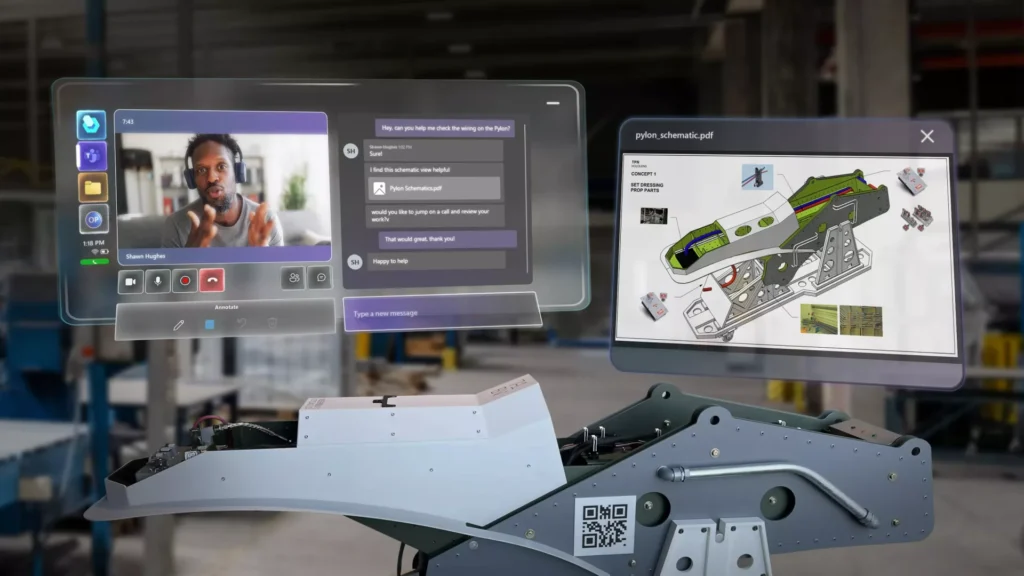
The mixed reality toolbar in Teams desktop allows players to mark up the actual environment seen by a HoloLens 2 headset. A person on a desktop can draw on their own screen and have those markings joined in virtual space to the perspective of a HoloLens 2 user. The phrase “electronic commerce” refers to the online sale of products and services. Instead of a single virtual window for Teams, distinct functions can be divided into resizable holograms. According to Microsoft, a user has one window
displaying a shared PDF document and another displaying a video call and a chat thread.


A narrative of pounding a door guard on a car was used to highlight the benefits of HoloLens 2. A worker at a Toyota Logistics Center in New Jersey tried to pound the panel with the proper amount of
power. Using too much or too little power might jeopardise the work. A colleague in California may guide the worker using HoloLens 2, encouraging them to listen for a certain sound and then passing
that tone through. Instead of merely being utilised to assist in a single situation, the experience was filmed using HoloLens 2 and uploaded as a Microsoft Dynamics 365 Guide to assist future personnel.

5. VR mastermind John Carmack leaves Meta for good and goes all in on AGI

John Carmack, the father of virtual reality, is leaving Meta for good. The industry has lost a visionary and a vital voice with his departure.


After portions of the correspondence were exposed to the public, Carmack published his departure letter on Facebook. Carmack, as usual, is blunt in his message to staff. He cites inefficiency and his
inability to alter anything about the situation as causes.


“We have a fantastic quantity of employees and resources, but we constantly self-sabotage and waste effort. The term “responsible tourism” refers to the practise of allowing people to visit a location
without having to pay a fee. It’s been challenging for me. I have a strong voice here, so it appears like I should be able to move things, but I’m clearly not persuasive enough.”


Carmack, who is tired of battling, claims to have his own business to operate. But the struggle for virtual reality’s success is still winnable, he believes. “Enough with the whining. I wearied of the struggle and have my own business to run, but the war is still winnable! VR can deliver benefit to most of the people in the world, and no firm is better positioned to achieve it than Meta.”


Carmack’s VR career: from pioneer to critic Carmack spent a little more than a decade in the VR sector, changing it significantly. In 2012, the famed coder launched the VR buzz, joined Oculus a year later as
chief technology officer, and continued in that post after Facebook purchased the firm. He spearheaded the development of Samsung Gear VR and Oculus Go, two VR devices that paved the road for Meta Quest.


Carmack’s idea from the start was for VR to be self-contained, with no cords, external sensors, or connections to other players. An insight that eventually proved to be ground-breaking, propelling Meta Quest 2 to become the most popular VR headset to date. He stepped down as Oculus’ chief technical officer at the end of 2019 to focus on artificial intelligence research. From then on, he worked with Meta as an external consultant. Carmack said in August that he still spent roughly 20% of his work time on VR and AR projects for the firm.


Carmack and Zuckerberg disagree.


The phrase “electronic commerce” refers to the sale of electronic items. The programmer criticised expensive costs and wasted resources in an interview with podcaster Lex Fridman. Carmack is recognised for his honest and open speeches about the state of the business, which he gives every year at Meta’s VR and AR conference. In his most recent address, in October, he also discussed the company’s failings openly.


On Twitter, he elaborates on his reasons for leaving and alluded to issues with Zuckerberg. “There is a significant strategic divergence between Mark Zuckerberg and me, so I knew it would be extremely
hard to maintain promoting my views within.” Carmack now intends to devote his whole career to the advancement of generic artificial intelligence through his AI business Keen Technologies.


We at Twin Reality are currently working on developing latest tech in metaverse and solving major business problems using our AR/VR platforms and we even work with some of major companies
creating event’s and apps for them and well if you wish to know more about our company and what we do you can visit our website and visit our collaboration and contacts page that can answer all your
questions.

XR News Round Up [ 5 Dec 2022]: Samsung new VR headset coming soon, Quest Pro New updates

We began this month with some exciting news in AR/VR space well it’s already been almost 2 weeks now and while everyone is excited about tomorrow’s football match but we are excited about Samsung new Headset for Developers Next Year that’s not all and Quest pro just announced about their new update for headsets, well guess what we’ve got some of exciting news about the AR/VR scenes so fasten your seatbelts and let us take you to around this week’s roundup blog.

1.Quest Pro Update to Bring MR Passthrough Recording, Quest 2 Support for Pro Controllers

The Quest platform’s v47 software update is chock-full of quality-of-life enhancements that aim to improve the user experience across Quest Pro and Quest 2, including enhanced media sync, an avatar mirror, and the option to instantly give applications from your Wishlist to friends and family. More notably, Quest Pro now has mixed reality passthrough recording in v47, as well as Quest 2 controller compatibility.

First, let’s look at Quest Pro-specific changes, followed by improvements that affect the whole Quest platform.

Updates for Quest Pro

Meta intends to make good use of the extra horsepower in Quest Pro by gradually rolling out background audio playback as an experimental feature, which will allow you to listen to music and podcasts Browser as well as Progressive Web Applications (PWAs), which include 2D apps like Instagram, Facebook, and Spike, but also WebXR-based stuff.

When Quest Pro first released in late October, the inability to record mixed reality footage was a bit of a bummer, but Meta now claims that v47 will soon (again, in a slow rollout) allow users to shoot images and movies while using mixed reality in passthrough mode. Here’s how to effortlessly switch from VR to passthrough MR during the same recording:

Updates to the Quest

In terms of video capture, Meta has added capture controller shortcuts to Quest, making it quicker to take video and photographs. Once you have v47, you can capture photographs by holding down the Oculus button and pushing the right controller trigger. Hold the Oculus button and the right controller trigger simultaneously to capture video.

And synchronising media should be a better experience as well, as Meta claims it will improve how you view, edit, and share your VR photographs and films. We’re hopeful that the new synchronisation technique will be faster and more dependable than the previous one, which claimed to immediately sync to the Oculus app but sometimes left us waiting for days for photos and video to appear.

In addition, Meta is enabling Quest Pro Touch controller compatibility with Quest 2 in v47. Because of the incorporation of its own camera sensors, Quest Pro’s controller is the company’s first inside-out tracked controller. Because there is no direct line of sight between the headset and the controllers, you have a greater range of motion in-game.

Many social VR apps, like Quest, offer mirrors for simpler avatar control. With a new mirror added to Home, the v47 update allows you to view and alter your avatar. This will be progressively rolled out and will initially be available in four environments: Desert Terrace, Space Station, Winter Lodge, and Cascadia.

Here are a handful newer features in v47:

Universal Menu Customization – From the home screen, you may initiate, find, and join a multiplayer session with your pals. For speedier access to apps, you’ll be able to pin and unpin apps from your library to the Universal Menu.

Redesigned device management screen – Now you can see when your headset needs to be charged.

Wishlists that can be shared – Make your app wishlist public and share the link with friends and family. You may change your wishlist by going to the Store page on your headset or the Meta Quest mobile app. Friends and relatives will be able to give applications directly from your wishlist.

Meta Quest Digital Gift Cards can be used to purchase any software or game in the Meta Quest Store.

Read More

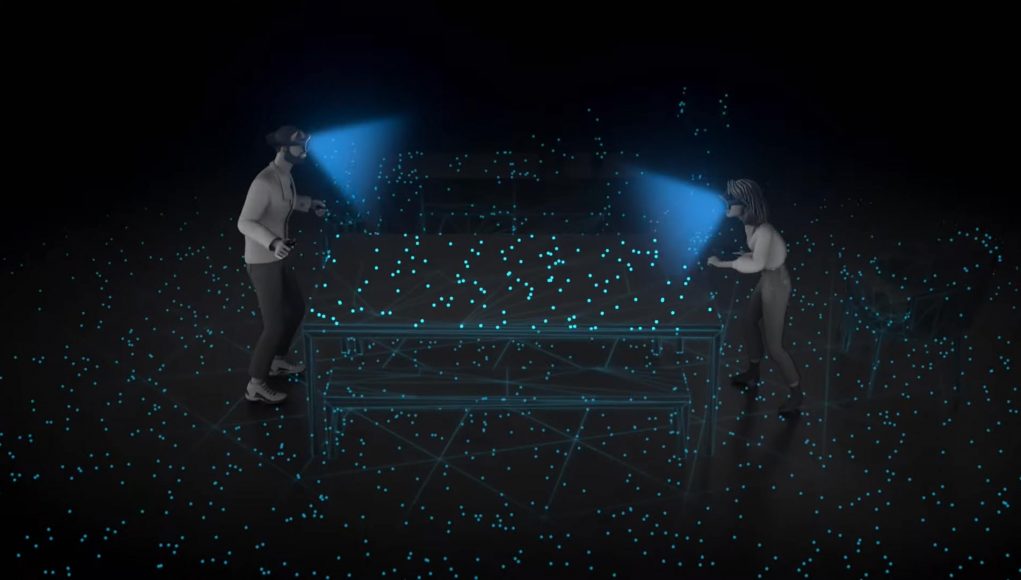
2. Meta Shows How Quest Pro Uses Shared Point Clouds for Local Multiplayer

Meta hasn’t yet pushed out colocation services for the full Quest platform, which means a pair of Quest 2 headsets won’t automatically ‘see’ one other in the same physical play space, but this isn’t totally true for the company’s newest headset, the Quest Pro.

Meta has released a small instructional video demonstrating how local multiplayer works between two Quest Pros. The gist is as follows, albeit the explanation can also be found in the video below:

Quest Pro creates point clouds that may be shared with other Quest Pros in order to track the room and superimpose virtual visuals over your physical surroundings in mixed reality. Users may choose whether or not to share point cloud data, Meta states in the educational video, however this is done with Meta’s servers acting as a mediator.

This is a significant difference from how local multiplayer works (or doesn’t function) on Quest 2, since games normally require some shared room marker to calibrate the relative locations of players inside a pre-defined region. In terms of general ‘avatar-to-person’ tracking fidelity, this type of ad hoc local multiplayer can produce varying results, but by being able to sync up point clouds, you should (in practise) have the highest level of positional precision between two players.

Meta (in relation to Facebook) has been discussing colocation on Quest for quite some time. Beginning in 2018, the business demonstrated an arena-scale multiplayer prototype based on the VR shooter Dead & Buried, which we believed would eventually lead to the company providing colocation services for the Quest platform. A year later, the firm disclosed code in the Oculus Unity Integration pointing to a Quest colocation API, yet we appear to be no closer to colocation on Quest 2.

It’s worth noting that the business is now only enabling colocation on Quest Pro, their $1,500 mixed reality headset that debuted in late October. Meta appears to be improving its value offer for Quest Pro, and colocation services appear to be a ‘pro’ feature.

Read More

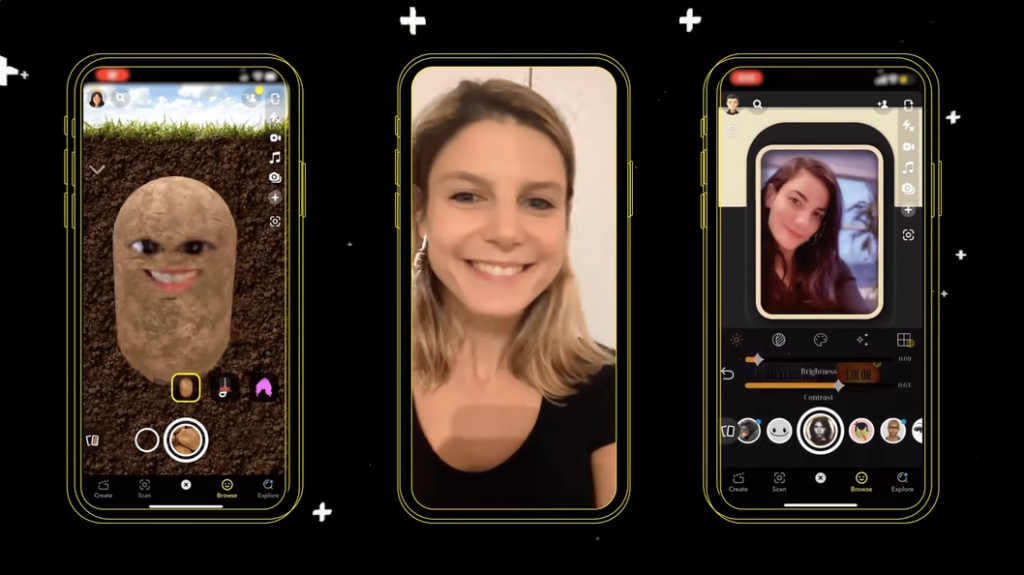
3. Snapchat Is Adding Paid Power-Ups to AR Lenses

Lens Fest 2022, Snap’s annual developer conference dedicated on its worldwide community of augmented reality (AR) makers, kicked off today. The business got things started this morning with the announcement of a new feature that lets chosen developers to offer premium upgrades to their AR Lenses. Snap Tokens, Snapchat’s official in-app money, may be used to purchase additional content such as digital items, effects, and tools, according to the company. As part of an early pilot programme, the business is now evaluating the functionality with a small group of creators and developers.

“AR is now an essential part of the Snapchat experience,” the company stated in an official update. “We foresee even more possibilities for hardware to raise it to a new level over time.” “With glasses that allow you to engage with AR around you with your hands, our objective is to make AR even more natural.”

“Advanced hardware and software, distribution channels, and methods we promote growth through the Snap AR platform all work together to power the creativity and businesses of our global AR community,” the firm continued.

According to Engadget, participating Lenses will be available in certain regions across Australia and New Zealand over the coming several weeks. They may be found in the Lens Carousel and Lens Explorer sections of the Snapchat app, which is accessible for free on iOS and Android smartphones.

Snap has made significant investments in its AR Lens inventory as well as its range of Spectacles AR spectacles over the last two years. According to the corporation, AR studio Paper Triangles made around $4 million in 2021 producing Lenses for a number of prominent companies. Following a 20% reduction in staff size, the firm stated in September that it was moving its long-term focus to community expansion, revenue growth, and AR technologies.

Read More

4. Samsung Reportedly Plans Headset for Developers Next Year

According to the South Korean newspaper Electronic Times, Samsung has already developed prototypes and is evaluating samples for production. The objective is to provide developers the hardware and SDK they need to produce content in order to “create a market by developing an ecosystem rather than delivering goods quickly.”

Samsung has been a hardware partner for both Meta and Microsoft’s VR aspirations, but has yet to venture into the platform space.

It collaborated with Facebook on the phone-based Gear VR, effectively the first widely marketed consumer VR device, beginning in 2014. However, by 2019, then-CTO John Carmack pronounced it dead, citing the friction required in inserting your phone, which meant standalone headsets took control. The platform’s upgrades formally ended in 2020.

freestar

Samsung released Odyssey, a Windows VR headset, in late 2017, followed by Odyssey+ a year later. Both utilised OLED screens similar to the original Oculus Quest and HTC Vive Pro, with lens separation adjustability and built-in headphones. In 2020, China’s intellectual property authority granted Samsung a patent for a successor with four tracking cameras, but no product was released as a result.

For more over four years, rumours have persisted that Samsung is developing its own standalone AR/VR headset. Nothing has been formally confirmed, but with the popularity of Meta’s Quest and new entrants like Apple on the horizon, may Samsung finally be ready to genuinely enter?

We at twin reality are working on building the new age metaverse and solving some of major problems is metaverse using AR/VR apps and we provide business solutions to all your needs. For more information and if you really want to explore and get to know more about our company kindly visit our website and don’t forget to drop your queries.

Read More