Top 6 VR Maintenance Training Use Cases

Virtual Reality has completely revolutionised the way maintenance training is delivered. By giving employees a realistic and immersive experience, virtual reality technology improves training outcomes and lowers the possibility of mistakes and mishaps at work. 

Before trying maintenance activities in an actual workplace, personnel can practise them in a safe and controlled environment by replicating real-world conditions.

According to PWC, 47% of industries are using virtual reality for maintenance training.

Virtual reality (VR) can make training more engaging and motivational by enabling workers to interact authentically and effectively with virtual items and equipment. 

Additionally, this can help in increasing retention of the material being taught. Employees can engage in interactive VR simulations that closely resemble the real-world scenarios they will face at work. 

This can improve job performance by enabling a deeper comprehension of the task. Virtual reality technology also makes training more accessible by allowing employees to practise jobs virtually at any time and from any location.

With our virtual reality simulation and immersive 3D gamification experience, Virtual Reality Company Twin Reaity are revolutionising industrial training. We’re here to turn your next-generation training ideas into reality.

Research and Markets projects that the VR-powered maintenance and repair market will grow from $403.3 million in 2018 to $3319 million by 2024. 

In this blog, we will explore various VR maintenance training use cases that have successfully revolutionised maintenance activities across different industries.


1. DHL: Vision Picking In Logistics

Through a pilot project, DHL, a well-known transportation company, has shown how useful AR/VR technology can be for maintenance training. To help its warehouse workers with the picking process, the company developed a virtual reality training session. The process was made more effective and efficient by replacing the manual scanners and paper pick lists with this creative method.
Additionally, DHL warehouse workers could access guided information for picking by wearing virtual reality glasses. This pilot programme had remarkable results, including a 25% improvement in performance during the selection process. Employees at the warehouse were able to choose orders more successfully and effectively as a result.

2. Boeing : Virtual Reality Training in Design and Manufacturing

Boeing is now testing the Extended Reality Learning Framework or XRLF. It is a virtual maintenance training programme that is a cloud-based AME training solution. The company prioritises content reuse. The architecture of its Extended Reality Learning Framework (XRLF) permits the reuse of assets in a wide range of distribution methods.

XRLF is connected to Microsim, Boeing’s virtual maintenance trainer (VMT). Microsim, aimed at tablets and laptops, is available for clients to license at the company’s training centres. It does not necessitate the use of a server.

Boeing has some proof-of-concepts for streaming. The organisation would have the scalability, reach, and capacity to reach a large number of users and endpoints using a cloud-based solution. It is anticipated to see hosted streaming applications in two to three years.

3. Airbus : Virtual Maintenance Training

In order to minimise the need for specialised aircraft for training, Airbus is training its crew members via a virtual maintenance trainer powered by CAE. 

In order to support its clients, Airbus offers VR maintenance and structure training services which is a significant application of VR industrial training

These services range from the creation of an upstream suitable course for aspiring maintenance technicians and engineers to training specific to aircraft types and the ongoing or ongoing education of seasoned mechanics. 

A stand-alone 3D virtual solution that was co-developed with Air France Industries KLM E&M is beneficial by training your base’s maintenance crew about engine run-up processes.

The company tailors its maintenance and structure training services to your needs and expectations by providing flexible, comprehensive, and tailor-made training solutions, whether in one of the Airbus training centres, on your premises with Airbus instructors, via remote training solutions, or through innovative training materials deployed at your base. 

4. UDC

Virtual reality maintenance training based on the L3Harris 737-800 model is used in the aviation programme at the University of DC Community College. This helps students learn about malfunctioning avionics, landing gear, hydraulics, and other issues in a safe setting.

Thanks to an internal funding source and grant, the University of D.C. Community College’s aviation programme has been operating an L3Harris 737-800 VMT since January.

The virtual aeroplane operates in the same manner as a real aeroplane. Students in the hydraulics class can observe the fluids’ motion. They are also able to observe the wider picture, such as how the landing gear’s hydraulic system functions. Students’ knowledge of aircraft systems is more in line with the demands of the industry today because they are studying them on a 737-800 VMT.

Pupils engage in interactive learning with an electronic copy of the handbook and the aircraft system. As instructed in the handbook, they can take out and replace components.

To demonstrate to students how an in-flight emergency seems to a pilot, the VMT can simulate a TCAS alert. Additionally, the VMT can mimic a TCAS failure in flight, which results in a fault code that can be troubleshooted.

5. Ge Aviation

GE Aviation is incorporating a learning management system with a virtual maintenance trainer into a training tech upgrade for its Customer Technical Education Centre.

At the Customer Technical Education Centre (CTEC), teachers use big interactive whiteboards called smart boards, while students are given tablets with materials in PDF format and the capability to modify PDFs. These can show virtual disassembly and reassembling models of engines.

To broadcast lessons to distant places, GE plans to launch a new learning management system that uses cloud delivery, along with an in-house VMT.

The Chief Engineer’s office at GE is utilising virtual reality (VR) for analysis in several of its cloud-based distribution systems, including GE App Dash; Siemens Teamcenter Visualisation Mockup; the HTC Vive headset; and F110 maintenance awareness, which offers 3D, immersive content for the F110 engine.

6. Magpie

A student performance tracker called Magpie was created by Charles River Analytics and DiSTI. It keeps an eye on how students behave, participate, and comprehend in a simulated, real-time setting.

The dynamic customisation of training to meet the needs of each individual is another trend. Under a contract with the Air Force Research Lab, Charles River Analytics (CRA) is working with DiSTI to build an intelligent VMT known as MAGPIE.

The intelligent component is the system’s capacity to keep an eye on students’ behaviour and adjust the way the course is taught dynamically based on how well they understand the subject.

The MAGPIE software can monitor a student’s progress by comparing their performance to a standard or standard set of steps. It can also identify problems and modify the scenario’s flow and content to better support the student. 

In order to make sure the foundational knowledge is covered, it can identify the gaps in a student’s knowledge and advance them through the curriculum.

Final Thoughts

To sum up, technology such as Virtual Reality is a real game changer for various industries. This improves the client experience, leaves little opportunity for error, saves time, and provides trainees with a much safer environment to learn, undertake maintenance, and support a variety of other opportunities. It is anticipated that most forward-thinking companies will rapidly use these technologies in order to keep on top of trends.

Virtual Reality Healthcare Companies

VR healthcare

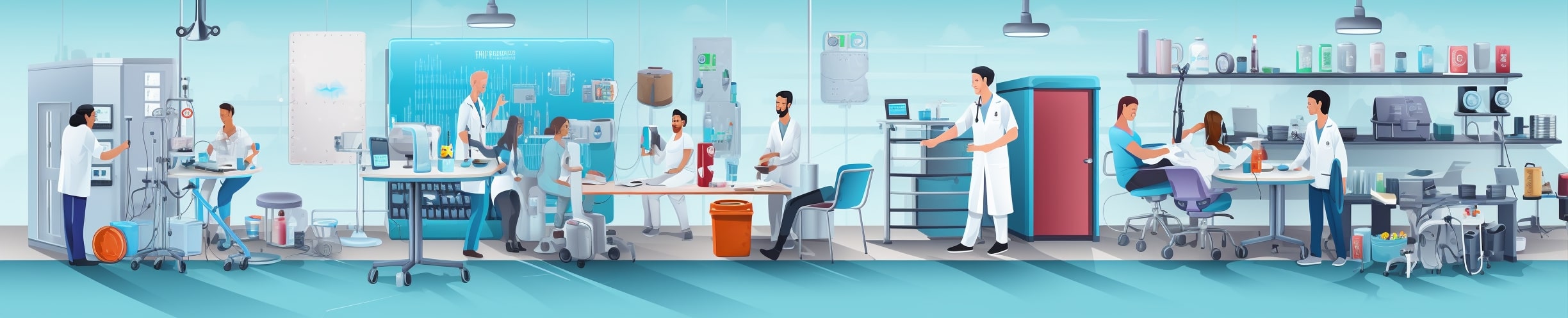
Virtual reality technology has revolutionized various sectors. Within healthcare, VR has proven transformative as it redefines patient care, medical education, and surgical precision. At Twin Reality – one of the premier virtual reality companies – we explore how VR is revolutionizing healthcare through immersive experiences that transcend traditional medical practices.

Market Overview

The growth trajectory of the global healthcare VR market as reported by Grand View Research. It shows a significant increase from $3.01 billion in 2022 to an anticipated $29.38 billion by 2030, highlighting the rapidly expanding role of VR technology in the healthcare industry.

This steady climb demonstrates healthcare’s eager embrace of virtual reality technology; due to growing demands for quality care while simultaneously striving to lower costs. Virtual reality (VR) technology now plays a pivotal role in medical practices around the globe as its benefits integrate effortlessly with various medical applications

Key Players and Innovations

Companies such as Surgical Theater, EchoPixel and Medivis are leading this VR revolution. Surgical Theater’s innovative “surgical rehearsal platform” gives neurosurgeons access to virtual reality environments for preoperative planning of complex procedures – improving precision and safety while increasing precision and safety overall. 

EchoPixel extends this concept further with True3D; their groundbreaking AR healthcare platform, providing interactive visualization of patient organs and tissues. 

Medivis’ combination of medical AR with AI allows it to bring advanced anatomical representations forward – pushing presurgical planning as well as education on anatomical details never before seen before!

Touch Surgery and ImmersiveTouch represent an enormous leap from traditional methods, providing unparalleled depth of understanding and interaction with complex medical data. 

Their VR surgical simulations enable medical professionals to practice intricate procedures risk-free within virtual settings – this not only aids skill development, but can significantly decrease learning curves for young surgeons as well.

Diverse Applications in Healthcare

VR’s applications in healthcare extend far beyond operating rooms. Companies like Floreo have leveraged virtual reality for cognitive and social skill development among those living with Autism Spectrum Disorder; providing users with a safe platform where real world situations can be practiced safely – further augmenting traditional therapy methods.

VR technologies developed by InMotion offer engaging and effective physical therapy and rehabilitation solutions, like their Corpus VR platform which gamifies rehabilitation exercises to make them more engaging for patients while giving therapists valuable motion data. This approach not only speeds recovery but keeps patients motivated throughout their rehabilitation journey.

Impact on Healthcare Professionals and Patients

VR in healthcare has proven beneficial for both professionals and patients. VR provides medical staff with a more immersive training environment through immersive programs for medical training; hands-on approaches to learning make these training programs highly effective in enhancing education quality and thus improve medical training outcomes significantly.

Patients using virtual reality will gain new perspectives into understanding and engaging with their health through VR platforms like Floreo. VR cognitive training helps patients overcome challenges associated with autism or cognitive impairments such as dyslexia. 

VR’s use in pain management provides a non-pharmacological alternative, thus decreasing medication dependence with its side effects.

Virtual reality in healthcare marks an exciting new era of medical treatment and education; however, its introduction is not without challenges.

A significant one is cost; making VR less accessible for smaller healthcare facilities in emerging markets due to expensive hardware/software requirements; additionally there may be barriers related to widespread adoption as a result of sophisticated hardware/software requirements; plus medical professionals may face difficulties learning to incorporate VR effectively into their practices.

Though VR in healthcare presents challenges, its future looks bright. We anticipate an increasing focus on more user-friendly VR solutions at more reasonable cost that are accessible to a broader range of providers. 

Advancements in hardware such as wireless headsets with intuitive controls should enhance user experience further by making VR applications more realistic and immersive.

Expanding Telemedicine Capabilities

VR’s integration into telemedicine is an exciting development. As remote healthcare becomes ever more necessary, virtual reality (VR) offers interactive and personalized consultation experiences, simulating doctor’s visits for easier diagnosis and treatment of patients remotely. The potential applications are vast – particularly providing healthcare to remote or underserved areas.

Enhancing Medical Training and Education (T/E)

VR’s role in medical training and education cannot be overemphasized. By simulating realistic medical environments, it provides medical students and professionals with a safe yet controlled space in which to practice and hone their skills safely and responsibly. 

VR in education has revolutionized how students learn anatomy and surgical procedures while making learning interactive and effective; additionally soft skill training applications like VR soft skill training have become essential tools in developing communication and empathy in healthcare professionals.

Industry Applications with Broader Scope

VR technology’s applications go well beyond healthcare; industries including manufacturing, engineering and aviation have begun embracing it for training and simulation purposes. Aviation utilizes VR to train pilots through flight simulation, dramatically decreasing risks and costs associated with real life training sessions; similarly VR in automotive design is revolutionizing design processes.

VR and the Future of Surgery

One of the most exciting applications of VR in healthcare is surgery. VR technology enables surgeons to plan and rehearse complex surgical procedures virtually, thus decreasing errors and improving patient outcomes. For instance, companies like Surgical Theater are leading this revolution with VR solutions that transform MRI scans and CT scans into interactive 3D models for planning surgical procedures in real life.

VR as an Engaging tool in patient education and engagement

VR can play an invaluable role in patient education and engagement. By offering immersive and interactive visualizations of medical conditions and treatments, VR provides patients with better insights into their own health issues and treatment plans, leading to improved compliance and outcomes for treatment plans and plans across sectors. VR for Business illustrates this potential.

Conclusion

Virtual Reality in healthcare represents more than simply technological progress; it represents an innovation which represents a paradigm shift in medical treatment, education and patient care. As VR continues its rapid advancements within health services it will offer more effective, efficient and humanized medical solutions – not simply through adopting new tech; Twin Reality stands ready at the forefront of this revolution, exploring VR’s endless potential within medicine as well as beyond it.

VR Training for Warehouse Management

Warehouse management using VR

In the ever-evolving landscape of logistics and supply chain management, the role of warehouse personnel is crucial in ensuring the smooth flow of goods from production to consumer. 

Traditional warehouse training methods often involve lengthy classroom sessions and on-the-job training, which can be time-consuming and costly. 

However, with the advent of virtual reality (VR) technology, there has been a paradigm shift in the way warehouseman training is conducted. Before delving into the VR realm, it becomes crucial to emphasize the significance of  Virtual Reality companies Industrial Training.

This cutting-edge solution empowers businesses and organizations to provide their staff with highly realistic and immersive training experiences.

In this blog, we will explore the transformative impact of VR on warehouse training, highlighting its benefits, applications, and the future it promises for this essential industry. 

Current State of
VR Training for
Warehouse managment

Warehouse management

In order to understand the challenges associated with conventional warehouse training methods, it’s vital to understand the potential of VR. 

Traditional training typically involves a combination of classroom instruction and hands-on experience. While on-the-job training is valuable, it can be resource-intensive and may pose risks, especially in high-stakes environments where errors can lead to significant consequences.

Moreover, the logistics industry is constantly evolving, requiring warehouse personnel to adapt to new technologies, workflows, and safety protocols. This demand for continuous learning makes it imperative for companies to explore VR training approaches that are both efficient and effective.

Promise of Virtual Reality for Warehouseman Training

Virtual Reality offers a revolutionary solution to the challenges faced by traditional training methods. By immersing trainees in realistic, simulated environments, VR enables warehouse personnel to undergo training in a controlled and safe space. Let’s explore the key advantages of incorporating VR into warehouseman training:

Realistic Simulations

VR technology creates highly realistic simulations that replicate the warehouse environment, complete with shelves, pallets, and various products. Trainees can interact with these virtual elements, gaining a practical understanding of their roles and responsibilities.

Hands-On Experience

VR provides a hands-on learning experience without the need for a physical warehouse. Trainees can practice tasks such as inventory management, order picking, and equipment operation in a virtual setting, enhancing their skills in a risk-free environment.

Safety Training

Safety is a top priority in warehouses, where accidents can result in serious injuries or damage to goods. VR allows for immersive safety training scenarios, where employees can learn to identify and respond to potential hazards, emergency situations, and proper handling techniques.

Cost-Effective Training

Traditional training often incurs expenses related to physical facilities, equipment, and materials. VR industrial training reduces these costs by eliminating the need for a dedicated training space and physical resources. It also minimizes the potential for product damage during training exercises.

Customized Training Programs

VR enables the creation of customized training programs tailored to specific warehouse operations. Whether it’s a focus on forklift operation, inventory tracking systems, or team coordination, VR simulations can be designed to address the unique needs of different warehouse roles.

Applications of VR in Warehouse Training

VR safety Training Warehouse management
Application Description
Equipment Operation Simulate the operation of warehouse equipment such as forklifts, pallet jacks, and conveyor systems
Inventory Management Practice scenarios related to receiving, storing, picking, and organizing products within the warehouse
Team Coordination Simulate teamwork scenarios to enhance communication, coordination, and task efficiency among team members
Safety Training Immersive training for identifying and responding to potential hazards, emergency situations, and proper handling techniques
Remote Training and Collaboration Facilitate virtual training sessions, allowing personnel to participate from different locations
Emergency Response Training Simulate emergency situations like fires or spills to train personnel on proper response procedures
Customized Training Programs Develop tailored training programs addressing specific roles and responsibilities within the warehouse
Data-Driven Insights Collect and analyze performance data to identify areas for improvement and track trainee progress over time
Advanced AI Integration Integrate artificial intelligence to create dynamic and adaptive training scenarios based on performance
Integration with Warehouse Management Systems (WMS) Connect VR training simulations with real-world warehouse management systems for seamless workflow integration

Future of VR in Warehouseman Training

As technology continues to advance, the future of VR in warehouse training holds even more exciting possibilities. Here are some potential developments:

    • Integrating artificial intelligence (AI) into VR simulations can enhance realism and adaptability. AI can generate dynamic scenarios, adjusting training based on the trainee’s performance, and creating a more personalized learning experience.
    • With the rise of remote work, VR can facilitate virtual training sessions, allowing warehouse personnel to participate from anywhere in the world. This not only increases accessibility but also fosters collaboration among teams in different locations.
    • VR training platforms can collect data on trainee performance, allowing for detailed analytics. This data can be used to identify areas for improvement, track progress, and refine training programs over time.
    • Integrating VR with WMS can provide a seamless connection between training simulations and real-world warehouse operations. Trainees can practice using the same systems they will encounter on the job, ensuring a smooth transition to the actual work environment.

Final Thoughts

Virtual Reality has emerged as a transformative force in warehouseman training, offering realistic simulations, hands-on experience, and cost-effective learning solutions. 

As the technology continues to evolve, the future promises even more sophisticated industrial training applications, contributing to a safer, more efficient, and adaptable workforce in the logistics industry. 

Warehouse training using VR is not just a technological advancement; it’s a strategic investment in the skill development and safety of the individuals driving the heart of the supply chain.

Why VR Soft Skill Training is a Game Changer

VR soft skill training

Becoming successful in your career takes more than just hard skills. Although hard skills are associated with particular technical expertise, soft skills are character attributes that help foster relationships and resolve issues in the workplace. Additionally, soft skills enable you to make the most of your hard skills. And, these soft skills can be enhanced with the help of  Virtual Reality Company like Twin Reality.

According to research conducted by the European Journal of Training and Development companies implementing soft skill training show over 14% improvement in employee performance and a 12% increase in productivity.

soft skill training
Soft skill vr training
Soft skills demonstrate the capacity to collaborate with people and advance within an organisation, whereas hard skills are measurable. For this reason, almost every employment position demands that applicants have superior soft skills.

A survey conducted by LinkedIn Learning found that 92% of talent development professionals believe that soft skills are equally or more important than hard skills.

The emergence of Virtual Reality (VR) technology as a training tool marks a groundbreaking development in the field of professional development. VR offers a highly immersive and interactive learning experience that transcends traditional training methods, enabling users to step into realistic and customisable virtual environments.
From medical surgery simulations to team-building exercises and leadership training, VR’s ability to replicate complex scenarios and engage multiple senses offers a transformative approach to promising increased retention, improved skill acquisition, and a host of innovative training possibilities in various industries.

State of VR in Training

VR use for safety training
The current landscape of VR industrial training is rapidly evolving, with widespread adoption across various industries and educational institutions. Virtual Reality technology has become more accessible, cost-effective, and versatile, making it a compelling tool for immersive learning experiences. 
From healthcare professionals practising complex surgical procedures to employees engaging in realistic safety drills and students delving into interactive educational content, VR training offers a safe, customizable, and highly engaging platform that enhances knowledge retention and skill development.
  •  Virtual Reality (VR) training offers numerous advantages over traditional training methods:
      1. Studies have shown that VR training leads to better knowledge retention compared to traditional methods.
      2. VR provides an immersive and interactive environment that engages multiple senses, enhancing the learning experience.

      3. VR can recreate complex and realistic scenarios, allowing learners to practice in situations that closely resemble their actual work environment.

      4. VR training can be tailored to individual needs, offering a personalized learning experience.

      5. The immersive nature of VR training captures learners’ attention and promotes higher levels of engagement.

VR's Impact on Soft Skills Development

Virtual Reality (VR) facilitates immersive learning experiences for soft skills through its unique ability to create realistic, interactive, and emotionally engaging scenarios:

Realistic
VR can replicate real-world scenarios with a high degree of fidelity, whether it’s a team meeting, customer interaction, or conflict resolution. Learners are placed in a 3D environment that closely mimics their workplace, allowing them to navigate situations as they would in their jobs. This realism enhances the relevance of the training.

Interactive
VR environments are interactive, meaning that learners can actively participate in the training scenarios. They can engage in conversations, make decisions, and perform actions as they would in a real-life situation. This hands-on experience fosters a deeper understanding of how soft skills are applied in practice.

Emotionally Engaging
VR can elicit emotional responses, which are vital for soft skills development, especially in areas like empathy, conflict resolution, and leadership. Learners can connect with virtual characters or situations on an emotional level, making the learning experience more impactful.

Virtual Reality (VR) offers a versatile platform for enhancing a wide range of soft skills, including:

    • Communication Skills: VR simulations allow individuals to practice effective verbal and non-verbal communication, active listening, and adaptability in various scenarios, from job interviews to customer interactions.
    • According to a survey conducted by the National Association of Colleges and Employers (NACE), communication skills consistently top the list of attributes employers seek in new hires.
    • Leadership Skills: VR can immerse learners in leadership scenarios, where they can practice decision-making, delegation, conflict resolution, and team management, improving their leadership capabilities.
      In a survey by LinkedIn Learning, leadership and management were identified as the most in-demand soft skills.
    • Teamwork and Collaboration: VR team-building exercises enable participants to work together in a virtual environment, fostering skills such as cooperation, conflict resolution, and collective problem-solving.
    • Emotional Intelligence: VR can evoke emotional responses and empathy in learners, helping them better understand and manage their own emotions while also enhancing their ability to relate to others.
      Numerous studies, including research published in the Harvard Business Review, emphasize the importance of emotional intelligence in the workplace.
    • Presentation and Public Speaking: VR offers opportunities to practice delivering presentations to virtual audiences, improving public speaking, confidence, and effective presentation skills.

Designing VR Training for Soft Skills

Effective Virtual Reality (VR) soft skills training programs incorporate several key components to maximize their impact and facilitate skill development. The following components must be considered while designing a VR industrial training program:

    • Realistic Scenarios: VR training should immerse participants in lifelike scenarios relevant to the soft skills being developed. These scenarios should closely resemble real-world situations, enabling learners to practice in a context that mirrors their daily work environment.
    • Interactivity: VR offers an interactive learning experience where participants can make decisions, engage with virtual characters, and actively apply their soft skills. Interactivity fosters engagement and skill practice.
    • Feedback Mechanisms: VR programs should provide immediate and constructive feedback to learners. This feedback can be automated or facilitated by instructors, helping participants understand their strengths and areas for improvement.
    • Customization: Effective VR training is often customizable to individual needs and skill levels. Learners can progress at their own pace and focus on specific areas of soft skill development.
    • Emotional Engagement: VR can evoke emotional responses, which is essential for soft skills like empathy and emotional intelligence. Effective VR programs are designed to engage learners emotionally, allowing them to connect with virtual characters or scenarios.
    • Integration with Traditional Training: Some organizations integrate VR training with existing training methods to create a blended approach. This combination allows learners to benefit from both the immersive qualities of VR and the strengths of traditional training.
    • Content Diversity: VR training should offer a variety of scenarios and soft skill challenges to ensure that learners experience a broad range of situations and interactions.
    • Assessment and Progress Tracking: VR programs should include methods for assessing learner progress and skill development, such as quizzes, simulations, and performance evaluations.

Case Studies of Successful VR Training Implementations

Several organizations have successfully implemented Virtual Reality (VR) training programs to enhance soft skills. Here are a few case studies illustrating successful VR training implementations for soft skills development:

Walmart’s VR Training Program

Walmart has implemented VR training across its stores for employees. The VR program covers scenarios like dealing with holiday rushes and Black Friday events. It provides a realistic and immersive experience, helping employees enhance their customer service skills, including soft skills such as communication and problem-solving.

PwC’s “Virtual Reality Leadership” Program

PricewaterhouseCoopers (PwC) developed a VR training program called “Virtual Reality Leadership” to enhance leadership and communication skills. The program immerses participants in realistic business scenarios, allowing them to practice decision-making, teamwork, and communication in a virtual boardroom setting. PwC reported positive feedback and increased confidence in leadership skills among participants.

KPMG’s “KPMG Ready” VR Training

KPMG developed a VR training program called “KPMG Ready” to prepare its employees for various client interactions. The program includes simulations of client meetings and presentations, helping employees enhance their communication, interpersonal, and client relationship skills. KPMG reported improved confidence and performance among participants.

Deloitte’s VR Leadership Development

Deloitte has implemented VR training for leadership development. The program includes immersive simulations of leadership scenarios, allowing participants to practice decision-making, communication, and team management. Deloitte reported positive outcomes, with participants expressing increased confidence in their leadership capabilities.

Emirates’ VR Cabin Crew Training

Emirates Airlines has integrated VR into its cabin crew training program to enhance soft skills such as customer service, communication, and teamwork. The VR simulations allow trainees to practice responding to various in-flight scenarios and interacting with passengers, contributing to improved customer service skills.

Predictions for the Future of VR in Soft Skills Training

    • VR will play a substantial role in employee onboarding, transforming the traditional 2D process into an immersive, scenario-based experience.
    • VR training will extend beyond large enterprises, becoming more prevalent in education, from primary schools to vocational training, and training agencies responding to the demand for immersive learning experiences.
    • More companies will transition from pilot programs to full VR implementations in their learning programs.
    • Acceleration driven by the integration of VR training with Learning Management Systems (LMS) and Learning Experience Platforms (LXP), offering an effective way to apply e-learning knowledge to real-life situations.
    • Instructional designers will emerge as the new creators of VR training content, moving beyond traditional programming roles.

Challenges and Potential Solutions in VR Training

Challenges in VR Training

Potential Solutions

Scalability
    • High costs of hardware and software
    • Explore partnerships with VR hardware manufacturers for bulk discounts.
    • Resource-intensive content creation
    • Adopt cloud-based VR solutions to reduce internal resource strain.
    • Limited reach across diverse teams
    • Invest in scalable development frameworks for reusable VR modules.
Accessibility
    • Need for specialized hardware
    • Adopt a tiered approach, providing a mix of high-end and more affordable VR headsets.
    • Potential exclusion due to motion sickness
    • Develop VR content with accessibility features, such as customizable interfaces.
    • Challenges for individuals with disabilities
    • Implement alternative input methods and accommodations for diverse needs.
 
    • Thoroughly assess and provide alternatives for individuals experiencing discomfort.

Final Thoughts

Virtual Reality (VR) plays a pivotal role in revolutionizing soft skills training by providing immersive and realistic learning experiences. It transforms traditional training approaches into dynamic, scenario-based simulations that enable participants to practice and refine crucial skills such as communication, teamwork, and leadership in a safe and controlled environment. Overall, VR’s impact on soft skills training lies in its capacity to create engaging, memorable, and effective learning experiences that significantly contribute to professional growth and success.

Nokia and Industrial Metaverse

The Metaverse, a central hub for the future of industry, has become an ally for businesses worldwide. Many companies undergoing digital revolutions will use cutting-edge new technologies like virtual, augmented, and mixed reality (VR/AR/MR) to improve their operations, procedures, and efficacies. Before delving into the VR realm, it becomes crucial to emphasize the significance of Twin Reality’s Virtual Reality Industrial Training. This cutting-edge solution empowers businesses and organizations to provide their staff with highly realistic and immersive training experiences.

Telecom companies will need to develop their infrastructure with new hardware, software, and solutions in order to handle the extraordinary levels of demand that are expected to arrive over the next few years. Telecoms such as Nokia strive to realise this vision through creativity and data-driven empirical research.

What stands out in the Nokia environment is that they have a solid grasp of the various industries, as there are differences when discussing the industrial metaverse in the fields of manufacturing, public safety, energy, and transportation.

They can assist in mapping it to the industrial metaverse since they have industry professionals who comprehend the use cases, languages, technologies, and use cases behind them.

They also uphold this for their network of partners along the entire value chain, since they saw ourselves as not being the sole participant in the Metaverse. The Metaverse is too complex for any one person to control and run alone; instead, a coalition of partners, several research domains, and go-to-market partners are required to handle its intricacies.