Update Your Business Using Virtual Reality – Need of the Time

VR for business

Nothing more than a crisis can reveal the true nature of an institution, and the present pandemic is no exception. 

COVID-19 has had an impact on every element of enterprises and lives as we know them now due to the collapse of the economy and the loss of several lives. 

The crisis has had a serious impact on businesses in a number of sectors that make up the foundation of our economy, including oil and gas, power, the automotive industry, construction, etc.

Automotive and associated industry businesses have suffered more than ever as a result of the lockout. 

Enterprises cannot afford accidents, unplanned downtime, and low productivity while dealing with such major difficulties since these factors have a direct impact on their ability to serve their clients, which has an impact on revenue and profits. Human mistake is to blame for around 80% of all events.

Fortunately, cutting-edge technology is providing realistic and efficient solutions to overcome such obstacles.Immersive technologies like Virtual, Augmented, and Mixed Reality (VR/AR/MR) are such technology that companies are aggressively embracing.

Virtual Reality creates a simulated realistic environment as part of Industry 4.0, often known as the Fourth Industrial Revolution, which successfully tricks your brain into thinking you are somewhere you are not. 

VR transports the user to a world that has been constructed virtually using a clever combination of technology and software.

How can this Smart Manufacturing technology be efficiently utilized to meet future CEOs, COOs, CTOs, and CFOs’ aims for sustainability, dependability, and safety in the digitalized economy?

Virtual reality is a medium, a means by which humans can share ideas and experiences.

Let us delve into the practical adoption and applications of Virtual Reality in the sectors identified below.

Virtual Reality Meeting in office

1. Industrial Workforce Training using VR

Since virtual reality technology satisfies a variety of needs generated by a competitive environment, it has found broad use in oil and gas, manufacturing, and processing businesses. 

First off, it has been shown to significantly contribute to increasing staff productivity through efficient VR training sessions.

Based on validated case studies, VR-Training increases knowledge retention by 75–90% compared to conventional classroom-based training, which only achieves less than 20%. 

The retention of safety, compliance, and job skills is crucial for many firms, thus effective training of a workforce is a significant task. The workforce has ample time and chances to develop competency thanks to VR-based training solutions, saving them the cost of taking risks in the real world.

Second, VR is the finest substitute for classroom and field training in the current environment for achieving social distance. Here, with little to no human touch, trainees can swiftly pick up and apply their virtual learning experience and procedures in the real world.

Until the necessary competencies are attained, the training can also be repeated.
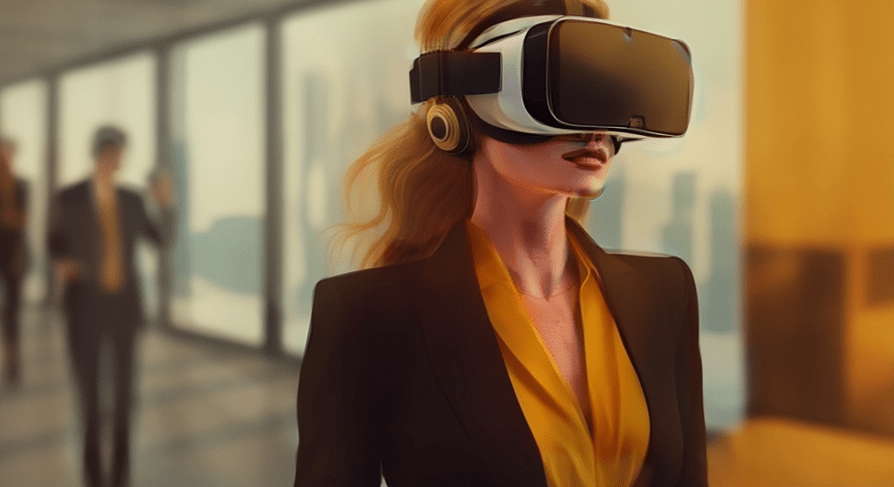
Women wearing VR in office

2. VR-based healthcare training

The globe demands and requires a high level of medical ability to handle the ongoing pandemic. Thus, proficiency in the healthcare sector is becoming even more important for the country.


VR-Simulation modules can be used by the healthcare sector to teach doctors, nurses, and other healthcare workers in-depth clinical procedures, safe practices, and medical protocols.


This lessens any hazards associated with the expected inflow of COVID-19 patients in this country and around the world. The immersive VR environment vividly presents information and knowledge, and learning is accomplished instantly.

3. Events, conferences, and exhibitions online

Due to businesspeople being unable to meet, the events and exhibits sector was also severely impacted by the shutdown. In these situations,
The industry is using interactive virtual events to safely arrange conferences and seminars without human interaction. 

Visitors and professionals can virtually walk through exhibition booths, engage in marketing conversations, contact vendors and corporate officials, and experience product offerings. 

Without leaving the security and comfort of your home, you may do all of this and more.
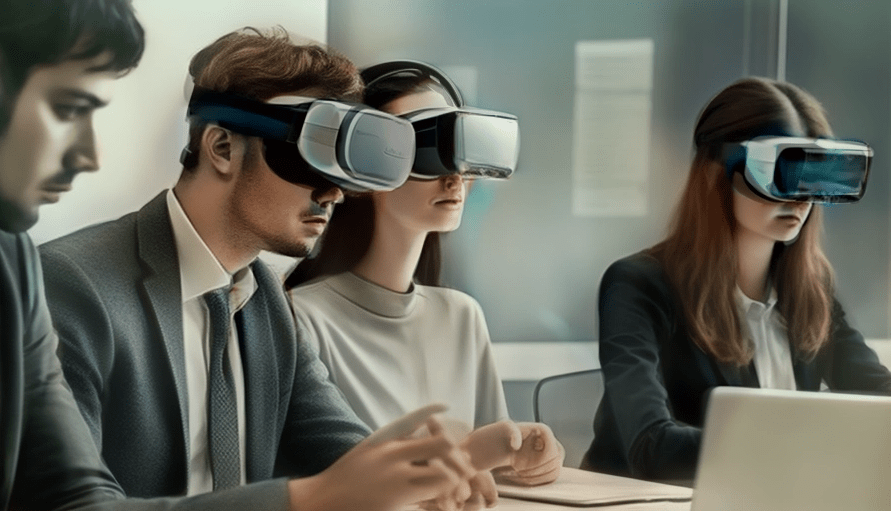
In meeting with people from different location using VR

4. The Corporate Reboot

Industry 4.0 solutions are rapidly becoming a “necessity” in the post-pandemic world as a result of the existing circumstances. 

This will put Industry 4.0’s suite of next-generation solutions, particularly Augmented, Virtual, and Mixed Reality (AR/VR/MR), in the spotlight and possibly increase demand.

VR will never look real until they learn how to put some dirt in it.

Conclusion

Businesses have recently encountered unforeseen difficulties, notably those relating to a lack of competent labor, rising production risk, resource downtime, and a lack of an appropriate technical roadmap to increase efficiency. 

Immersive VR, AR, and MR technologies will help create skilled workers while lowering risks to increase production in an industrial context. This is a crucial stage in restarting the manufacturing process.

VR For Safety At Workplace

virtual reality for safety training

For many firms across the UK, workplace safety is a top responsibility. Yet, depending on the nature of the position, some businesses find it more difficult to ensure trainee safety.


A worker primarily based in an office, for instance, would be thought to be at lower risk of damage, whereas someone running heavy equipment, handling hazardous materials, or performing life-threatening medical procedures might not have the opportunity to try again.

As depressing as that may sound, it is true. According to the Health and Safety Executive (HSE), 142 work-related fatal injuries were reported in the UK in 2021, with 20 of those accidents occurring in manufacturing and 39 in the construction sector.

It demonstrates how hazardous some workplaces may be and raises the topic of what measures may be taken to safeguard trainees who are about to begin a career in potentially lethal working settings.


As you probably already know, virtual reality (VR) has played a significant role in how employers arrange training programs as more and more companies become aware of its potential and accessibility

Only when we aren't scared of the big "what if?" and embrace the moonshot thinking required to work in VR will we be able to help move this medium forward to its full potential.

In addition to being able to perform simulations for any business, it provides a 3D immersive platform so that workers from anywhere in the globe can learn industry-specific skills in a risk-free environment.


VR has demonstrated to heighten engagement, increase memory retention, and deliver better results across numerous industries, whether it’s operating heavy machinery, learning to fly an aircraft, or possibly developing ground-breaking technologies. On that, however, later.

Advantages of virtual reality for safety training

The use of VR in safety training has many advantages. The trainees are not only spared any chance of harm, but they are also given access to an immersive learning platform that they may have never used before.


It implies that participant involvement will likely be considerably higher right away, which opens the door for better engagement and deeper learning, where information retention is much more likely.


In fact, according to PwC’s “Seeing is Believing” report, VR learners finished their training four times quicker than those who learned the identical subject in a traditional setting. The same survey also mentions that students who used VR had a greater rate of knowledge retention.


Similarly, a research by the University of Maryland in 2018, Professor of Computer Science, Amitabh Varshey, said: “This evidence is fascinating in that it shows that immersive environments could offer new avenues for enhanced outcomes in education and high-proficiency training”.


A 2016 study involving Chinese high school students discovered that adding VR learning to the curriculum increased exam results and memory recall.


The accessibility of VR in training may be one factor in its success. Because VR can be accessible from anywhere in the globe by putting on a headset, it is preferable to the hassle of gathering resources and wasting time travelling to specialised training facilities.


It implies that students can study anything from performing heart surgery to running large machinery comfortably.
It’s a solution that benefits both employers and employees.

We are yet to see a person who has experienced virtual reality and emerged unconvinced.

Also, utilising VR for safety training eliminates any dangers or side effects you would associate with conventional teaching techniques. 

As a result, students pay closer attention to training modules since they feel more secure knowing they are in a secure setting. Real-world situations but without real-world repercussions. 


But in addition to the protection and safety it provides, virtual reality also exceeds computer-based learning in terms of memory retention. 


That’s because using VR requires learners to make real-world motions, as opposed to the largely static action of using a mouse and keyboard, which in turn makes use of embodied cognition.

Researchers have a phrase for the idea that practising processes as you would in your work will help you learn them more effectively.
 
Before continuing , It’s important to note that everyone has unique learning preferences. And even while VR has the ability to satisfy any requirement in a secure setting, there are still advantages to creating a mixed learning program that combines VR and conventional methods .

It largely depends on the requirements of your students.
Safety and VR training implementation

Safety and VR training implementation factors for employers

There’s no denying that VR offers a great deal of promise to speed up the expansion of your company. By providing a virtual learning platform that is entertaining, secure, and effective, you’ll not only enjoy a decrease in training costs but also leave a lasting impact on your staff.

Yet there are a few things you need to think about before you decide to use VR at work. 

How will you initially implement the new technology to meet the needs? 

Determine which parts of your training will benefit most from virtual reality by following our guidance. For instance, if your industry is inherently risky, VR can be used to make a safer learning environment where trainees can practise using equipment and machines without running the risk of getting hurt.

Do you run your company from several outlying locations, secondly? If so, employing a headset and VR technology, you may enable colleagues to collaborate across distances on given modules.


The use of VR in other industries to boost productivity and performance is something else to take into account. 

What are they doing that is breaking the rules? How are they making the most of their employees? 

You might possibly use some of the same tactics. It takes some thought to suddenly include VR into your training regimen, of course. The idea of learning through VR could be intimidating to some employees, especially those who are not frequent technology users.

Conclusion.

Workplace safety training in various industries is changing as a result of virtual reality. Because VR provides a platform where students may learn without running the risk of getting hurt, unlike the possible risks associated with in-situ learning.


Virtual reality (VR) can be created for every part of work-related training, regardless of the industry. The options are unlimited, whether it’s to perfect cardiac surgery, participate in a battle zone exercise, or carry out scientific study. Unlike binary. Combining VR and practical training can benefit your staff in the best possible way.

8 Benefits of Using VR in Education

VR in Education

With more schools embracing the technology, virtual reality, or VR, is exploding in education. Virtual reality (VR) enables pupils to travel the world without ever leaving the classroom. Imagine allowing pupils to tour the Giza Pyramids while they are seated at their desks. This is made possible by virtual reality in education.

Virtual reality (VR) is a term that most people have heard of, but many do not understand what it is or how it is used in learning and education . Virtual reality (VR) describes media that allows viewers to fully explore 360 degrees of a scene through interactive visuals or videos.

How does it function?​

The most popular application of 360 VR, a form of VR, is in education. Real-world places are filmed using specialised cameras and equipment for this form of VR. After that, the footage is returned to the studio to be turned into VR content. In what are referred to as immersive classrooms, the VR content can subsequently be seen on VR headsets or projected onto walls.


360 virtual reality can be utilised in the classroom to teach students about their surroundings. Also, virtual reality has a special capacity to engage and inspire students.


Students can visit places that would be impossible or too expensive to visit in person. VR is able to do this by opening up a whole new world of opportunities for educators.

Benefits of VR in education

What educational benefits may virtual reality bring? ​

By giving students memorable and engaging experiences that would not be possible otherwise, virtual reality can enhance education. Additionally, it can all happen in a classroom.

Any student can access VR, and teachers can easily keep an eye on their use. Virtual encounters have the capacity to engage and motivate pupils in a special and potent way.

We wouldn’t be shocked if VR eventually made it onto the curriculum, given the popularity of VR in education and the favourable reception from schools. Structured VR lesson plans and curriculum-aligned content have already been created and are available in the UK.

Photography is a kind of virtual reality, and it helps if you can create the illusion of being in an interesting world. 


Steven Pinker

Virtual Reality helps students in a number of ways like .. 

    • Experiential learning is excellent for students.

      In contrast to the conventional reading and writing approaches, VR offers pupils the chance to study through experience.

    • VR has the power to motivate 
      Students are inspired by being able to view and experience spectacular locales inside of the classroom thanks to virtual reality.
       
    • VR stimulates the mind and promotes original thought
       
      VR offers an immersive learning experience that is unmatched in the classroom. The classroom is “transported” away from the students, and their imagination is free to run wild.
       
    • VR encourages peer engagement in the classroom

      Students are urged to interact with one another during the VR experience. Thereafter, they are ready to express their ideas and talk about their experiences.
       

    • VR draws pupils in.

      Traditional teaching techniques often bore students. Like nothing else, VR’s cutting-edge technology captures students’ attention. We discover that kids are eager to check out VR right away.
       

    • Travel simulations in VR are realistic
      Schools can give kids travel experiences that would not be feasible or viable without the use of VR. Schools can provide students with amazing experiences while saving time and money.
       
    • VR is inclusive in the classroom
      Every learner has the same chance to enjoy the experience thanks to VR. VR is accessible to all pupils, unlike traditional field trips that may be too expensive for certain parents or too impractical for their kids.
       
    • VR provides enduring learning opportunities

      Students remember the VR experience long after it is over, and they are ready to discuss it in subsequent courses.

Secondary education with virtual reality ​

VR headsets are more common than immersive classrooms in secondary education. This is due to the fact that the influence of the headsets tends to be larger on older students.

The sense of immersion with a VR headset is unmatched because the entire field of view is contained. Also, secondary students are more adept at using the headsets than elementary school students, necessitating less input and direction from the teacher.

Teachers can give secondary pupils the impression that they are truly “there” by using VR headsets; this is what we mean when we talk about immersion. This is a truly life-changing experience for many students, and it must be experienced in order to be properly evaluated.

In France, a hip replacement was captured using two GoPros in a stereoscopic 3D arrangement. Students can watch the surgery using a virtual reality headset.


Nick Woodman

Conclusion:-

Virtual and augmented reality technologies present an education system with a wealth of fascinating options that can help it overcome its main problems and reach a new standard of excellence.


With how quickly technology is evolving and becoming more widely available, it is more a matter of time before they are viewed as a legitimate choice with a unique set of benefits.

Virtual Reality in Architecture

Virtual Reality in Architecture


No matter how stunning a photograph is, it can never accurately capture the size and feel of a project. With how quickly technology is developing, architects that do not incorporate virtual reality into their design process may soon fall behind.

Virtual Reality is now very much an option for architects of all backgrounds due to the accessibility and affordability of virtual reality head-mounted displays (HMDs) like the Oculus Rift, HTC Vive, or even Google Cardboard.

Certainly, virtual reality headsets are behind in resolution, but it'll all catch up pretty quickly once there's a consumer market and there's demand.

Architect view using VR

Architecture and virtual reality put together​

Long before the structures are actually created, HMDs have the potential to alter how architects and designers conceptualise and express their ideas. A simple 3D simulation of the functional design can be shown to the client. They experience a considerably more realistic feeling of scale, depth, and spatial awareness in the immersive environment than they would in typical renders, scaled models, or animations.

It is simpler to convey design intent properly when a building gives the immersive feeling of being inside it. VR can elicit a positive response in a similar way to physical architecture when clients are unable to comprehend spatial relationships and scale simply looking at a 2D representation.

 VR might potentially be utilised to investigate the relationships between rooms early on during the conceptual stage, considering things like how light changes in a room throughout the day or the views from aboveground floors. It is far simpler to comprehend these influences in VR than it is to view a scale model or BIM model on a screen.

The impact of virtual reality on architecture

Until virtual reality technology entirely replaces more conventional architectural methods, there are still some enhancements that need to be addressed. The effectiveness of an architect’s usage of VR will be significantly influenced by factors including speed, graphics, and the capacity to allow designers to change plans in real time.

How architects share their work with clients and how correctly they communicate are already being impacted by these technologies.

This explanation of virtual reality in architecture may seem very brief. It will surely be useful as a presenting tool, giving clients a sense of how a design would seem at scale and from a more visceral perspective. But how would it affect the work flow of an architect?

To be truly useful, VR technology must enable users to completely engage with a suggested model, including the ability to move objects around the room, open and close doors and windows, and turn on and off lights. The client’s comments will then need to include this degree of interactivity; specifically, what areas of the design did the client find particularly pleasing? where did they have difficulty engaging and interact? 

 The final step is to record and incorporate this visual feedback into the design.

And while this amount of in-depth feedback might create one or two obstacles to successfully implementing VR for architecture and design (more on this later), the technology’s accessibility shouldn’t present any such issues.

Due to the widespread use of smartphones, it is now possible to create virtual reality programs that are simple to download and set up on a client’s phone. In other words, instead of spending money on pricey technology like a dedicated VR headset, a cheap VR headset (like Google Cardboard) may be offered along with the necessary floor plans and schematics.

The most recent smartphone models have sufficient processing power to offer VR-quality graphics, and thanks to the built-in accelerometers, they will be able to detect movement as a client navigates their way through the virtual world.

In virtual reality, it's more about capturing and creating worlds that people are inhabiting. You really are a creator in the way the audience lives within the world that you are building.

Conclusion:- ​

Virtual reality technology aids in building and optimising linkages between various locations, light, construction, and materiality used in a project from the conception stage through to execution. So, the use of virtual reality in architecture is poised to inspire a proactive moment of making design usable and effective by all.


VR for cognitive training​​ helping Elders to fight old age impairment issues

VR for cognitive training​​

Elderly people are becoming older quickly, and this includes people whose everyday duties are made more difficult by cognitive impairment. 


The autonomy of these old people and their carers would significantly benefit from developing therapies that delay cognitive decline. Virtual reality (VR) is an immersive, interactive, and real-time simulation human-computer interface that has the potential to help with cognitive function. 


This literature review covers the elements of immersive VR, including its prospects and limits, that are of specific relevance for boosting cognition in old.

Aspects in which VR contributes:-​

First, the tremendous degree of flexibility offered by VR enables safe, individualized training for isolated activities and potentially dangerous situations. Second, VR’s dynamic and real-time performance feedback offers carers a labor-intensive tool in elderly care.

Third, the collection of high-resolution data makes it possible to detect minute alterations over time, which is important for determining the type and severity of cognitive alterations in the elderly, particularly those suffering from dementia. Fourth, virtual reality immersion has been linked to cybersickness.

Finally, since VR is immersive, it allows users to perceive and express their emotions as well as their motor and sensory activities. Older subjects are observed to be less likely to learn emotionally and to rely more heavily on multisensory integration. Moreover, they experience high levels of flow, motivation, and presence in VR setups. The studies that are currently available are limited in size and have yet to be reproduced, despite the apparent potential of immersive VR.

Another obstacle to implementation is the elderly’s and healthcare workers’ lack of digital literacy. Hence, VR may be a particularly effective tool for training cognition in elderly individuals, even though replication of outcomes and standardization of VR interventions are needed before it can be employed in standard care.

VR is a way to escape the real world into something more fantastic. It has the potential to be the most social technology of all time

Why VR becomes more Important in issues related to the mind? ​

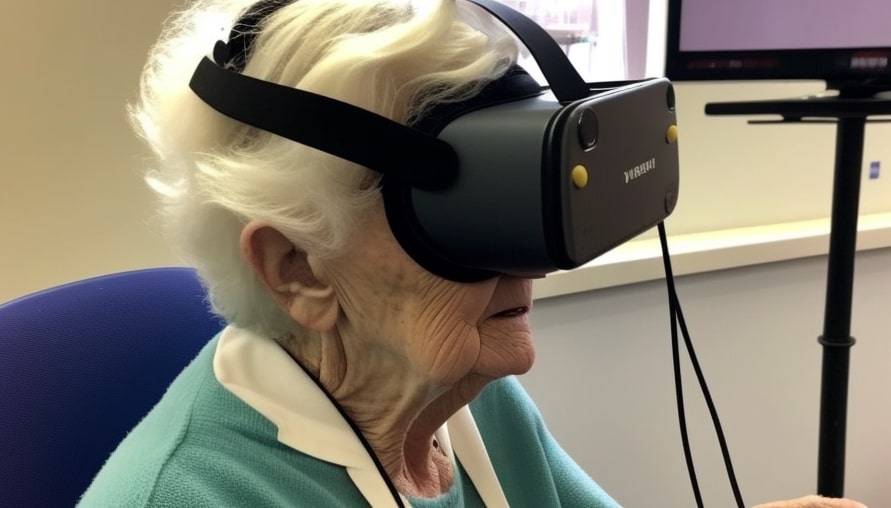
old woman using virtual reality

While many Europeans are still healthy as they age, an increasing number of them are also suffering from age-related disorders, as well as cognitive and physical decline and physical decline. 


Dementia is, in fact, the second most common reason for disability in people over 70. Dementia affects a broad range of cognitive skills, including long-term memory, executive functioning, and spatial orientation. The performance of activities of daily living (ADLs) is negatively impacted by the impairment of these capabilities. 


Lower quality of life has been linked to the subsequent decline in autonomy. The cognitive deterioration that older people undergo has not yet been completely stopped by any intervention.


Nonetheless, it has been demonstrated that cognitive training can slightly enhance overall cognition in healthy aged as well as dementia patients. Furthermore, both healthy [16–19] and cognitively impaired elderly people have responded favorably to physical therapies like weight training, either by themselves or in conjunction with cognitive ones. However, gains are sometimes modest and not all studies uncover a beneficial effect.


An innovative and promising approach to improve cognitive functioning is immersive virtual reality (VR). Burdea and Coiffet succinctly describe virtual reality as “a high-end user-computer interface involving real-time stimulation and interactions of an embedded subject through multiple sensorial channels (visual and auditory, sometimes haptic, even smell and taste if possible), based on a synthetic environment.”

VR Features ​

The incredible thing about the technology is that you feel like you’re actually present in another place with other people. People who try it say it’s different from anything they’ve ever experienced in their lives.”

VR offers a variety of features that allow several pretty unique options in comparison to conventional computer-based gadgets, but it also has a number of limits.

VR Allows for a Highly Flexible Training Environment

The VR environment is very adaptable and enables training in environments that would be either too risky or impractical in real life. Before tackling a task in its full complexity, it enables the practice of the work’s component elements. For instance, a double-blind, randomized controlled trial showed that individual parts of walking, such as weight shifting and stepping, can be later trained and improved in persons with hemiparetic stroke.

VR Has the Potential to Decrease Dependence on Care Professionals

Rehabilitation and other training programs can take a lot of time for older people and their informal carers since they require seeing a professional, and they need a lot of work from care providers because each person needs individualized instruction and assistance. Yang et alrandomized’s controlled study. This demonstrates that senior VR therapy within a community context is actually possible and successful.

VR Allows for the Gathering of Rich Data


The ability to collect a wide range of data with a high temporal resolution made possible by virtual reality (VR) makes it easier to spot small differences between and among people. For instance, kinematic information such as mass trajectories, stride length, and step breadth can be collected.

Conclusion:- ​

Due to its special qualities, immersive VR has a lot of potential for senior cognitive training. Given the diversity of the older population and the demand for secure training environments, it can be customized to the individual. Furthermore, the high level of automation in VR may reduce the load that traditional interventions place on carers and medical professionals while fostering a greater sense of autonomy in the aged.


Moreover, VR offers a very rich dataset, permits precise tracking of development, and enables fine-tuning of the treatment’s focus. Although the majority of research does not focus on the elderly, immersive VR training strategies often provide better training outcomes than other interventions, and the involvement of multiple senses and strong emotional saliency are likely to be the underlying causes.

Overall, immersive VR seems to foster greater flow, motivation, and pleasure than non-immersive interventions, which can be crucial for senior participants’ commitment to therapies. The realism of immersive VR also facilitates the transfer of learned abilities from the Virtual environment to the real world.