Top 6 Benefits of Integrating VR into Your Marketing Strategy

VR in marketing strategy

The leading brands of the world have adopted immersive tech for better marketing strategies at a rate of 75%.

The digital age presents market competition at levels like a nighclub while boosting customer attention shorter than normal TikTok video duration.

Virtual Reality (VR) emerged not merely as a gaming accessory but it became an innovative power for marketing.

Companies across all sectors including retail shopping and real state along with tourism promotion and education now use virtual reality which delivers captivating experiences to their customer base.

Statista suggests that the VR market will reach more than &22 billion in value by 2025. Market research indicates this development functions beyond a trend and it represents on ongoing movement.

The capabilities of Virtual Reality as a tool for advertising represent the key advantages that market your strategy.

The following explains the main advantages companies receive by integrating VR into their brand strategy.

1. Enhanced Customer Engagement

The world has grown tired of traditional static advertisements.

 YouTube viewers automatically skip their commercials while both Instagram users overlook sponsored content and people block out banner advertisements from their minds.

Do you think a visitor would find your advertisement attractive enough to become a final stop?

VR turns marketing into an experience. The virtual environment lets customers actively experience your branded products in ways past experiences never allowed.

Using 360-degree virtual tours a real estate company enables potential property buyers to experience homes virtually without requiring them to leave their house.

Users can virtual try garments through this fashion brand by moving their heads to check various sizes and styles while trying items on.

The result?

 Higher engagement.

 Longer interaction time.

 Stronger emotional connection.

Participation in VR content goes beyond passive viewing which leads to more powerful and memorable effects.

2. Immersive Storytelling That Sells

Anyone can tell a story.

Through VR customers gain the chance to experience stories firsthand.

Take TOMS Shoes, for example. TOMS Shoes originally developed a virtual reality experience which allowed customers to explore Peru in order to witness the effects of their “One for One” charitable initiatives.

Through their VR product customers experienced what TOMS Shoes was accomplishing due to their “One for One” program.

Feeling leads to buying behavior among customers.

VR gives users the opportunity to create detailed stories which put them at the forefront of fictional experiences. Consumer engagement through VR storytelling creates experiences that use empathy together with excitement to vividly express emotions to viewers.

3. Boosted Conversion Rates

Your sales team will find great satisfaction in this section.

According to research performed by Greenlight VR consumers consider a brand ahead of its time when it employs VR technology while 53% of respondents reported they would purchase from brands that use VR.

Why?

The technology of VR supplies answers to customer inquiries without requiring direct questions.

If you were searching for a new vehicle among available choices. Through VR technology customers can experience sitting inside the product while checking out features alongside testing it in a virtual drive without requiring any salesperson interaction.

The certainty you gain from experience leads directly to improved shopping results with increased sales along with decreased product returns.

I live in a world where confusion prevails but Virtual Reality displays complete understanding which transforms into actual purchases.

4. Personalized Experiences at Scale

Let’s face it:

Customers seek unique experiences which set them apart from feeling unidentified among many people. Every customer demands experiences that are personal to their individual needs.

Virtual reality stands as a transformative solution to achieve this goal in a new and advanced manner.

Utilities of user data including location information as well as preferences alongside behavioral patterns enable brands to produce tailored VR settings for each individual customer.

Skincare businesses provide personal virtual assessments through which they develop tailor-made solutions based on your real-time input.

Travel agencies use virtual reality design to let customers experience future honeymoon destinations through customized demos before finalizing bookings.

Traditional personal service belonged only to in-person meetings and high-value clientele until recently.

Now?

It’s scalable.

It’s digital.

And it’s jaw-droppingly effective.

5. Cost-Effective Product Demos

Let’s talk budget.

Product demo events together with in-store displays and logistics-heavy marketing campaigns form the bulk of spending for marketing departments.

Virtual Reality lets you present one exceptional experience to millions of users without needing any shipping process or setup team or traveling expenses.

A new kitchen appliance is about to enter the market. Your company builds a digital test area for users to try the product in a virtual setting rather than holding city-based live presentation events.

The system proves both more budget-friendly along with more dependable. The same superior quality experience belongs to every user.

And here’s where companies like TwinReality come in.
TwinReality specializes in building customized, immersive VR experiences tailored to specific business goals — from training simulations to interactive product launches.

If you’re thinking about taking your demos virtual, they’re one of the leading names to trust.

6. Competitive Differentiation

Truth be told most advertising techniques appear identical to one another.

All businesses use standardized formats and repeating social media methods together with uniform color schemes.

Standing apart from others requires following a different path which others do not see. And VR is the ultimate zig.

Your audiences will notice your market-leading creativity when you present them with something completely different.

The unique approach draws both customers and stimulates admiration from investors along with business partners and media reporters.

When your brand adopts VR in its marketing approach it indicates your product leads the market instead of merely following current trends.

Conclusion

To sum it up, here are the top 6 benefits of integrating VR into your marketing strategy:

  • Stronger customer engagement

  • Immersive storytelling that leaves an impact

  • Higher conversion rates and sales confidence

  • Personalized experiences at scale

  • Cost-effective and scalable product demos

  • A major edge over the competition

And we’re just scratching the surface. As the tech becomes more accessible and mainstream, early adopters will reap the biggest rewards.

So, whether you’re a startup looking to make waves or an established brand ready to evolve, now is the time to explore VR.

If you’re wondering where to start, check out TwinReality — a pioneer in virtual reality solutions for business.

Because in this digital world, the brands that stand out are the ones brave enough to step into new realities.

Checklist: How to Choose the Right VR Partner for Your Project

VR (Finding the right partner)

Virtual reality exists beyond gaming platforms now. Business organizations worldwide are adopting VR technology at a fast pace because immersive technology spending forecasts predict a $72.8 billion market in 2024 source. An expanding demand has attracted numerous service providers who all assert their superiority in the market.

Immersive technology

The selection of a VR partnership becomes the key factor that determines project success or failure. Selecting a VR partner requires more than stunning visuals since it requires both partnership ease and industry specifics and advanced technological abilities and extended planning outlooks. The following practical evaluation checklist presented in this blog helps you identify the best VR development company for your needs.


The guide serves as support whether you are new to VR or advancing an existing concept.

1. Define Your Goals and Project Scope

Start by defining your objectives regarding your VR project before seeking a VR partner collaboration. The organization plans to develop immersive training programs for its workforce. A product visualization tool for customers? A virtual tour for real estate clients?

The existence of structured objectives enables the identification of relevant expertise partners while establishing initial agreement between both organizations. Creating deadlines and financial goals will help you discard numerous VR partners from the outset.

2. Evaluate Technical Expertise and Portfolio

A trusted VR partnership should demonstrate their experience through various projects which match your business requirements. The evaluation process requires clients to check case study examples and speak with happy clients and experience live demos whenever possible. The portfolio demonstrates their approach to design as well as their technology skills and previous work in various sectors.

Look at their technical abilities for evaluation. The VR partner demonstrates expertise in working with tools that include Unity and Unreal Engine alongside Blender. Check if the VR development company provides creative solutions across different platforms including Oculus as well as HTC Vive and WebVR and mobile options. Additional questions about their solutions for previous project problems should never be ignored.

3. Prioritize Industry Experience

Teamwork with experts from your industry provides exceptional benefits to projects. The requirements for healthcare VR simulations include knowledge of compliance regulations and data privacy concerns since architectural visualizations must display realistic art and exact dimensions.

A VR partner with prior work experience in your industry will help you streamline development and minimize education requirements to generate superior end results together.

4. Assess Communication and Collaboration Style

A VR project requires effective communication as its foundation for success. All updates regarding your project concept and deployment should progress through direct communication channels that include continuous feedback exchanges and development cycles.

During your first meeting with a VR firm evaluate their capacity to be open and responsive alongside their ability to grasp your strategy. A fantastic partner will withhold own proposals in favor of listening closely and offering effective solutions.

5. Review Pricing and Contract Terms

The ultimate cost of developing VR applications depends on how intricately designed and large scaled the project becomes. Obtain detailed development proposals from the finalist partners that include:

  • Development stages and timelines

  • Companies should see breakdowns of their expenses for each phase of development starting with design followed by development and testing and ending with revisions.

  • Maintenance and post-launch support

It is essential to watch out for firms which present blanket prices or ambiguous projects. Your partnership with the best VR vendors should receive customized packages which adapt to your business requirements.

6. Check for Support and Future Scalability

After VR launch the user experience should continue. Evaluate if the company provides continuous service through bug remedies and content additions and analytics tracking. Inquiries about future scalability should be part of your evaluation to determine if the company can assist you with platform expansion and AI or IoT integration.

The established company TwinReality stands out because of its capabilities. TwinReality functions as a premier virtual reality company which provides customized solutions along with robust post-launch maintenance to keep your experience valuable over time.

7. Request a Pilot Project or Prototype

Examine small prototype testing along with a pilot project before entering into a lengthy contract agreement. The pilot operation lets you evaluate their workflow by testing their capabilities alongside your team without making significant initial investments.

Selecting this approach serves as a wise method to develop trust while ensuring your chosen partner can transform your ideas into practical results.

8. Ensure Compatibility with Hardware and Platforms

The VR system needs to function flawlessly on the intended hardware platform. Make sure your partner can enhance the performance of any VR device including the Oculus Quest together with the HTC Vive and web-based systems and work on the user interface and accessibility features.

Begin by verifying which platform your partner prefers then ensure they have worked with those specific systems beforehand.


Conclusion 

Partnering with the correct VR organization requires more than looking at their prices and portfolios since you need to find a team that matches your goals and has clear communication and outstanding technical and creative capabilities. Your mission will achieve success by defining your goals with a checklist and performing research which avoids expensive mistakes in building distinctive immersive experiences.

Every aspect of the VR development process matters from establishing your objectives through prototype evaluations until continuing assistance after launch. A collaboration with TwinReality enables you to secure a strategic innovator in addition to a trusted service provider.


Take the next step confidently. This checklist should be bookmarked while you complete research and you should prepare your project to achieve success in virtual reality.


10 Questions to Ask Before Hiring a VR Development Company

10 questions for VR development

The technological dream of Virtual Reality has become reality because VR exists now as a booming industry that modifies work processes and learning methods while enhancing entertainment delivery. The analysis by Statista projects that the worldwide VR market will arrive at $87 billion by 2030. The selection of an appropriate VR development company either ensures success or results in project failure for both those introducing educational gaming elements to startups and brands developing immersive product demonstrations.

vr_market_growth_2020_2030

But how do you know which VR partner is right for you?

Here are 10 essential questions you should ask before sealing the deal with a VR development company.

1. What Experience Do You Have in My Industry?

Virtual reality serves multiple industrial fields such as real estate and retail together with healthcare and education. The organization which developed surgical virtual simulators would struggle while developing real estate walkthroughs. Inquire about their experience with projects that match your requirements such as yours before requesting detailed case studies. Similar to restaurant hiring you would not look for a pastry specialist to prepare steaks.

2. Can You Share Examples of Your Past Work?

This one’s non-negotiable. Portfolios don’t lie. Request to observe their demonstrative models and technical prototypes as well as their operable software applications. A dependable virtual reality company needs to present exemplary immersive experiences they created during their work process while discussing the complexities they resolved. Virtual reality reveals itself in the clearest way through direct observation.

3. What VR Platforms and Devices Do You Develop For?

The VR marketplace extends across multiple platforms which include Meta Quest, HTC Vive, PSVR, Pico and mobile-based VR systems. Your mind should focus on experts whose field matches your objectives. If your customer base mostly interacts with smartphones through their devices then developing a premium Oculus-specific application will result in a wasted effort. It is similar to building an expensive luxury vehicle intended for off-road use because it appears appealing but proves useless under those conditions.

4. What’s Your Development Process Like?

Your implementation requires teams that maintain openness and keep their operations organized. Inquire about their work approach to check if they implement Agile methodology. What frequency will you receive project status updates? The team uses which tools for both communication and project management applications? A well-organized process serves to eliminate delays as well as miscommunication and unexpected expenses.

5. What Tech Stack and Tools Do You Use? 

Different projects require different technologies. A reliable VR company needs to demonstrate skilled use of Unity together with Unreal Engine and Blender and WebXR among other platforms. Inquire about their platform preferences together with their reasoning particular to your needs when you have explicit technological specifications. System compatibility during your project selection process can avoid future technical difficulties.

6. Can You Handle Both the Creative and Technical Aspects?

Developing for VR demands skills beyond programming because artists must apply their storytelling abilities and designers need mastery of design while both artists and programmers need 3D modeling competence and user experience expertise. The best virtual reality experiences should achieve compatibility between strong immersion and useful user experience features. Is the company equipped with designers and 3D artists working within its base? Or do they outsource? A complete team of developers across every application level will help you realize your vision fully.

The excellence of TwinReality emerges at this point. TwinReality operates as a leading virtual reality service provider by fusing their artistic creativity with advanced technical capabilities to give individualized solutions that serve multiple industries such as architecture education and manufacturing.


twinreality

7. What Is Your Testing and Quality Assurance Process?

The intensity of VR creates problems when system errors occur because users either become sick from movement or lose patience quickly. Rigorous testing is crucial. You should understand their methodology for identifying and testing products regarding bugs along with performance and user experience. Real users take part in their usability testing process. The company performs testing on multiple VR platforms.

8. What Kind of Post-Launch Support Do You Provide?

After launching to market VR development continues its ongoing process. Applications require system updates along with bug resolution as well as programmed hardware and software version modifications. Establish whether their service includes continuous support and maintenance after the application launches. After switching off their headset a reputable VR company will maintain contact with their customers.

9. How Do You Handle Data Privacy and Security?

Security investigations deserve extra attention when your VR program handles user data or works in fields with regulatory needs such as healthcare. Request information about data encryption measures and data management procedures and GDPR compliance. High levels of immersion in VR technology should not dismiss the necessity for data security protection.

10. What’s the Estimated Cost and Timeline?

The budget must not determine your decisions but clear project costs take priority. Request complete cost analysis with information regarding design services alongside development and testing processes and support provision. Learn the process they use for forecasting delivery schedules together with potential causes of schedule modifications. An honest partner presents detailed cost plans rather than providing general numbers.

cost in VR

Final Thoughts

Immersive learning environments together with jaw-dropping product showcases have emerged as new possibilities through virtual reality developments. A successful virtual reality project begins with selecting an appropriate development team. Investment protection combined with intended VR project impact depends on the proper selection of questions during the development process.

If you need assistance with your first immersive app or existing VR operation expansion you should select the proven virtual reality development company TwinReality to transform your concepts into reality while maintaining high operational efficiency.


Take a moment before initiating your VR entry because of its importance. Ask the questions. Evaluate the answers. Your decision should be final with strong clarity and assertiveness.

Why Businesses are Investing in VR Development in 2025

VR in 2025

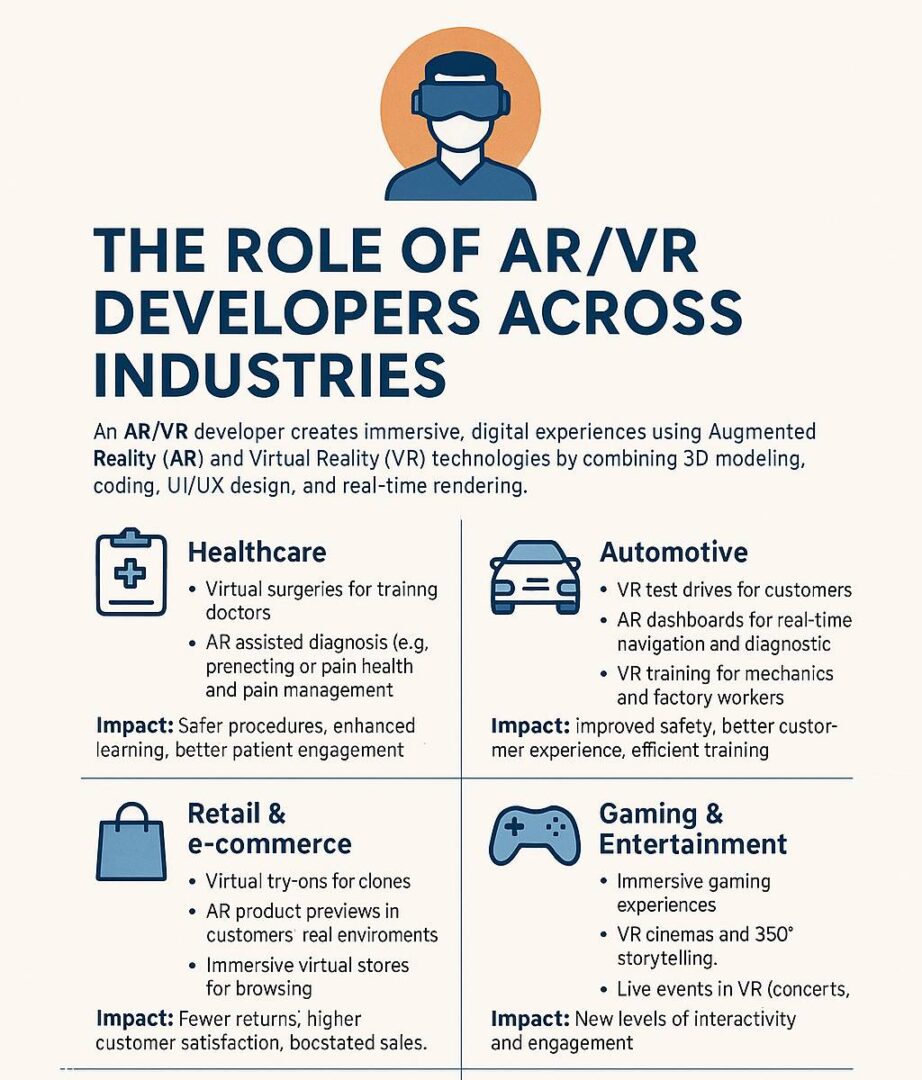
Businesses from different sectors will step up their investments in Virtual Reality (VR) development during 2025 because they see its substantial impact bounds. The Meta’s Reality Labs achieved a 40% annual growth in sales between 2023 and 2024 due to rising corporate use of virtual reality technologies. The maturation of VR technology enables organizations to utilize this technology for engaging customers while improving employee training and enhancing product design alongside promoting collaboration and marketing initiatives. The investments businesses make lead them to outpace their competitors while becoming digital transformation leaders.

Enhancing Customer Engagement

The primary motivation behind business investment in VR is its capability to produce next-level immersive engagements with customers. Today VR incorporates new strategies that provide deeply engaging customer experiences as traditional methods continue to lose popularity

Gucci together with other luxury fashion brands sustains innovation leadership through the integration of VR in their marketing plan which leads to virtual showroom platforms that customers can experience through their home devices. The immersive experience creation expertise of specific businesses including TwinReality allows companies to achieve deep customer involvement. Online shopping through virtual platforms delivers true representation of products which enables customers to touch and feel before taking steps businesses cannot reach at the standard electronic marketplace.

The tourism sector utilizes VR technology to grant users virtual access to explore travel destinations so they can choose their destinations before making reservations. Travel agencies benefit from virtual previews that deliver better lead conversion rates to their clients. The implementation of VR tours by hotels and resorts generates better booking rates through their facility expos.


Revolutionizing Employee Training

Since employees rarely respond well to training there has always been a challenge because of training expenses as well as spatial limitations and safety protocols. The technology of VR solves these problems through its ability to deliver authentic simulations which help staff gain practical training inside secure virtual conditions.

The medical staff at UC San Diego enhances minimally invasive surgery outcomes and minimizes medical staff injuries through their adoption of VR headsets. By using this method doctors gain the chance to practice advanced clinical procedures numerous times without endangering actual patients. VR applications have entered aviation through simulated flight operations that replicate genuine air traffic scenarios thereby enabling pilots to develop their operational readiness prior to aircraft takeovers.

The application of VR-based training allows industrial personnel to master safe machine operation procedures which decreases workplace safety incidents and helps eliminate non-compliance issues. A combination of safer operations and reduced training expenses defines the benefits VR brings to organizations which incorporate it for their training programs.


Streamlining Product Design and Development

VR in product design

VR transforms product development by giving engineers and designers capabilities to transform virtual prototypes before manufacturing their physical counterparts. Design speed increases and costs decrease together with design errors reduction through these processes.

BMW together with Ford implement VR technology to design vehicles while their engineers verify different vehicle aspects using digital prototypes without creating physical versions. Virtual reality simulation platforms enable designers to achieve faster design improvements through the assessment of aerodynamic and safety performance and ergonomics testing.

VR-based product development helps both architecture and real estate sectors achieve better results in their workflows. AssemblyVersion Mode enables architects to develop three-dimensional architectural models of constructions which clients can explore virtually before construction takes place. Correct communication with clients becomes possible through this approach which results in accurate planning and enhances customer satisfaction.


Facilitating Remote Collaboration

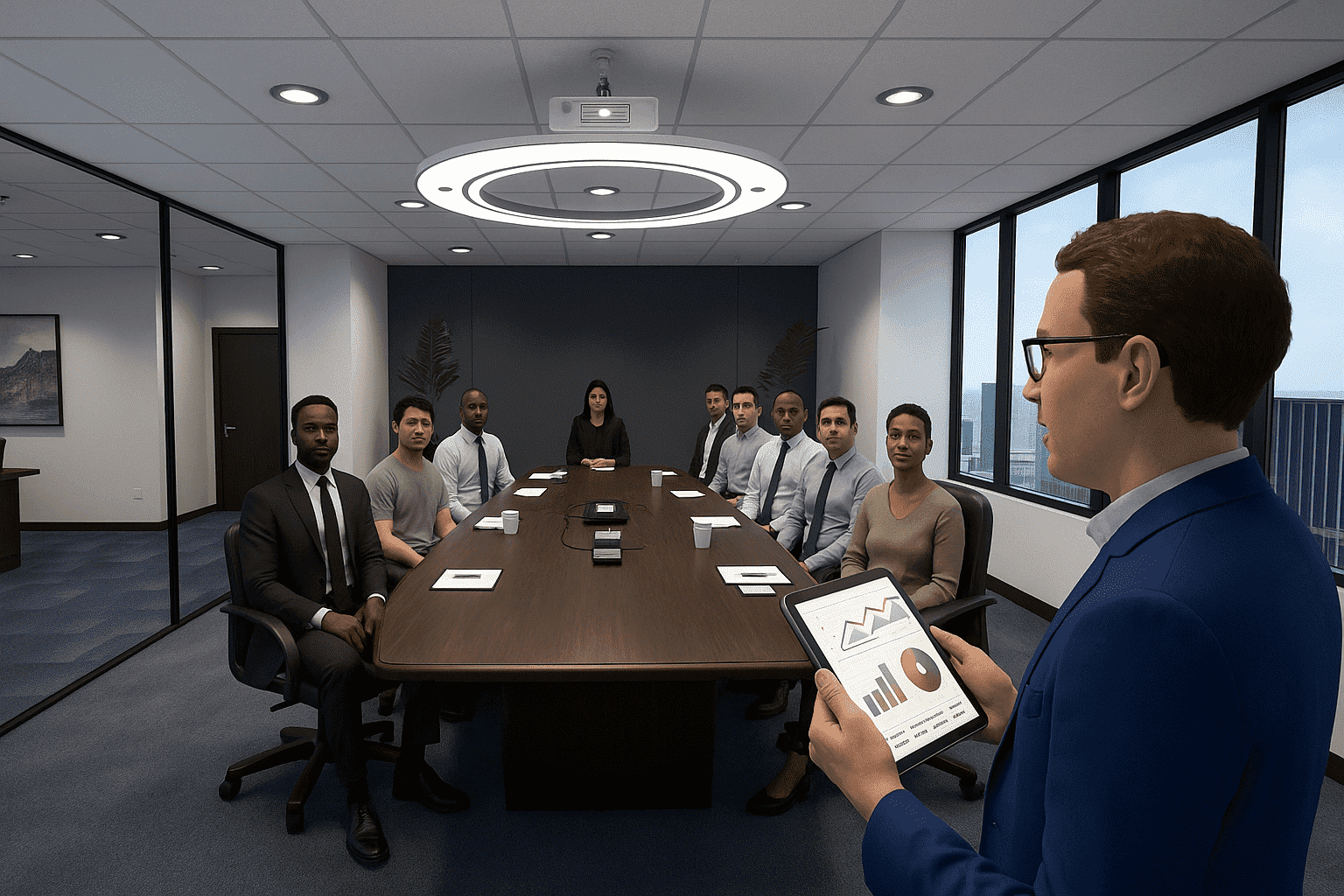
Businesses take advantage of VR technology to support team collaboration between professionals who work in separate locations because of remote work practices. Remote work tools similar to video conferences function effectively yet insufficiently replicate the comprehensive engagement possible in VR-based collaborative environments.

Accenture together with Microsoft run VR-powered virtual office environments where their employees conduct meetings while conducting brainstorming activities and working collectively on projects through digital shared spaces. Remote employees can use virtual office spaces that duplicate actual workplace meetings to preserve team work excellence across geographic distances.

The educational sector together with training institutes embrace VR collaboration at an increasing rate. Students across the world can communicate with their instructors and classmates through VR-based training centers operated by universities and professional institutions. The educational landscape becomes more available and interactive due to these advancements.


Driving Sales and Marketing Strategies

The adoption of VR technology by businesses enables new ways of presenting products during their commercial processes. The functionality of showing customers virtual replicas of products before buying has proven to be a transformative tactic in the marketplace.

Property evaluation companies use Virtual Reality technology to introduce clients to virtual home inspections. Real estate and commercial property sellers now let interested buyers examine their spaces using virtual reality tours that deliver interactive online experiences. Through this approach customers obtain needed information which leads to accelerated sales activities.

Retail businesses now maintain digital stores for shopping that deliver a virtual storefront experience to their customers. Nike and Adidas among other brands enable customers to use their VR-powered shopping platforms which let them virtually try clothing products before they buy them.


Reducing Costs and Risks

Reducing cost of VR

The implementation of VR systems in businesses results in cost reduction through error minimization along with safer operations and lower operational costs.

Industrial organizations employ VR to perform real-time inspections of machines and conduct maintenance procedures. Through VR simulations technicians can identify equipment problems before performing actual maintenance thus avoiding both equipment downtime and latter repair expenses. Companies that work in the oil and gas sector benefit most from this preventive strategy since equipment problems lead to severe economic losses and environmental damage.

Healthcare providers employ VR for phobia and mental illness treatment by using exposure therapy processes. The method permits patients to undergo controlled fear-based virtual reality simulations which partly replace the necessity for costly in-person treatments.


Catering to the Next Generation of Consumers

 The growth of Generation Z’s purchasing power drives businesses to adopt VR solutions that match their requirement for immersive touchscreen-friendly activities. VR acts as an excellent medium to attract digital-first customers who belong to younger demographics.

Both Google and Roblox continue developing their platform ecosystems to enable brands to open virtual sales fronts which distribute real products within their three-dimensional interactive virtual worlds. By implementing this approach businesses reach young demographics and develop new online retail standards for future market expansion.

VR becomes a popular tool for entertainment corporations that develop interactive entertainment content for their audiences. Virtual reality technology enables users to experience concerts and live events and play games from the front row without needing physical presence at the event through its implementation by concerts and gaming and live events.

Conclusion

Businesses invested heavily in VR during 2025 because this adaptable tool shows the ability to transform multiple operational areas. Organizations use VR both to advance customer interaction and train personnel better but also implement it for product improvement and maintain collaborative relationships remotely thus demonstrating its critical status.

The business world will embrace an improved and more efficient future because TwinReality and similar companies create customized VR solutions that propel industry transformations. Organizations that start using VR today will obtain current market dominance while preparing themselves for digital market success in the future. The business landscape moves beyond being an emerging trend because Virtual Reality now represents an essential paradigm change in operational methods and customer and employee engagement.

The ongoing development of VR technology enables businesses to create novel possibilities which establish better industry benchmarks while maintaining their lead in digital innovation.

Top 5 companies that are using fire safety training

Fire safety training

Workplace protection needs to be absolutely vital for all businesses with frequent fire risks.

Business organizations globally dedicate substantial monetary resources to train their workers about fire extinguisher training while implementing broader fire safety measures to safeguard people and facilities as well as business operations.

Workplace fires inflict billions in annual losses per year so the National Fire Protection Association (NFPA) states that fire safety training stands as an essential business investment for contemporary organizations.

Research demonstrates that quality fire safety training decreases workplace fire occurrences by a maximum of 40% thus demonstrating its importance in hazardous industrial settings.

Try for Free VR Fire Extinguisher

Our VR Training is available for download on sidequest.

Supporting Devices:
– Meta Quest 2
– Meta Quest 3s
– Meta Quest 3

1. ExxonMobil

As one of the largest oil and gas corporations in the world, ExxonMobil faces high fire risk due to its operations in refineries, drilling rigs, and processing plants. ExxonMobil has implemented advanced fire extinguisher training for employees, combining VR simulations with hands-on practice. This approach allows staff to experience realistic fire scenarios and understand the correct use of extinguishers in emergencies.

Additionally, ExxonMobil collaborates with local fire departments to conduct routine fire drills, ensuring their teams are prepared to respond swiftly in case of fire incidents. The company has also developed a digital fire hazard map to help employees identify potential risks before incidents occur.

2. Boeing

Boeing VR Fire training

Boeing takes fire safety seriously across its factories and offices. They train staff using hands-on fire drills and clear safety protocols. Teams learn how to use extinguishers properly and respond fast in case of emergencies. Boeing also works with local fire departments to keep their safety game strong.

Fire safety is a core part of Boeing’s workplace culture. With large-scale operations and complex machinery involved, the risk of fire can’t be taken lightly. That’s why Boeing invests in regular training, emergency simulations, and quick-response systems to make sure their teams are always ready.

Their approach shows how consistent, practical training can protect both people and property—even in the most advanced industries.

3. Siemens

Simens VR Fire Training

Siemens takes a strong stand on fire safety. From their factories to offices, they train employees through hands-on fire drills, emergency response protocols, and equipment handling. Their teams are prepped to act fast and smart in case of a fire. Siemens also works closely with safety experts to keep their processes sharp.

Fire safety is deeply embedded in Siemens’ workplace culture. With tech-heavy environments and advanced systems in place, the risk of fire is real. Siemens handles this by running regular drills, educating employees on best practices, and updating safety protocols constantly. Their proactive approach ensures people and property are always protected.

4. Shell

Shell VR Fire Meeting

The worldwide petrochemical and energy corporation Shell allocates its main efforts toward fire safety standards throughout its entire operation network. Every employee at the company gains fire extinguisher training through new employee programs which teach them proper emergency response.

Virtual reality technology enables Shell to generate virtual fire incidents for employees who operate in offshore drilling platforms as well as refineries and chemical plants. Experienced workers benefit from interactive learning resources that teach them about fire behaviors as well as how to conduct evacuations and utilize fire suppression tools in hazardous zones.

The company has established sophisticated fire detection sensors that automatically trigger alarms and fire suppression systems upon detecting a fire. Through early detection system implementation and extensive training measures fire-related losses have substantially decreased.

5. Amazon

Amazon VR Fire Training

Amazon operates large distribution facilities across the globe where fire risks emerge from electrical systems and storage conditions and packaging materials become hazardous. The staff members of Amazon receive thorough training about warehouse-specific fire dangers and fire extinguisher usage through extensive programs established by the company. Real-life fire simulation drills enable employee training that enhance their response accuracy. Through its Internet of Things technology Amazon monitors fire risks which enables it to detect fires earlier while having developed effective response protocols.

The Fire Marshal Program established by Amazon appoints specific staff members who perform regular safety checks and lead emergency actions. The proactive approach has resulted in a 50% improvement of response times for fire emergencies throughout their warehouses.

Why Fire Extinguisher Training is Crucial?

The training of fire extinguishers becomes essential because it enables workers to respond swiftly when fire emergencies occur. Workers who receive proper training can control minor fires thus limiting costly damage to property and the workplace. Organizations focused on fire safety experience lower disruptions and decreased insurance expenses at the same time as their employees feel more confident.

Companies that develop extensive fire safety training protocols decrease their fire damages by 30% according to studies which evaluate their performance versus untrained organizations.

The Role of VR in Modern Fire Safety Training

Multiple organizations have started using virtual reality fire extinguisher training as a method to improve training effectiveness. Employees can use virtual reality simulations for risk-free practice of different fire situations within realistic virtual environments. The engaging training modules both improve knowledge retention and allow workers to build automatic responses for essential fire control actions.

Through its VR Fire Extinguisher Training solution TwinReality assists companies to enhance their fire safety readiness by delivering realistic training experiences. Within virtual training environments employees perform fire extinguishing tasks on electrical faults chemical spills and flammable materials without suffering actual threats. The performance of employees can be monitored by supervisors throughout simulated situations using VR technology to confirm that workers meet fire safety requirements before real-life emergencies occur.

Conclusion

Every workplace needs fire safety as an essential component to secure its operations. ExxonMobil together with Boeing Siemens Shell and Amazon lead the way through their implementation of innovative fire extinguisher training methods that protect both personnel safety as well as risk reduction. Business operations stay uninterrupted together with life conservation when companies invest in preventive fire protection initiatives.

Through their united utilization of VR technology IoT sensors alongside mentorship programs these industry-leading organizations create revolutionary changes in fire safety methods. Employee safety in workplaces continues to improve globally as businesses implement identical defensive approaches to workplace fires.

To learn more about VR Safety Trainings in Refineries, check out this blog: “VR Safety Trainings in Refineries: Helping Reduce Errors.”