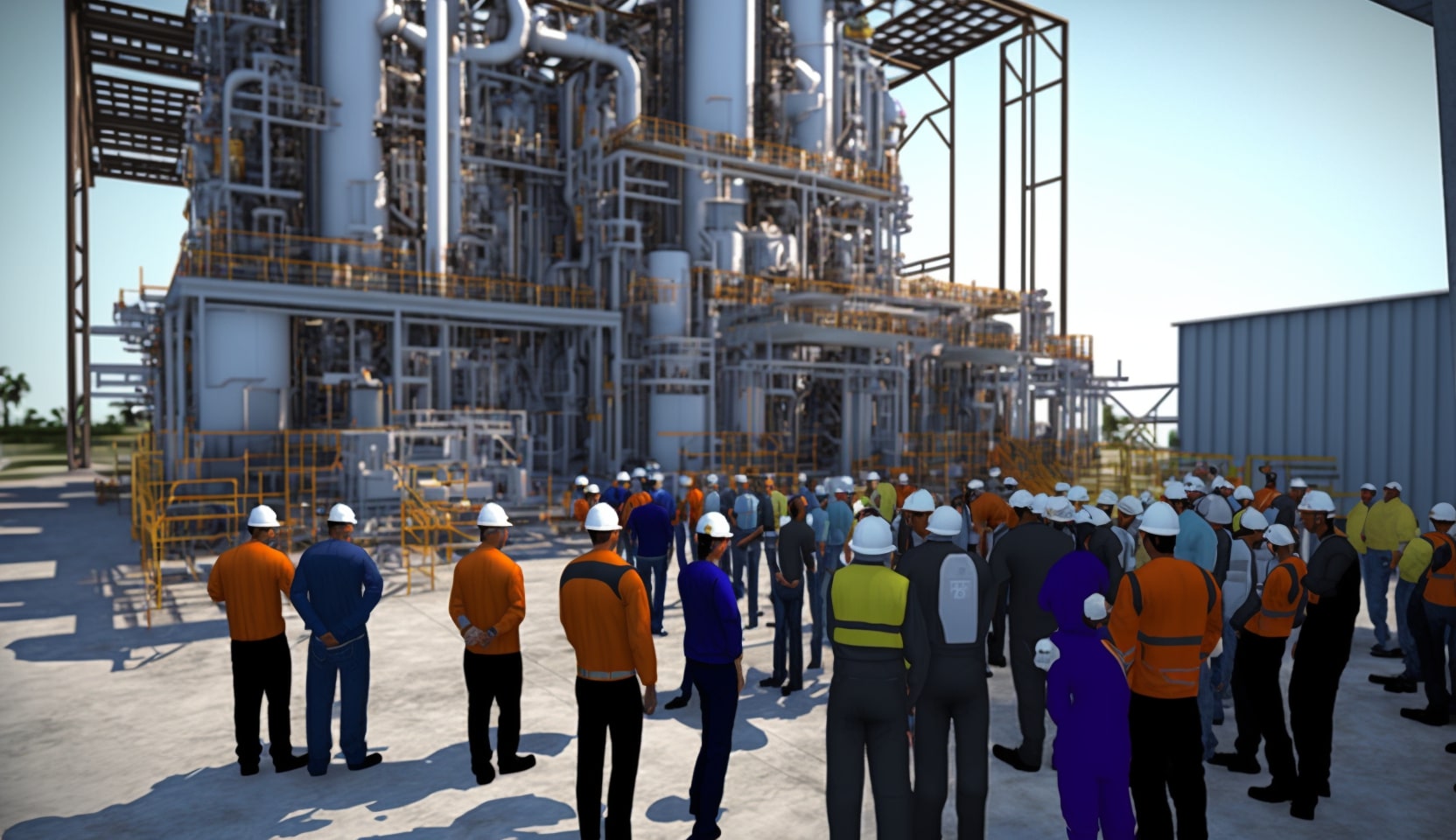
VR for the Industry 4.0 ​


What actually is Industry 4.0:-


Industry 4.0, also known as the fourth industrial revolution, is the integration of advanced technologies such as artificial intelligence, machine learning, the Internet of Things (IoT),

 robotics, and automation into traditional manufacturing and industrial processes. Industry 4.0 aims to create a more efficient, flexible, and connected manufacturing system, allowing for increased productivity, improved quality, and better decision-making capabilities. 

This new era of manufacturing involves the use of smart factories, where machines are able to communicate with each other and with humans in real time, making the entire production process more streamlined and responsive to changes in demand. 

Industry 4.0 technologies also allow for more data collection and analysis, which can help manufacturers optimize their processes and identify opportunities for improvement.

Overall, Industry 4.0 represents a significant shift in the way we approach manufacturing and industrial processes and has the potential to drive major advances in productivity, efficiency, and innovation.

 

Virtual Reality(VR) has been transforming the way we experience gaming, entertainment, and education. But now, with Industry 4.0, VR is also transforming the manufacturing and industrial sectors. 

VR technology is providing new ways for manufacturers to design, visualize, and test their products, while also improving worker safety and training.


Industry 4.0 represents a new era in manufacturing, characterized by the integration of advanced technologies such as artificial intelligence, machine learning, the Internet of Things (IoT), robotics, and automation. 

In this context, VR offers a unique set of capabilities that can be leveraged to drive innovation and enhance productivity.


“Virtual Reality for Formula One could be fantastic – driving the car!” –


Applications of VR in Industry 4.0


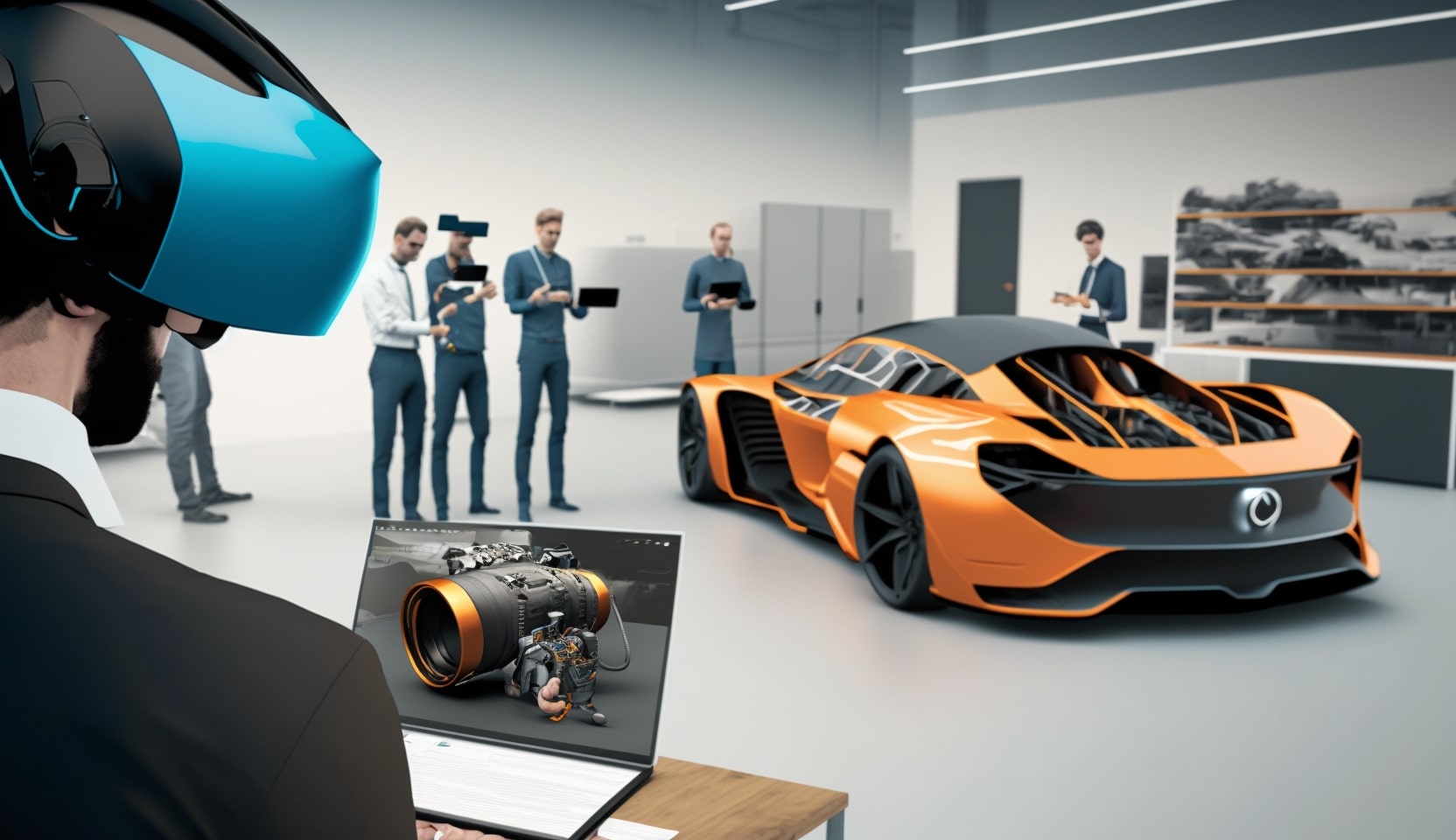
One of the key applications of VR in Industry 4.0 is product design and visualization. VR allows manufacturers to create 3D models of their products and visualize them in a virtual environment, providing a more immersive and interactive experience than traditional 2D models. 

This allows designers and engineers to test and refine their products in a simulated environment, identifying and addressing issues before they arise in the physical world.


In addition, VR can be used to create virtual prototypes, reducing the time and cost associated with physical prototyping. 

With VR, manufacturers can create and test a virtually infinite number of design variations, enabling them to identify the most efficient and effective design solutions.


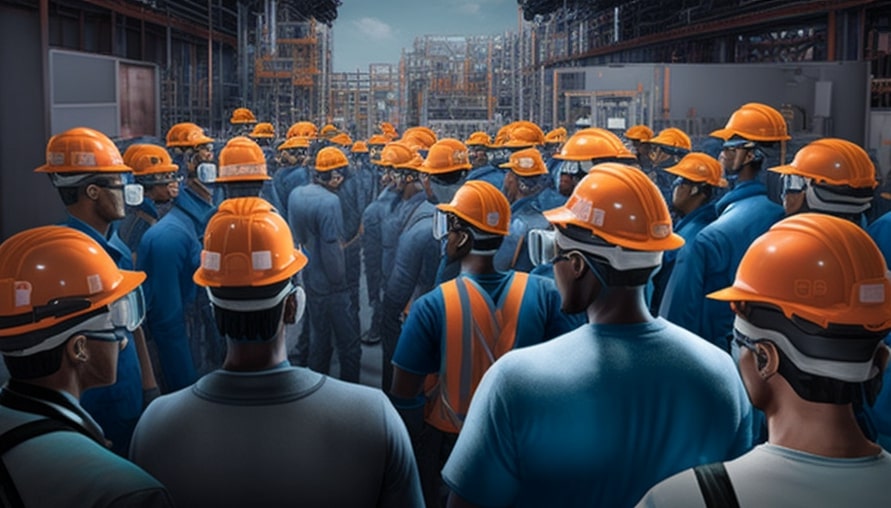
Another application of VR in Industry 4.0 is in training and education. VR provides a safe and controlled environment for workers to train on complex and dangerous equipment, reducing the risk of injury and improving learning outcomes. 

VR also allows for more immersive and engaging training experiences, improving retention and comprehension.


Training in virtual reality has the potential to increase skill retention by 70% compared to conventional classroom-based training. 

For more effective hands-on learning, businesses can construct virtual representations of locations to immerse their staff in. Professionals can develop their knowledge and motor skills in these settings without worrying about immediate dangers. 

Explanation by real example:-

For example, imagine a worker who needs to learn how to operate a large piece of machinery. Instead of practicing on the real thing, which could be dangerous and potentially damaging to the equipment, the worker could practice in a virtual environment using a VR headset. 

This would allow them to get a feel for the equipment and develop their skills in a safe and controlled environment.VR can also be used for remote training and collaboration, allowing workers to connect and communicate with colleagues and experts from anywhere in the world. 

This is particularly useful in the current pandemic situation, where physical distancing and remote work have become the norm.

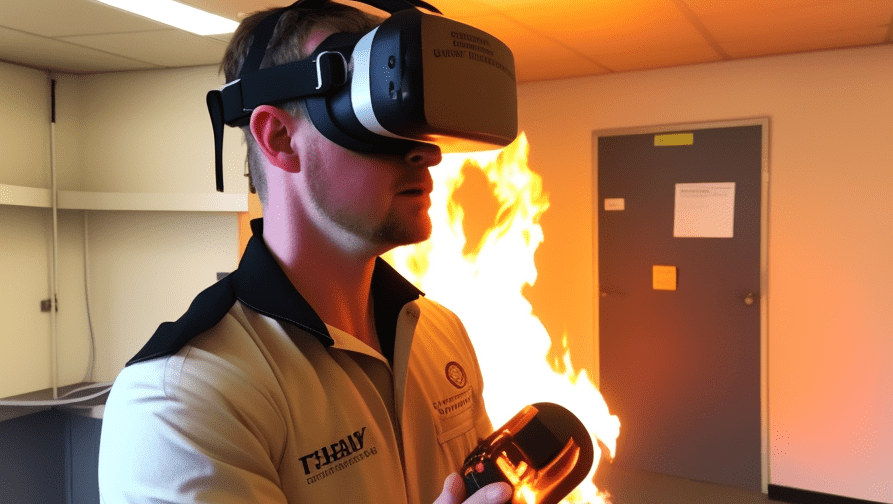
In addition, VR can be used to simulate and train for emergency situations, such as fires or other accidents. 

This allows workers to develop their skills and preparedness in a realistic and immersive environment, improving their ability to respond effectively in the event of an actual emergency.


“There is some art that says the same thing to everybody. WE need something like that. What that is, I don’t know. But the virtual reality may be the key to it.”


ADVANTAGES OF VIRTUAL REALITY AND AUGMENTED REALITY IN INDUSTRY 4.0:


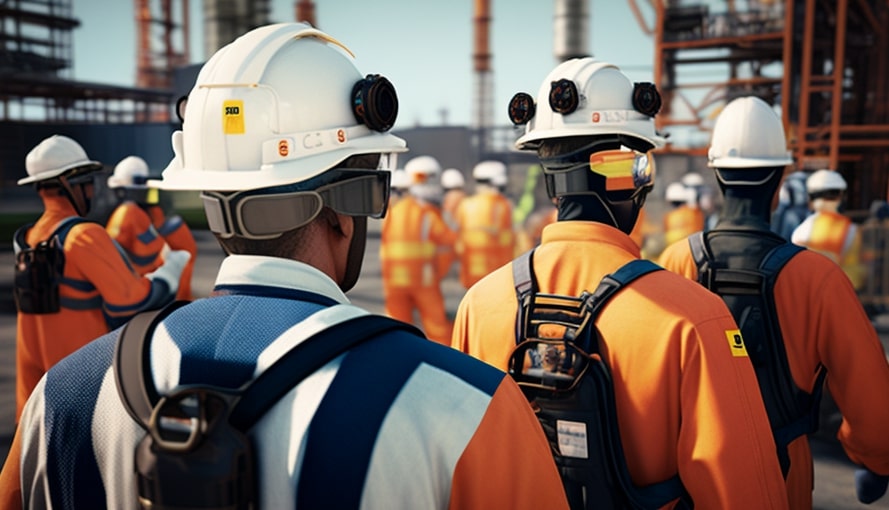
Finally, VR can be used to enhance worker safety in the manufacturing environment. By using VR, workers can be trained on safety procedures and protocols, such as the proper use of personal protective equipment (PPE) or how to safely operate machinery. 

VR can also be used to identify potential safety hazards in the workplace, allowing manufacturers to proactively address and mitigate these risks.

  1. process development
  2. reduced downtime
  3. enhanced safety
  4. money saved


Conclusion:-


In conclusion, Virtual Reality is playing an increasingly important role in Industry 4.0, providing manufacturers with new capabilities and opportunities to innovate and improve productivity. 

From product design and visualization to training and safety, VR is transforming the manufacturing and industrial sectors in exciting and innovative ways. 

As the technology continues to advance, we can expect to see even more applications of VR in Industry 4.0, driving further advancements and growth in these industries.
VR for Automotive Industry:- ​

VR for Automotive Industry

Virtual Reality (VR) is an innovative technology that has the potential to revolutionize the automotive industry. By using VR, car manufacturers, and dealerships can offer their customers an immersive and engaging experience, whether it be through virtual test drives, interactive showrooms, or personalized vehicle customization.

VR technology enables car buyers to explore and interact with a vehicle in a virtual environment, allowing them to experience the look, feel, and functionality of a car without having to physically be in it. This can be particularly useful for customers who live far from a dealership or who may be hesitant to visit a physical showroom.

Car manufacturers can also use VR for design and customization, allowing customers to visualize different color and accessory options before making a purchase. VR can also be used for employee training, providing a realistic and immersive experience for employees to practice in a safe and controlled environment.

Overall, VR has the potential to enhance the buying and selling process for both customers and car manufacturers. As technology continues to evolve, we can expect to see more and more automotive companies adopting VR to provide their customers with an innovative and engaging experience.

Virtual Reality (VR) is an exciting technology that has been gaining popularity in recent years. One of the industries that can benefit greatly from VR is the automotive industry. In this blog, we will explore how VR can revolutionize the automotive industry.

The automotive industry is constantly evolving and innovating to meet the demands of consumers. VR technology can help this industry to further innovate and enhance the experience of car buyers. 

By shifting prototyping, showcasing, and test driving to the virtual world, virtual reality software enables lowering R&D and production costs, improving sales, and reducing driving risks. The global market for virtual reality in the automotive sector was worth $759.3 million in 2019 and is expected to reach $14,727.9 million by 2027 at a CAGR of 45.1%.

“It would be nice if we could design a virtual reality in Hyperbolic Space, and meet each other there.”

Here are some ways VR can be used in the automotive industry:

  1. Virtual Test Drives: 
    VR can provide an immersive experience for car buyers, allowing them to take virtual test drives of different car models. This can be particularly useful for customers who may not have access to a physical showroom or who may be hesitant to visit a dealership due to the COVID-19 pandemic.

  2. Design and Customization:
    VR can also be used in the design and customization of cars. Customers can use VR to see how different colors, finishes, and accessories would look on their car before making a purchase. This can save time and money for both the customer and the dealership.

  3. Employee Training:VR can also be used for employee training in the automotive industry. This can include training on new car models, safety protocols, and customer service. VR can provide a realistic and immersive experience for employees, allowing them to practice in a safe and controlled environment.

  4. Virtual Showrooms: VR can also be used to create virtual showrooms, allowing customers to view and interact with cars in a virtual environment. This can be particularly useful for customers who live far from a physical showroom or who prefer to shop online.

  5. Marketing and Advertising:VR can also be used for marketing and advertising purposes in the automotive industry. Companies can create VR experiences that showcase their latest models and technology. This can help to generate buzz and excitement around new releases.

The self-driving automobile is currently the automotive industry’s most significant technological advancement. There has been steady progress in this direction, and during the past few years, a number of open trials have been conducted. Understandably, the safety of such driverless cars is a huge problem. Because to the fact that the vehicle must be capable of handling any circumstance, the research and development (R&D) procedure for it is exceedingly difficult.

“The thing that excites me about these informational technologies is I think we are going to be able to use virtual reality to show each other the insides of our own heads.”

Conclusion:-

In conclusion, Virtual Reality (VR) is an innovative technology that has the potential to transform the automotive industry. By providing customers with an immersive and engaging experience, VR can enhance the car-buying process and improve customer satisfaction. Car manufacturers and dealerships can also use VR for design and customization, employee training, and marketing and advertising purposes.
As technology continues to evolve, we can expect to see more and more automotive companies adopting VR to provide their customers with an innovative and personalized experience. Overall, VR has the potential to drive innovation and revolutionize the automotive industry for years to come.

VR safety Trainings In Refinery To Helping Reducing Errors

VR safety Trainings In Refinery

A refinery provides the necessary energy and intermediates for the production of products that are vital to our survival. In order to maintain the flow of the country’s economy, these refineries must run safely.

Millions of individuals may find themselves in problematic circumstances due to supply chain disruptions brought on by outages or accidents. 

Human error is one of the main causes of these occurrences, and the best method to decrease it in a refinery environment is by providing all employees and contractors with proper training.

The facility develops a positive safety culture as a result of such training, and everyone collaborates to send everyone home safely each day.

Teaching people to develop the skills they need for their jobs hasn’t altered all that much.Industry 4.0 technologies like Virtual Reality (VR), 

Augmented Reality (AR), and Mixed Reality (MR) may completely alter how people learn for the Fourth Industrial Revolution’s emphasis on safety and operational excellence.

Every refinery has safety as a major focus, which is obvious the moment someone walks inside. 

To guarantee safe outcomes with regard to individual and process safety, thorough safety procedures, compliance training, and audits are regularly carried out. 

The danger of injury increases while operational or maintenance operations are being carried out.

Human brains are already wired to enjoy gambling, and there's evidence that virtual reality is addictive too. What happens when these two powerful entities collide?

Upholding strict standards for performance and safety

 Several measures are used by businesses to monitor the plant’s safety performance. They keep tabs on the frequency of incidents and near-misses and look into them to determine the underlying causes, get rid of risky behaviours and circumstances, and stop similar incidents from happening again at their facilities.

Injuries are classified when they do occur as recordable injuries that require first aid. Lost-time injuries are a common safety performance statistic used by project organisations and construction firms. 

Numerous businesses have accomplished years of injury-free operations, and these measures are also rigorously monitored. It takes a lot of dedication and effort from all employees to produce such outcomes, which are supported by top-notch safety practices and training.

Typical Refinery Training

Using VR glass in refinery

At a refinery, mechanical maintenance work often includes opening equipment, overhauling, removing piping and equipment, doing repairs, and putting everything back in working order. 


There is always a chance of physical harm because this is always manual labour done with the aid of machinery.


The majority of this equipment works with extremely dangerous substances that could expose users and harm them. 

Hydrogen sulphide and other toxic pollutants are present in crude oil, making it a dangerous substance. 

Therefore, it is crucial to assure both the safe completion of the work and the safe return of such equipment to service. 

The best-running plants put a lot of attention on achieving this through improved practices and training.

Employee orientation often kicks off refinery training, which goes over crucial safety protocols. Also, they educate staff members about permit to work laws, lockout/tagout procedures, restricted spaces, working at heights, electrical safety, scaffolding, lifting techniques, and other topics.

Training in these methods teaches employees how to conduct tasks correctly and lowers the possibility of accidents and fatalities. 

Presentations on slides are always used to offer instruction in classroom settings. The majority of the information is in the form of text, with the odd video and some illustrations to illustrate the key ideas behind these operations. 

Despite the fact that the information presented is helpful, the way it was delivered was boring.

If there is any practical training, it often consists of a few exercises that are done in groups to save time. It is not possible to guarantee that each person understands every topic through practice. 

Such exercises cannot be performed in a real-world plant environment because doing so would interfere with normal operations and could result in injuries. 

While traditional training methods guarantee the participants’ safety, they frequently fail to impart the knowledge and skills required. 

Workers frequently learn it only during their on-the-job training or whenever the process units go through turnarounds and maintenance outages. 

Few people present that day at the refinery had access to the ability to observe the internals, its arrangement, and the state of equipment after years of operation. 

How VR training can be useful?

A specifically made headset is used to immerse the user in a computer-generated 3D environment called virtual reality. This environment can be created to look extremely realistic, and it frequently deceives people into thinking that it is actually a part of the virtual environment.

Virtual reality has pushed suspension of disbelief to new heights.

The atmosphere of the refinery, including all of its numerous pieces of machinery, pipelines, valves, instruments, and structural components, is created in 3D and is intended to seem extremely realistic thanks to the necessary lighting, texture, physics simulations, etc. 

Imagine being able to roam around and see everything around you in a virtual plant ecosystem. Such capacity enables the user to carry out any type of task generally carried out by any function in the refinery environment. 

A plant operator, manager, technician, or member of the emergency response team could be this person.

Now, it is possible to train employees in a fully virtual plant setting using virtual reality solutions. 

This extremely lifelike virtual plant can represent a single unit or the full building. According to the unit’s Standard Operating Procedures, operators can receive training in both core operations and particular responsibilities (SOP). 

They can also receive training on maintenance tasks in accordance with the facility’s Standard Maintenance Procedures (SMP).

Effective VR Training

The economic advantages of VR in learning and development are highlighted by PWC in its report Seeing is Believing. 

They claimed that VR training is 3.75 times more emotionally engaging than other types of instruction and four times faster than conventional classroom training. 

By 2030, the sector is anticipated to expand and contribute up to 294 billion dollars to the global economy. That demonstrates the significance of this technology and the scope of VR’s economic opportunities.
Projects to integrate virtual reality training for operations, maintenance, and safety workers have been started by a number of businesses.

Virtual reality in fire safety training​

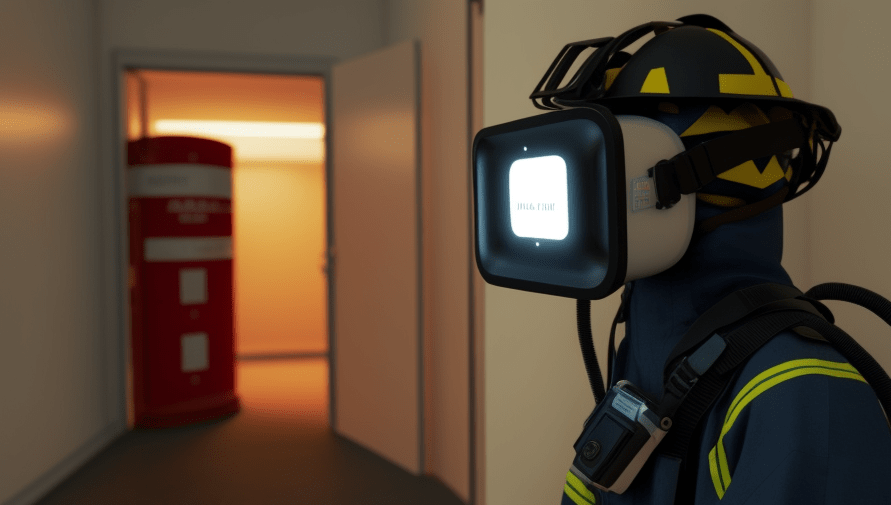
VR fire training

Data from the Ministry of Home Affairs from 2017 show that there are less than 3,000 fire stations in India, compared to the needed 8,559, and that roughly 6,00,000 fewer people work in fire departments nationwide. 

Also, 2.6% of the leading causes of mortality in 2019, according to the ADSI data, were due to accidental fire. Certainly, the archaic administration and training of fire safety requires a new strategy to reduce the frightening numbers and equip personnel for such unforeseen events.

VR at its best shouldn't replace real life, just modify it, giving us access to so much just out of reach physically, economically. If you can dream it, VR can make it.

virtual reality revolutionise fire safety training

How might virtual reality revolutionise fire safety training?

Wherever, at any time, a fire can start. It may occur at work or at home. It’s crucial to develop the knowledge of what to do and what not to do in these circumstances.

Organisations that provide fire department services have been training their employees on fire safety for decades utilising conventional methods and tools like structural burn buildings for walkthroughs and flame generators. 

But, even a small mistake can be catastrophic for both professionals and trainees while performing live-fire training exercises. 

On the other hand, building a training facility and maintaining it can be expensive, whether it’s for in-house employee training or professional firefighter training facilities. 

Virtual Reality has the potential to dramatically transform fire training in this area. Here are the key three justifications:

Cost-effective

Using VR, it is possible to imitate the surroundings of the real world and generate a variety of firefighting scenarios. In this manner, employees, professionals, and trainees can all learn how to respond in various scenarios. 

Because of this, building a new infrastructure exclusively for training will be much less expensive. With VR, all you need is a few headsets—PC or standalone, depending on the simulation type—and an existing lecture hall or classroom where you can put up the headsets and ask participants to try it out. 

One of VR’s main benefits is that it makes distant cooperation possible. Workers in the present pandemic situation don’t need to physically travel to the affected area; they can learn from the comfort of their home.

Eco-friendly

Training facilities have historically used theatrical smoke machines with artificial fire and live-fire training to instruct experts and novices so that users can experience realistic heat conditions. Unfortunately, no research evaluating the effects of various fuels have been conducted In contrast to the current training approaches, virtual reality is a more environmentally friendly option. It is an act of pride to adopt eco-friendly solutions that can benefit the environment and users, especially in light of the fact that many nations are engaging in global dialogue about climate change.

Immersive Education.

VR offers immersive learning, where students learn by doing, in contrast to traditional learning tools like movies, SOPs printed on paper, and photos. 

The learning is much more advantageous because the user is totally engaged in the virtual environment and isn’t diverted by the sounds of the outer world.

A learner engages in active learning when they are witnessing a phenomenon or a simulation, according to American educator Edgar Dale.

Contextual learning is made possible by VR, allowing users to interpret their own virtual encounters. It enables students to recall material for an extended period of time and carry out practical tasks more precisely and securely. 

Experiential learning in VR also inspires students and boosts their self-esteem.

With VR, you're not interpreting the medium: you're in it; which means that the medium is disappearing, that your consciousness becomes the medium.

Fire safety

How are Simulanis utilising VR for training in fire safety?

Virtual Fire Safety VR consists of both hardware and software. For a multi-sensory experience, it includes a VR headset, a real fire extinguisher, and a fire heater in the hardware. 


It has 4 different kinds of immersive module material in the software, which are as follows:


Fire Introductory
Understand the basics of fire, potential causes, and how to avoid it.

Fire Classification
Find out about the various types, classes, and symbols of fire.

Fire Extinguisher Types
Learn how to utilise various fire extinguishers, such as foam, CO2, water, and dry powder, as well as when to use each extinguisher in different firefighting scenarios.

Fire extinguisher techniques
Through our immersive and interactive module, students can gain practical experience by simulating a real-life fire situation and learn how to use an extinguisher by pulling the safety pin, aiming the nozzle at the base of the fire, slowly pressing the level to release the material, and sweeping it on the fire to put it out.

Fire control using VR

Conclusion

Overall, the use of VR technology in fire safety and training has enormous potential to improve the safety and effectiveness of first responders. As the technology continues to evolve and become more widely available, we can expect to see even more innovative uses of VR in the field of fire safety in the coming years.

How VR Technology is Revolutionizing the Oil & Gas Industry

VR for Oil and Gas Companies

Many of the Fundamental Oil and Gas Problems can be Solved with AR and VR

The oil and gas sector has always been exposed to significant and wide-ranging risks, including those related to politics, legislation, volatile markets, and physically demanding locations, to mention a few. But the problem is more complicated than ever today.

With the price drop and volatility of the previous five years, a new normal marked by prudence has emerged. 

Companies are placing a strong emphasis on efficiency as a way to generate value, a goal that requires highly competent personnel. Large numbers of senior workers are leaving as the sector goes through a crew turnover. 

As a result, the need for a diminishing pool of experienced workers is growing, and businesses are finding it difficult to capitalize on their knowledge.

Also, the industry-wide pace of operational change has sharply accelerated. Shale technology has reduced the turnaround time to months or even weeks, as opposed to the past when upstream assets were assessed through a time horizon of 10, 20, or even 30 years. 

Time compression demands solutions that allow people to work remotely rather than requiring them to fly to far-off places. 

The bottom line is that businesses must work at previously unheard-of speeds while managing tighter budgets and fewer staff members.

With so many forces acting in opposition to one another in the past, it would have been impossible to carry out such a mandate. New technologies, though, are altering that.

Particularly, some businesses are starting to use augmented reality (AR) and virtual reality to address these difficulties (VR). More people could gain from making more active use of these technologies.

Virtual reality is like dreaming with your eyes open.

oil company using VR

AR , VR Explained

What are AR and VR, exactly?

Both of these technologies allow for virtual visualizations, which let us view things that aren’t actually there. This is how they are similar to one another. However, there are some significant differences.

With the use of a tablet or headgear that the user may point at actual items, augmented reality (AR) overlays digital components onto the real world. 

By projecting directions onto the physical store, augmented reality (AR) can improve big-box store navigation or lead customers toward a product. 

By digitally simulating a sofa in the appropriate location, augmented reality helps us visualize how furniture might look in our homes. Virtual creatures can appear in the real world in games like Pokemon Go thanks to augmented reality.

VR immerses the viewer in a virtual environment that blocks out the real world, as opposed to AR, where the user may still see their physical surroundings. 

By simply donning a headset, VR can theoretically place a user in the cockpit of a space shuttle or the driver’s seat of a race car, allowing them to move around in an authentic-looking, three-dimensional environment.

Applications of AR/VR in oil and gas

Applications of AR/VR in oil and gas

In the workplace, AR and VR are applied in a number of contexts, such as planning, maintenance, and training. 

In the oil and gas sector, AR headsets that attach to hard hats can show instructions a technician needs to do an inspection or maintain a system on equipment without using their hands.

By clearly illustrating the necessary actions, tools, and components, precise AR animations significantly increase productivity while lowering mistakes and ambiguity.

Additionally, they can offer checklists, sensor data, and a visual representation of which components need adjusting, removing, or replacing. AR makes it possible for this information to be graphically given when and where it is needed, rather of relying on manuals.

AR can assist technicians in planning equipment modifications. One company employed augmented reality (AR) to enable mechanics to envision exactly where the cable would need to go and how it would need to be fastened when faced with the problem of installing a cable in a complex set on a ship. This made it crystal clear what difficulties they would encounter.

Remotely placed experts can communicate with general support staff and practically watch their backs using AR headsets with two-way communications. 

This can be done in real-time, high-definition video. Using the same technology, procedures can be recorded for quality assurance and future use.

Other AR applications can display the inside workings of a piece of machinery, helping technicians better understand how to make adjustments. 

Combined, these qualities assist businesses in coping with the lack of skilled labor and lessen the need to fly such labor to remote locations. An AR system can significantly speed up the team’s ability to locate and address the root cause of an incident.

Training is a crucial area where VR is used in the oil and gas industry. Trainees can utilize a VR headset to visit a setting or engage with a piece of equipment virtually rather than learning theory in a classroom or flying people to far-off places.

As trainees on a virtual rig turn their heads to the side, they see what they would see on a real-world rig, creating an immersive experience similar to that of video games. 

Given the intricacy of refineries, drilling platforms, and processing plants, the chance to engage in lifelike training prior to accessing these environments is priceless, and businesses save money by eliminating the need to fly trainees to the locations.

Engineers can remotely monitor generators, pumps, compressors, and shale shakers using VR apps that are connected to sensors. 

This offers diagnostics at a fraction of the cost which is quicker and more accurate. In order to better decide where to explore, geoscientists are utilizing VR to visualize seismic data and even to virtually drill.

What is it like to walk in someone else's shoes? Books allow us to imagine it, and movies allow us to see it, but VR is the first medium that actually allows us to experience it.

Status of AR/VR in oil and gas

Similar to the internet and smartphone revolutions, AR/VR adoption is being driven by consumers, notably online gamers. 

The manufacturing, aerospace, retail, real estate, educational, sporting, and healthcare sectors have all seen a rise in the use of these applications.

The use of AR/VR in the oil and gas business is still less aggressive than in other industries. Businesses are beginning to experience success in refineries using AR/VR, particularly for maintenance and inspections. 

Businesses are starting to realize benefits in downstream industries like retail, employing AR and VR to gain a more thorough and intuitive understanding of their locations.


We think the oil and gas sector is ideally positioned to benefit from AR/VR for the following three reasons:


First, a lot of data, generally from sensors, is what industrial AR/VR thrives on. These sensors have been widely used in the business for a long time, whether in wells, refineries, or other locations. Due to the widespread use of these sensors, a vast amount of data is accessible for use with AR and VR.

The second factor has to do with how that data is kept. In the past, it frequently had a proprietary format that made it challenging to use for auxiliary reasons. 

That is currently altering. Producers are increasingly combining the operations technology systems they employ to monitor and manage equipment and processes with their data-centric information technology systems. 

Data is now easier to access than it always was thanks to this IT/OT integration, which makes AR/VR use possible, for upstream and downstream applications.

The rise of digital transformation in the sector and the change to a customer-centric mindset—whether the “customer” is a drilling engineer at a well site, a maintenance engineer in a refinery, or a patron in a retail establishment—are the third and fourth reasons. 

Prior to this, the design philosophy was to prioritize efficiency over the needs of the consumer.


Managers can therefore benefit from using AR or VR to better understand how these clients interact with the equipment or the store. 

Companies can then simplify, streamline, or otherwise improve processes to give a better experience by adopting a design-led mindset.

Conclusion:-

As previously mentioned, AR/VR has the ability to significantly lessen the industry’s significant issues. 

The industry is also ideally positioned to benefit from the technology due to a number of variables, including the volume of data, the increased availability of that data as a result of IT/OT conversion, and the movement toward digital transformation.

Why then has the industry been so sluggish to adapt?

The most important element is the industry’s pervasive conservatism, which has valid reasons. It makes sense that the business has been slow to shift given the vast quantities of money involved in every component as well as the complex and varying risk profiles. 

You might lose a customer or some money if a new technology fails in a retail environment. In contrast, there is a serious risk of an environmental catastrophe or human fatality in the energy sector. 

This necessitates that any new technology undergo a much more thorough testing process, and in some circumstances, additional equipment is required to make sure that the new technology can withstand the challenging conditions that are characteristic of a field setting. 

There is frequently a stricter standard as well.

Furthermore, oil and gas field locations can be far apart. The difficulty in obtaining the necessary network bandwidth to retrieve the data essential for AR/VR applications from these far sites is much greater than in any other business.

Yet, in order to persuade clients to take the technology into account, we highlight its success in other fields that deal with delicate risks. 

The primary application of AR/VR in healthcare is to train surgeons and respond to emergencies in remote areas, among many other uses.

 The healthcare market for AR/VR was valued at US$ 933.1 million in 2018 and is anticipated to grow to US$ 3,192.2 million by the end of the forecast period, according to a market study.

The difficulties mentioned above can be overcome by a consortium of providers, as has also been observed in other industries.

With the help of system integrators, oil field service providers, network providers, hardware providers, and others, the industry has received these solutions. 

System integrators like Infosys will have to take the initiative in this, but as oil and gas executives become more aware of the advantages of AR/VR, the technology will swiftly become a necessary tool for competitive advantage.