
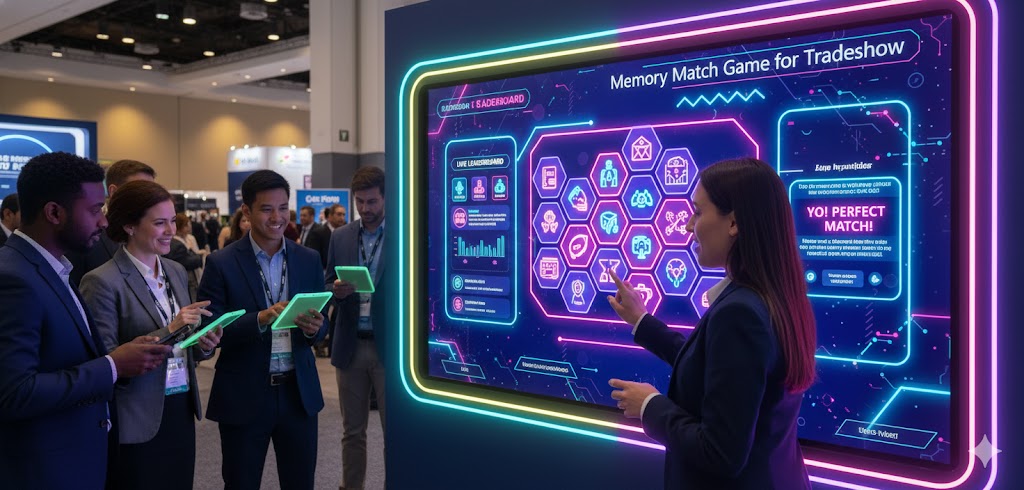
Memory Match Game setups are becoming one of the most powerful ways to turn busy trade show aisles into interactive high engagement hotspots. While most booths still rely on banners demos & product brochures the booths that truly stand out are the ones offering Trade Show Memory Match Game experiences that spark curiosity competition & conversation. Visitors now want quick fun tech driven experiences & the classic matching activity updated for modern events has become a favorite across brands.
The event world needs engagement not passive viewing. The right Event Memory Match Game can boost dwell time capture more leads & build strong brand recall.

1. Classic Card Matching Game
How the Classic Card Matching Game Works
The classic memory game uses face-down cards arranged in a grid. Players flip two cards at a time to check if they match. When a pair matches, the player keeps it; if not, the cards flip back. The simplicity of the game makes it intuitive, quick to learn, and engaging across all age groups. It relies heavily on short-term memory, recognition skills, and pattern recall, making it highly interactive for touchscreen and digital setups.
Where the Classic Card Matching Game Is Commonly Used?
• Kids’ learning apps
• Brain-training and cognitive apps
• Touchscreen kiosks at exhibitions
• In-store engagement screens
• Puzzle and casual gaming platforms
Benefits of the Classic Card Matching Game
• Easy to understand, no learning curve
• Boosts memory and concentration
• Works well for all age groups
• Fast gameplay ideal for kiosks
• Minimal design, easy customization
2. Theme-Based Memory Match Games
How the Theme-Based Memory Match Game Works
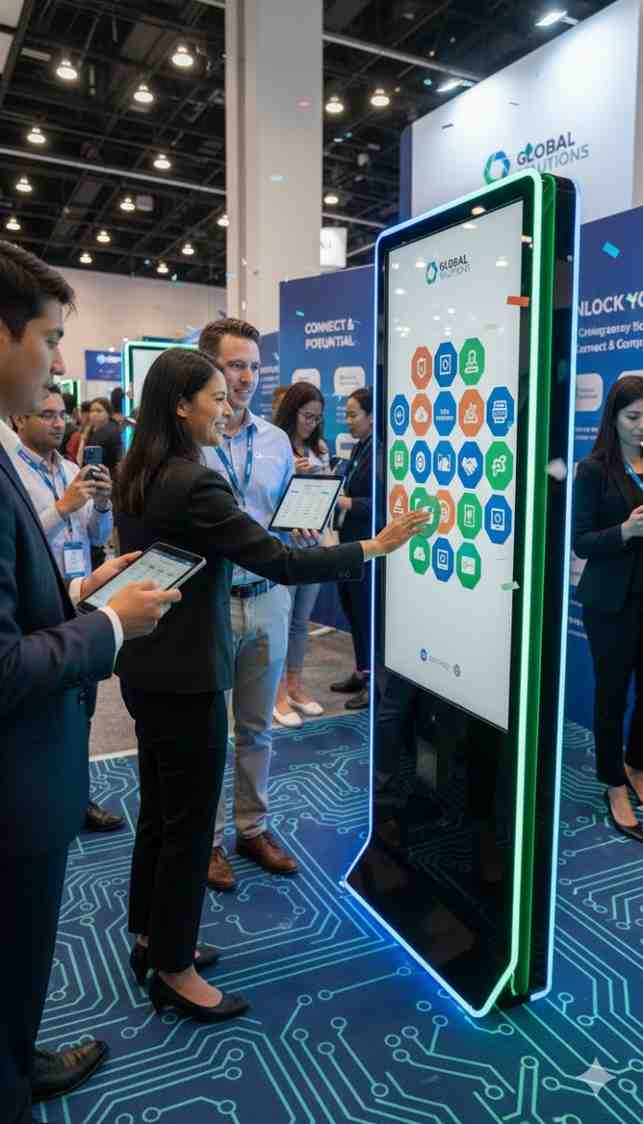
This version follows the same mechanics as the classic game but uses themed visuals such as animals, festivals, corporate branding, or product-based designs. The themed artwork turns a simple memory game into a storytelling or brand-expressive tool. It improves visual engagement and gives brands the opportunity to align the game with campaigns, seasons, or mascots.
Where Theme-Based Memory Match Games Are Commonly Used?
• Brand activations
• Exhibition booths
• Kids’ education platforms
• Festival & seasonal campaigns
• Corporate internal events
Benefits of Theme-Based Memory Match Games
• Strong brand recall through visuals
• Highly customizable for any industry
• More engaging than generic designs
• Suitable for targeted audiences (kids, visitors, learners)
• Great for marketing storytelling
3. Time-Based Memory Games
How the Time-Based Memory Game Works
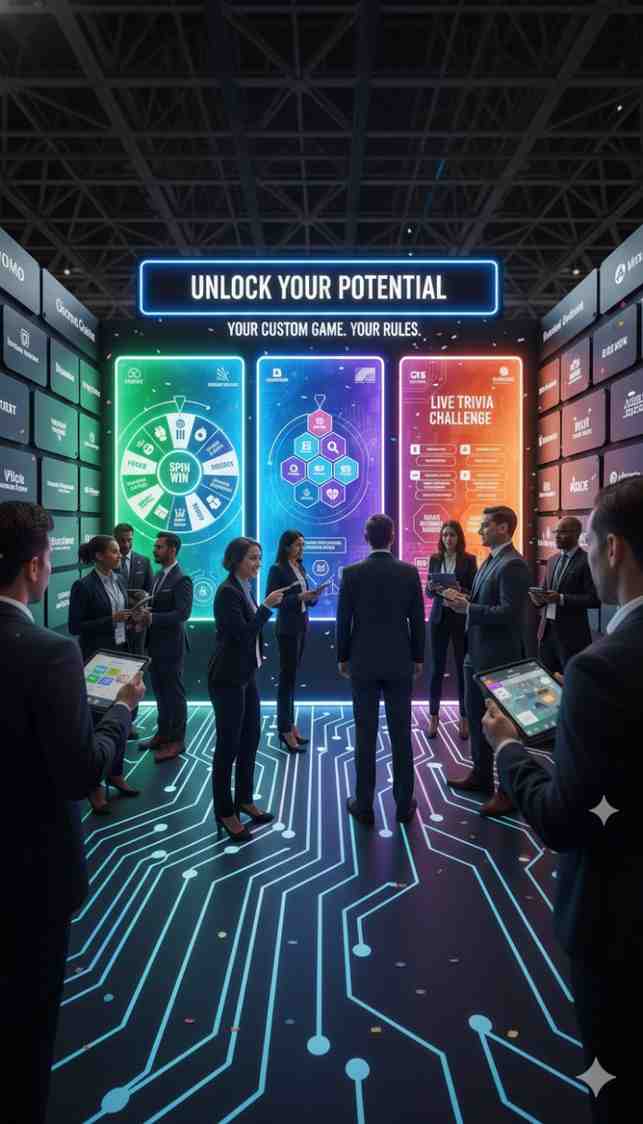
Players must match all card pairs before the countdown timer reaches zero. The timer creates urgency and competition, making the game more challenging. As difficulty increases, the timer shortens or card counts rise. This version is ideal for events where fast-paced engagement is needed or leaderboards are used to motivate visitors.
Where Time-Based Memory Games Are Commonly Used?
• Events & expos
• Competitive kiosks
• School competitions
• Mobile gaming apps
• Gamified training modules
Benefits of Time-Based Memory Games
• Highly engaging due to urgency
• Encourages repeat attempts
• Good for leaderboards & competitions
• Works well for short interaction booths
• Improves quick decision-making skills
4. Level-Based / Progressive Memory Games
How the Level-Based / Progressive Memory Game Works
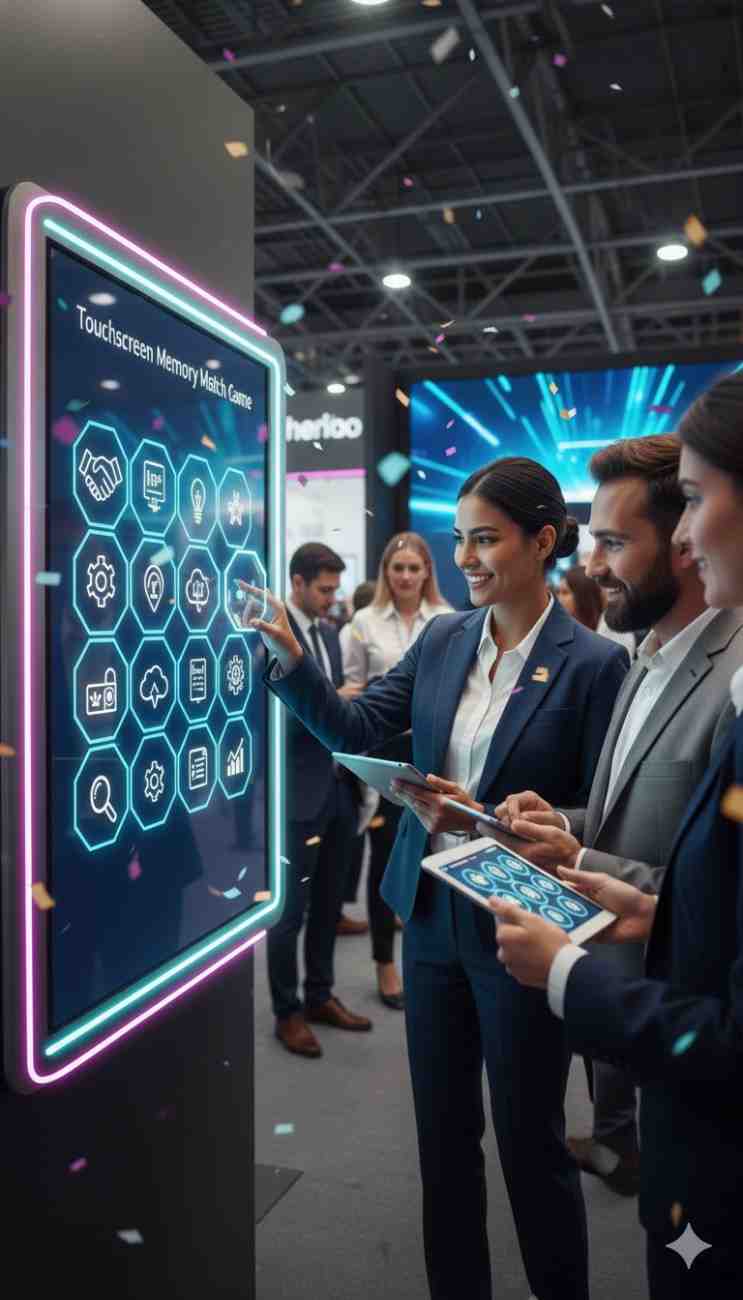
Players begin with a simple grid and advance to higher levels where more cards are added. Difficulty increases steadily, and some versions include limited lives or retries. This helps maintain long-term engagement and encourages players to keep progressing through stages, making it ideal for learning and app-based environments.
Where Level-Based Memory Games Are Commonly Used?
• Gamified learning modules
• Cognitive skill-building apps
• Long-session gaming apps
• Interactive kiosks with scoring systems
• Kids’ learning platforms
Benefits of Level-Based Memory Games
• High retention through progression
• Suitable for long gameplay sessions
• Improves memory across multiple levels
• Encourages players to complete challenges
• Easily customizable difficulty curve

5. Sequence Memory Match (Simon-Style)
How the Sequence Memory Match Game Works
Instead of matching cards, the game shows a glowing or highlighted sequence of objects. The player must repeat the exact sequence in the correct order. As the game progresses, sequences become longer and more complex. This gameplay strongly focuses on pattern recognition, rhythm, and short-term memory.
Where Sequence Memory Match Games Are Commonly Used?
• Cognitive training apps
• Kids’ learning tools
• Brain-fitness and puzzle apps
• Tech and gaming kiosks
• Rehabilitation or therapy exercises
Benefits of Sequence Memory Match Games
• Boosts pattern recognition
• Enhances sequential memory
• Suitable for all ages
• Great for skill assessment
• Highly engaging with sound and visuals
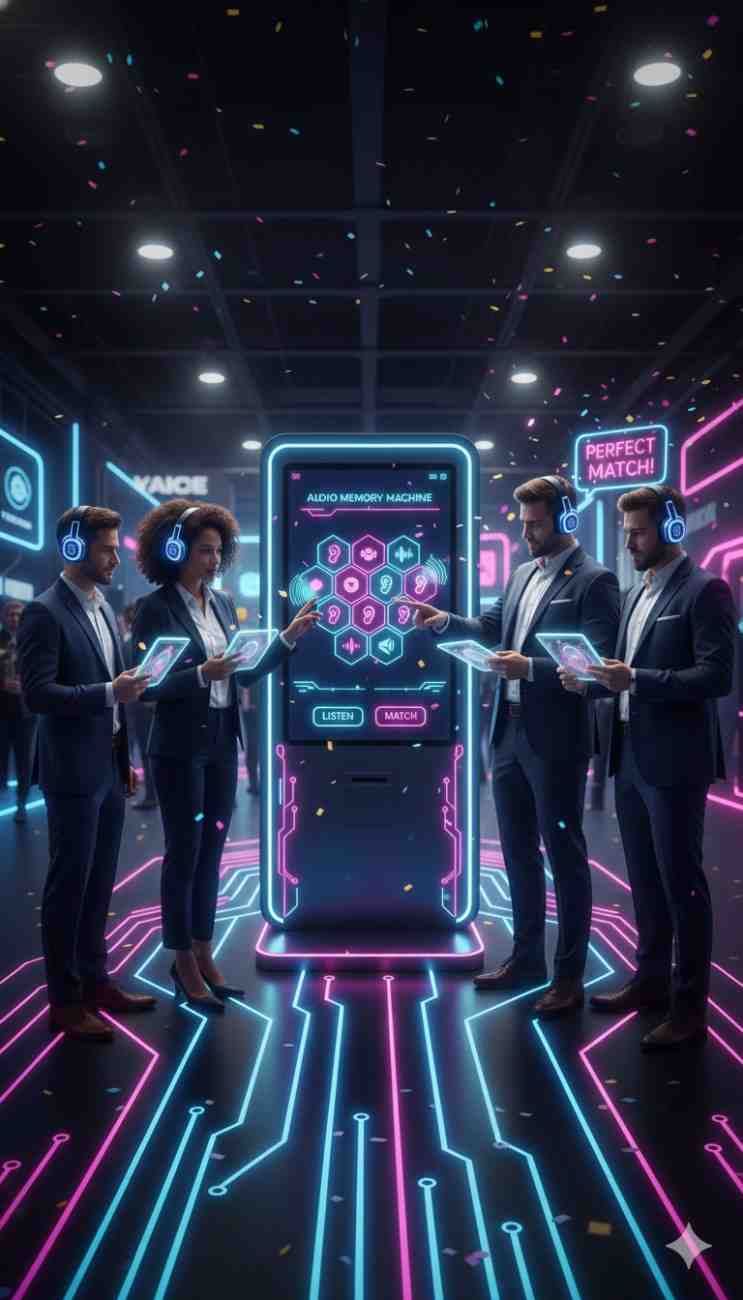
6. Audio Memory Matching
How the Audio Memory Matching Game Works
This version replaces images with sounds. Each card plays a specific audio cue—music notes, animal sounds, beeps, or spoken words. Players must find matching sounds instead of matching visuals. The game improves auditory skills and is highly inclusive for learning and sensory applications.
Where Audio Memory Matching Games Are Commonly Used?
• Special education programs
• Music training apps
• Sensory learning games
• Therapy & rehabilitation exercises
• Interactive booths for kids
Benefits of Audio Memory Matching Games
• Builds auditory recognition skills
• Inclusive for visually-impaired learners
• Unique and engaging gameplay
• Helps develop sound association
• Great for musical training
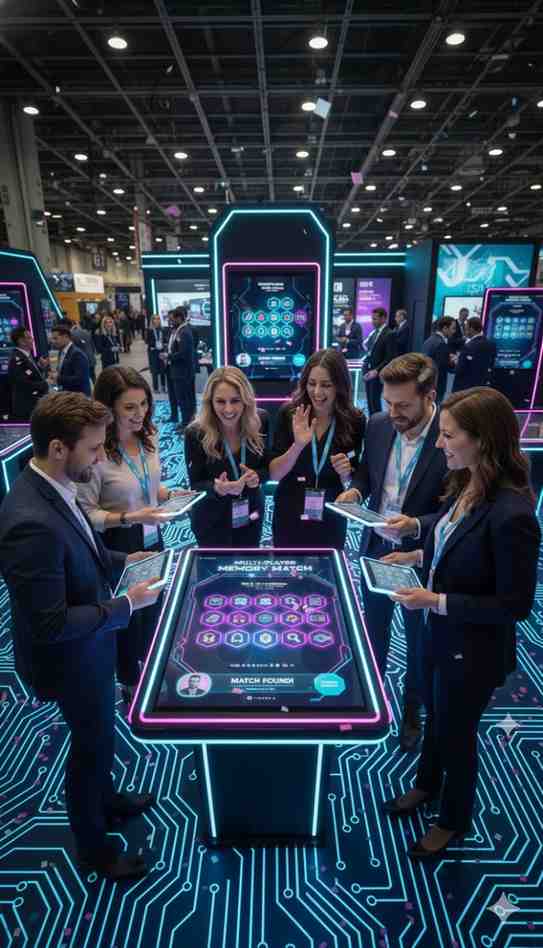
7. Multi-Player Memory Match Games
How Multi-Player Memory Match Games Work
Players take turns flipping cards to find pairs. The player with the most matched pairs wins the round. This turn-based format encourages competition and teamwork. Multiplayer modes can be local on a single device or online between remote players.
Where Multi-Player Memory Match Games Are Commonly Used?
• Family gaming platforms
• Corporate team-building events
• School competitions
• Trade show group kiosks
• Online multiplayer apps
Benefits of Multi-Player Memory Games
• Encourages social interaction
• Great for competitive engagement
• Extends player session time
• Suitable for large gatherings
• Works well for events and groups
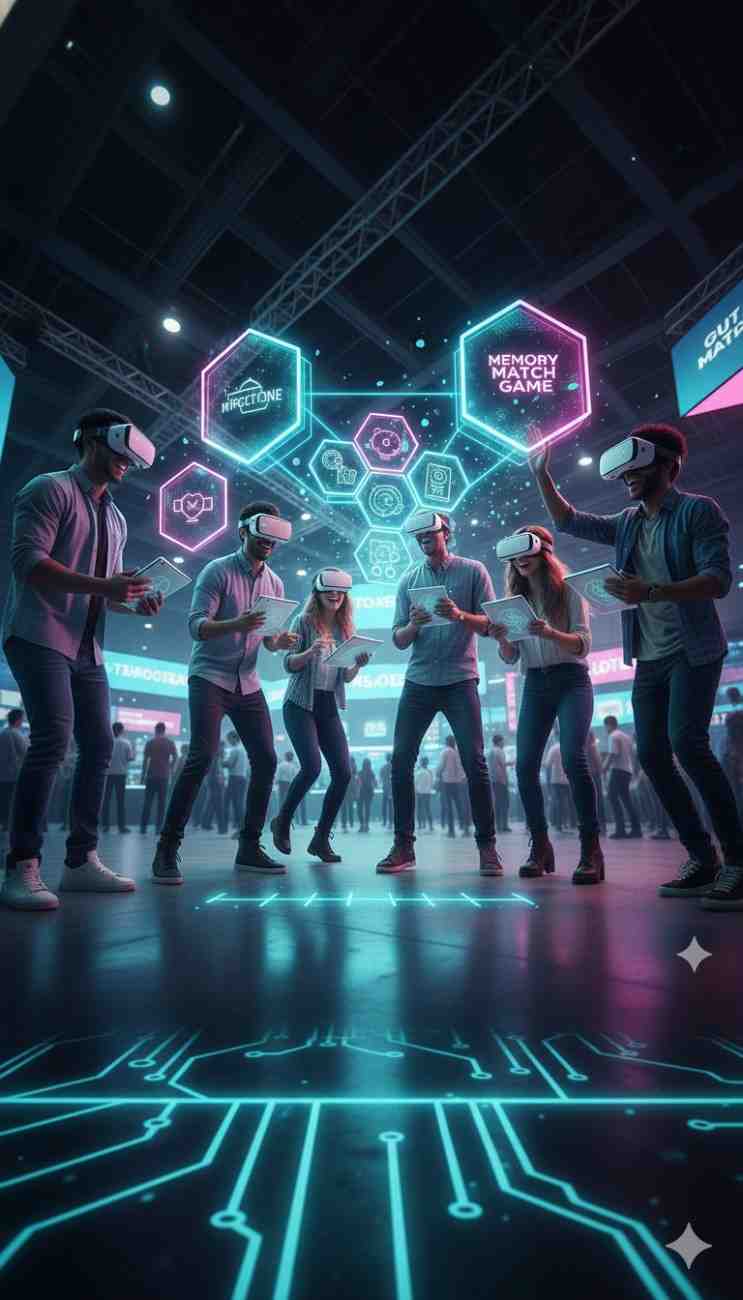
8. AR/VR Memory Match Games
How AR/VR Memory Match Games Work
Cards appear as floating 3D objects in augmented or virtual reality. Players interact with them using gestures, controllers, or touch devices. The immersive format makes the game visually exciting and modern, often incorporating animations, spatial sound, and interactive environments.
Where AR/VR Memory Match Games Are Commonly Used?
• Exhibitions & expos
• EdTech apps
• VR learning centers
• Brand activations
• Immersive game zones
Benefits of AR/VR Memory Match Games
• Highly immersive and futuristic
• Strong attraction for booth visitors
• Great for experiential marketing
• Engages visual, spatial, and memory skills
• Enables dynamic animation-based storytelling
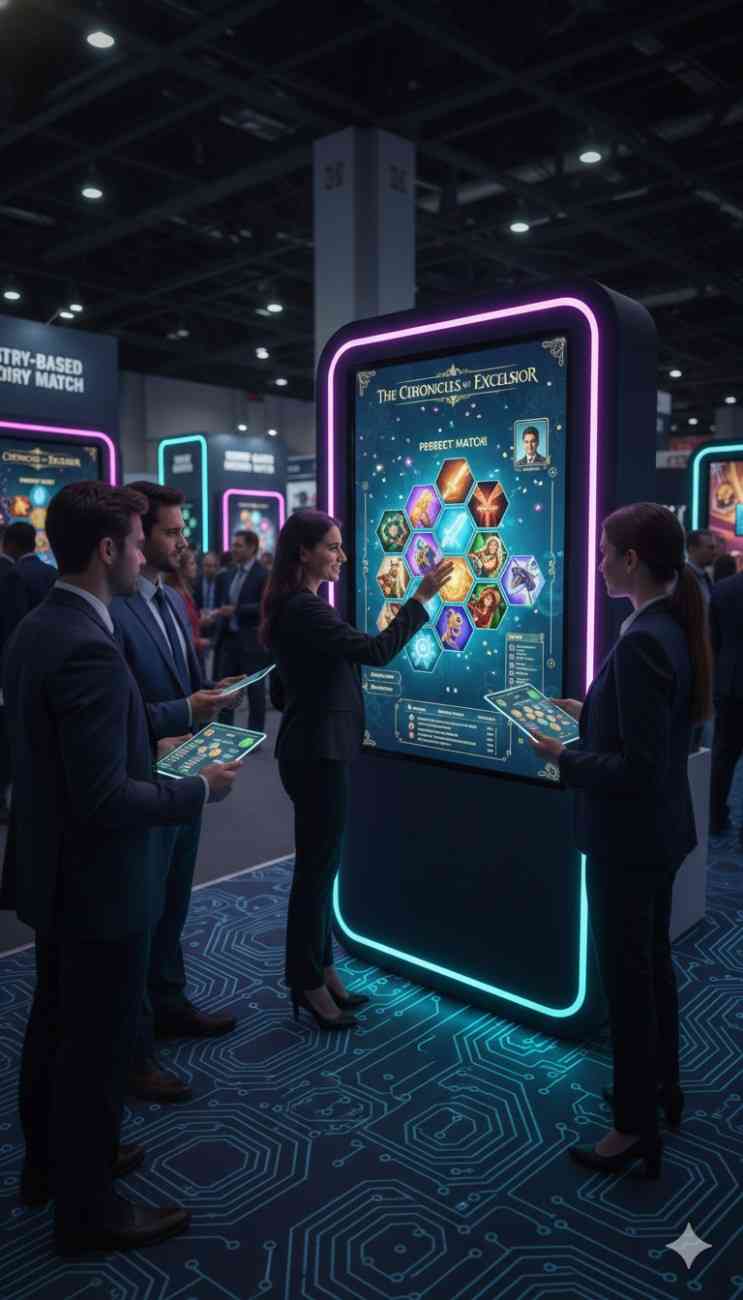
9. Story-Based Memory Match Games
How Story-Based Memory Match Games Work
Every time the player matches a pair, a part of a story unlocks—images, text, or animations. This adds narrative progression to the gameplay, making the experience more meaningful, especially for kids and learning-based systems. The game blends memory challenges with storytelling to enhance comprehension.
Where Story-Based Memory Match Games Are Commonly Used?
• Children’s learning apps
• Interactive books
• Educational kiosks
• Language-learning tools
• Museum or exhibit storytelling screens
Benefits of Story-Based Memory Match Games
• Improves reading and comprehension
• Creates emotional engagement
• Encourages players to finish the story
• Perfect for education and learning
• Helps with memory + narrative retention
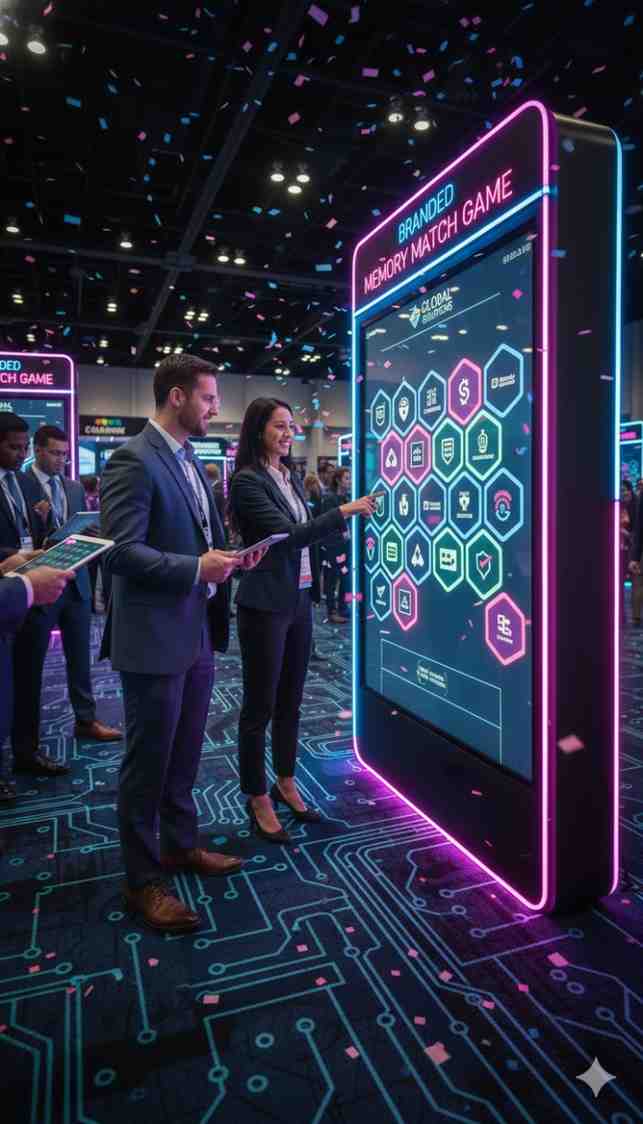
10. Branded Memory Match Game (For Marketing)
How the Branded Memory Match Game Works
This version uses brand-specific visuals such as logos, product photos, colors, mascots, or campaign graphics. It turns a simple memory game into a promotional tool that subtly reinforces brand recall. Perfect for trade shows, it quickly attracts visitors and collects leads through short, fun interactions.
Where Branded Memory Match Games Are Commonly Used?
• Trade show booths
• Mall activations
• Digital product launches
• Corporate celebrations
• Interactive marketing campaigns
Benefits of Branded Memory Match Games
• Strong brand visibility
• Effective for lead generation
• Easy to understand & quick to play
• Customizable for any industry
• Encourages booth traffic and engagement
Conclusion
The Memory Match Game format is more than fun. The activity becomes a strong tool for booth engagement product education & lead capture. These options offer modern branding flexibility & natural conversation starters. These setups turn any booth into a lively interactive space with Custom Branded Games that stay memorable long after the event.
The planners who want interactive playful & proven engagement find that matching games are the strongest Interactive Booth Game Ideas for Expo.
Ready to Add Trivia to Your Booth?
At Twin Reality we create custom branded lead generating Memory Match Game setups made for trade shows expos & conferences. The booth team can use tablet games QR based play or full leaderboard systems & we help you make the experience unforgettable
